
Badb: Badb is an Irish war goddess known as the Battle Crow.
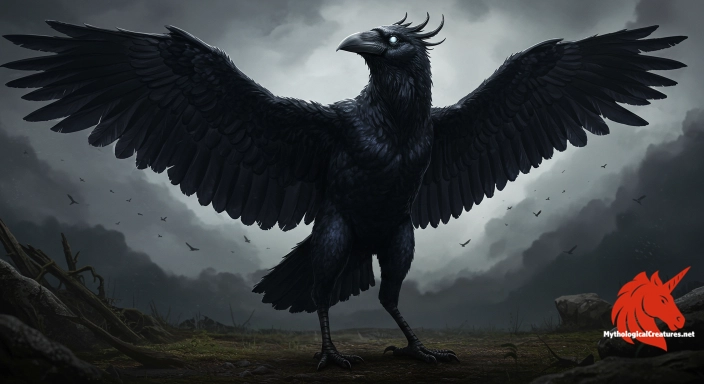
Badb
Badb - One of the three Morrígna, Badb plays a crucial role in signaling battle outcomes and foretelling death.
the legend in five swipes.
the legend in five swipes.
The Origin Story of the Badb
The Badb is a formidable figure in Irish mythology whose presence intertwines the realms of war, fate, and transformation. Emerging from the deep well of ancient Celtic traditions, she has been revered as both a war goddess and a harbinger of destiny. Her very name, meaning 'crow', connotes not just the avian form she assumes but also the ominous foretelling of carnage on the battlefield. Over centuries, her character has been shaped by oral traditions and early medieval manuscripts, which capture her dual nature as both protector and omen. This powerful deity is a central component of the triad of fierce goddesses, standing alongside figures such as Macha and the Morrígna, thereby reinforcing the multifaceted nature of battle and death. The legacy of the Badb is steeped in ritualistic symbolism where the natural world and the supernatural converge. Her myth is firmly ensconced in a cultural context that highlights the critical interplay between chaos in war and the inevitable passage of fate. The enduring resonance of her story reflects an evolving understanding of warfare, where the tumult of battle is both feared and mystically revered. Through her dynamic role, the Badb continues to inspire contemporary interpretations of myth and legend.
Badb: Manuscripts, Texts and Variants
The primary sources that recount the myth of the Badb are found in a rich collection of medieval Irish manuscripts and enduring oral traditions. Ancient texts, such as those compiled in the Book of Leinster and other narrative cycles, offer evocative accounts of her spectral presence on the battlefield. In these accounts, she is often depicted as an omen whose appearance precedes the break of a great conflict. Variations in her portrayal are evident in different manuscripts, where some texts focus on her role as a messenger of death and others weave her into the broader tapestry of war deities. The fluidity of her narrative is underscored by centuries of oral storytelling, passed down by bards and minstrels who added layers of nuance to her legend. These sources have, over time, contributed to a multifaceted image that blends fear and reverence. The enduring motif of her lamenting cry and transformative power is echoed in diverse retellings, each adding new dimensions to her character. Consequently, the multiple story variants serve both as historical testimony and as a living tradition in Irish cultural memory.
How would you recognise the Badb?
The Badb is most vividly portrayed in the guise of a crow, her silhouette marked by sleek, midnight-black plumage that exudes an air of mystery. Her physical form is not restricted to that of a mere bird; she is renowned for her shapeshifting ability, often transforming into a spectral woman with an elusive and commanding presence. In her crow form, every feather seems imbued with the portent of doom, reflecting the dark, inescapable truths of war. The eerie intensity of her eyes is said to hold the secrets of a warrior’s fate, shining with a supernatural light that heralds the outcome of battle. Descriptions often evoke a sense of both beauty and terror in her appearance, where form and function merge into a symbol of life’s transience. The interplay of light and shadow in her depiction reinforces the dual nature of her character—both a bringer of death and a controller of destiny. Details in some accounts suggest that the texture of her feathers carries a subtle, almost imperceptible luminescence that mystifies onlookers. The contrast between her human aspect and avian symbolism further cements her identity as a being whose physicality transcends simple mortal constraints.
The Geography of the Badb Legend
The portrayal of the Badb varies notably across different Celtic regions, each adapting her myth to local cultural and spiritual nuances. In several parts of Ireland, she is revered not only as a war goddess but also as an ethereal spirit linked with the land and its ancestral memories. Some traditions in the western regions imbue her with roles that intertwine battle with fertility and renewal, reflecting the cyclical nature of life. In the northern communities, her presence is accentuated by the stark imagery of a solitary crow, whose cry is synonymous with impending loss and sorrow. Local dialects contribute to subtle variations in her name and attributes, underscoring a shared yet diverse mythological legacy. In certain areas, the Badb is seen as an integral part of the natural landscape, a guardian of sacred battlegrounds interwoven with local lore. These regional adaptations enrich her character, ensuring that each portrayal speaks to the unique historical and cultural experiences of its people. Ultimately, the regional variations of her myth highlight the adaptability of Celtic storytelling, where the essence of the Badb is continuously reinvented to resonate with local identity.
Badb: Related Figures Across Cultures
The myth of the Badb finds intriguing parallels in numerous other cultural traditions, casting her as a universal symbol of war and destiny. Echoes of her role are found in the Norse valkyries, divine figures who similarly choose the fallen and navigate the fates of warriors. The crow, as a potent emblem, recurs in the mythos of many cultures—from the ravens of the Native American lore to the mystic birds of Japanese mythology—underscoring a shared fascination with omens and the supernatural. Such interconnections underscore the idea that the forces of death and transformation are a common human preoccupation across diverse societies. Her duality as both a forewarning of doom and a shaper of events invites comparisons with other deities who straddle the lines between chaos and order. The portrayal of the Badb resonates with the broader archetype of the battle prophet, a figure whose presence on the field signifies both peril and profound change. In comparative analyses, her evolving role reflects similar motifs found in ancient and modern narratives alike. These cultural parallels not only reinforce the universality of her image but also enrich the understanding of how different societies interpret the complex interplay between war, fate, and the natural world.
The Lasting Influence of the Badb
The legacy of the Badb has transformed substantially from the ancient echoes of Celtic battlefields to her vibrant presence in modern cultural expressions. Her traditional role as a harbinger of battle and death has been reinterpreted in the contemporary sphere, where she is often celebrated as a symbol of feminine strength and resilience. Throughout the ages, adaptations of her myth have evolved to reflect changing societal values and the reinterpretation of gender roles in the context of war and power. Modern artists, writers, and filmmakers have drawn on her enigmatic qualities, embedding her essence in works that explore the mysticism of battle and the inevitability of fate. The evolution of her imagery—from a fearsome omen to a multidimensional icon—illustrates how myth adapts to the modern world. In neoteric pagan circles and literary reimaginings, she is frequently invoked as a guide through both personal and collective transformation. This enduring reappraisal ensures that while her origins remain shrouded in antiquity, the spirit of the Badb continues to inspire and provoke debate. Her myth has become a living narrative that bridges prehistoric tradition with contemporary cultural and spiritual explorations.
Interesting Fact
One intriguing aspect of Badb is her dual identity as both a fierce war goddess and a crow, a bird often seen as a harbinger of death, which underscores the Celtic tradition of blending the natural and supernatural worlds.
Mythological Treasures
Chinese Beasts: A field guide to the dragons and demon kings of Chinese myth
From river dragons to demon kings, with the legends that shaped five thousand years of storytelling.
Japanese Yokai: A field guide to the spirits and demons of Japanese folklore
Fifteen spirits, with the signs to watch for and what the old tales say to do if you meet one.
Greek Myths: A field guide to the monsters of ancient Greece
Every monster here earned its place in legend, and each gets a full page of artwork and the story behind it.
the legend in five swipes.
Mythology commerce, done carefully
Align your store with our global myth audience
If you sell myth-inspired jewellery, prints, decks, or collectibles, we can feature your brand without overwhelming the reading experience.
Partner with usQuick Creature Info
Features:
Associations:
Our Mythic Legendary Rating:

Also Sometimes Known As:
Habitat:
Supernatural Powers:
Physical Attributes:
Abilities:
Behavior:
Lore:
Related Creatures, Tales or Lore
- MMacha
- MMorrigan
- BBean-sídhe
References
Discover Another Mythical Legend You May Not Have Heard Of?
Uncover the mysteries of ancient folklore and expand your knowledge of legendary beings from cultures around the world.
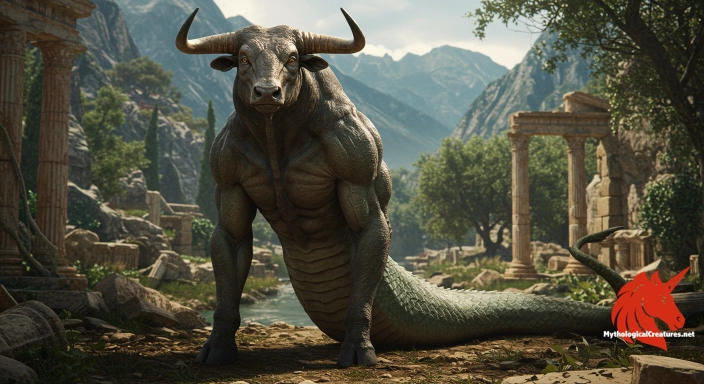
Dare to Meet the Ophiotaurus....
The Mythological Creatures Book Series
Yokai, Greek, Norse, Egyptian & Chinese. Five illustrated field guides to the creatures the old stories either warned or told you about.
Curated by the Mythological Creatures Team
Series editor: Mythological Creatures Directory
Primary desk: Northern & European Folklore Desk
(rev. November 2025)