
Macha: Macha is an ancient Irish sovereignty goddess associated with Ulster, known for her roles in land fertility, kingship, war, and horses.
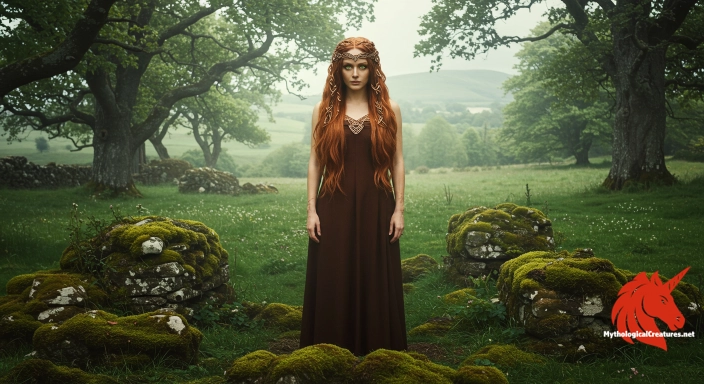
Macha
Macha - Represents the embodiment of sovereignty, linking land, fertility, kingship, war, and horses in ancient Ireland.
Origins & First Encounters
Macha stands as a captivating and multifaceted figure within the ancient Irish mythos, personifying the ever-present bond between the land and its people. Her origins are steeped in mystery, with early attestations emerging from mythic cycles that weave her identity into sacred places such as Navan Fort and Armagh. Embodying sovereignty over both the fertile earth and the tumult of warfare, she reflects the dual roles of nurturer and warrior. Over time, her story became intertwined with that of the Morrígna, a trio of formidable sisters whose collective power underpins the very idea of rulership. Ancient lore portrays her as an embodiment of the land’s vitality, bestowing prosperity as well as challenges upon those who dwell there. Diverse narratives, while seemingly contradictory, coalesce to underscore her central position in the natural and political order of early Ireland. Her myth was passed down through both oral traditions and medieval manuscripts, where her attributes of fertility, kingship, and martial prowess were extensively documented. Thus, Macha’s enduring presence continues to resonate as a profound symbol of both the natural world and the complexities of authority.
Source Texts & Tale Variants
The narrative of Macha is preserved in an array of ancient manuscripts, ritual texts, and oral storytelling traditions that have enriched her myth over the centuries. Early sources, including elements of the Ulster Cycle and the texts compiled in the Lebor Gabála Érenn, provide fragmented yet compelling glimpses into her divine persona. In these accounts, she appears under several guises, whether as the wife of Nemed, of Cimbáeth, or of Crunnchu, each version contributing a unique dimension to her character. Scholars such as Proinsias Mac Cana have explored these multiple identities, while voices like Gregory Toner suggest even further complexities in her portrayal. Folkloric tales from rural Ireland have preserved additional variants, highlighting her ability to both curse and bless the lands. Such sources reveal that despite variations, her association with sovereignty and fertility remains constant. Every retelling layers her narrative with details that reflect societal values and the ever-changing political landscape. The vast patchwork of texts and traditions ultimately testifies to Macha’s persistent allure and the significant role she played in the spiritual and cultural life of ancient Ireland.
Form & Powers
Artistic depictions of Macha evoke a sense of both majestic beauty and formidable strength, capturing the essence of a deity at once tender and indomitable. She is often illustrated with long, flowing hair that seems to mirror the wild, untamed landscape of the Irish countryside. Her eyes are rendered with an intense, watchful quality that suggests deep wisdom and a readiness for battle. Iconographic details such as intricately woven garments or a circlet allude to her status as a sovereign, reinforcing her divine right and authority. Many representations also feature horses or chariots, visually linking her with the spirit of warfare and the vitality of the land. Sculptures and manuscript illuminations frequently balance soft, nurturing features with robust, martial expressions. Although regional artistic traditions may vary in style, recurring motifs of radiant beauty combined with an austere, commanding presence are evident. In every portrayal, Macha’s physical form acts as a powerful reminder of her dual role as both the guardian of fertility and the instigator of conflict.
Regional Faces
Across Ireland, regional interpretations of Macha reveal a dynamic and locally adapted deity whose attributes shift to mirror the specific cultural and environmental milieu. In Ulster, her presence is most strongly felt, where landmarks such as Navan Fort and Armagh stand as enduring testaments to her once-sacred influence. Here, she is often portrayed as a warrior goddess whose blessings — and occasional curses — shape the destiny of tribes and territories. In other parts of the island, local legends tend to emphasise her more nurturing qualities, aligning her with seasonal fertility and the cyclicity of nature. Smaller communities have integrated her myth into celebrations and rituals that mark the passage of the year, thereby reinforcing her role as a guardian of the land’s bounty. Variations in her narrative also appear through the syncretic blending with other local deities, highlighting the adaptability of her myth over time. These local adaptations reflect both the diversity of Ireland’s socio-cultural landscape and the enduring relevance of her myth. In every region, Macha’s legend is finely tuned to resonate with the immediate concerns and aspirations of the people, ensuring her perpetual significance as a symbol of land and sovereignty.
Cultural Parallels
Macha’s enduring myth shares striking parallels with other sovereignty and fertility deities found throughout the ancient world. Her dual capacity for nurturing life and inciting martial prowess draws comparisons to the Norse goddess Freyja, whose narrative also balances themes of love, war, and power. Similarities can be observed with other Celtic figures such as Brigid, who, like Macha, merges the realms of healing and battle in her mythos. This intertwining of life-giving and destructive forces is a recurring motif in numerous cultures, underscoring a universal archetype of the sovereign goddess. Across Europe, such deities often serve as divine arbiter figures, validating the rule of kings and underscoring the sacred connection between the land and its people. Comparatively, Macha’s portrayal resonates with mythic patterns where divine feminine power manifests through both fertility and the harsh demands of conflict. These cross-cultural connections accentuate how themes of natural fertility and martial discipline are interlinked in the cultural psyche. Overall, Macha’s myth not only reflects indigenous Irish traditions but also forms part of a broader, global dialogue about the role of feminine divinity in shaping societal order.
Legacy & Modern Evolution
Macha’s myth has undergone a profound evolution, reflecting shifting cultural values and the transformative passage of time. Her ancient legacy, originally embedded in oral traditions and early medieval texts, has grown to symbolize the intricate bond between the land and its rulers. During the medieval period, she was revered as a mould for sovereign legitimacy, her story often invoked to legitimise the power of kings and the natural order. In modern times, her image has been revitalised, emerging as a powerful emblem of resistance, environmental stewardship, and female empowerment. Contemporary artists and writers frequently reference her multifaceted character, reimagining her as a timeless icon whose traits transcend the boundaries of myth. This modern reinterpretation has seen her legend intersect with broader discussions on sustainability, indigenous rights, and the role of myth in contemporary society. The transformative journey of her myth mirrors the ongoing dialogue between tradition and modernity, reaffirming her relevance. Celebrated in festivals, academic research, and various cultural expressions, Macha’s legacy endures as a dynamic symbol of Ireland’s rich and complex heritage.
Interesting Fact
Macha’s name is immortalized in iconic Irish locations such as Armagh and Navan Fort, emphasizing her lasting impact on the cultural and geographical landscape of Ireland.
For publishers and studios
Your next readers are already here
Many of our visitors are looking for books, campaigns, and resources that deepen their journey into myth. Position your title or setting here.
Discuss a placementQuick Creature Info
Features:
Associations:
Our Mythic Legendary Rating:

Also Sometimes Known As:
Habitat:
Supernatural Powers:
Physical Attributes:
Abilities:
Behavior:
Lore:
Related Creatures, Tales or Lore
- BBadb
- NNemain
- AAine
References
Discover Another Mythical Legend You May Not Have Heard Of?
Uncover the mysteries of ancient folklore and expand your knowledge of legendary beings from cultures around the world.
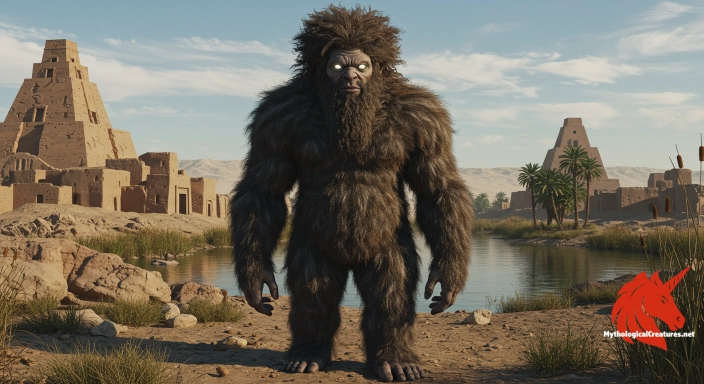
Dare to Meet the Lahmu....
Curated by the Mythological Creatures Team
Series editor: Mythological Creatures Directory
Primary desk: Northern & European Folklore Desk
(rev. November 2025)