
Beerwolf: Beerwolf is a German folk-tale monster, commonly associated with werewolves.
Beerwolf
Beerwolf - Represents both the monstrous nature of the werewolf legend and a political symbol of resistance against oppressive rulers.
the legend in five swipes.
the legend in five swipes.
The Earliest Known Accounts of the Beerwolf
The Beerwolf, a term rooted in German folklore, embodies the convergence of the traditional werewolf myth with a potent political allegory. Its inception is interwoven with the tumult of the Reformation, when voices of dissent and resistance began to take on new, symbolic forms. The creature surfaced in public discourse during a critical debate in 1539, and its image was soon entwined with the struggle against tyrannical authorities. Central to its mythos is the idea that a ruler who subverts the moral order becomes not merely a despot but a creature as feral as the wolf. This symbolism resonated deeply in a culture where the boundaries between secular authority and spiritual integrity were fiercely contested. The Beerwolf became a metaphor that reflected the profound anxiety of a society on the brink of religious and political upheaval. Its dual identity—both monstrous and emblematic of resistance—captured the imagination of those who dared to dream of overturning a corrupt order. The narrative served as a rallying cry in times of crisis, giving voice to the inexpressible anger against injustice. Over time, the image of the Beerwolf has transcended its literal interpretation and stands as a powerful reminder of the right to oppose oppressive rule. Its enduring legacy continues to inspire debate about the nature of sovereignty and the morality of rebellion.
Where can you read about the Beerwolf?
Primary historical records and folk narratives form the bedrock of the Beerwolf’s storied tradition. The term first gained prominence during a heated 16th-century debate, where Martin Luther invoked it to denounce rulers who overstepped both legal and moral boundaries. Early pamphlets and political treatises circulate with references to the Beerwolf, embedding it within the broader discourse of protest during the Reformation. The 1550 Magdeburg Confession further solidified its significance by introducing a clause that prescribed conditions under which a tyrant could be rightfully resisted. Documents from this period reveal an intricate blend of myth and political rationale, where supernatural imagery was used to underline very human grievances. Over successive decades, variations of the tale emerged, with some accounts emphasising a literal transformation into the beast and others portraying it as a metaphor for moral decay. These textual sources, steeped in the political and religious conflicts of the time, illustrate the dynamic interplay between legend and lived experience. As the narrative spread across communities, oral traditions further enriched its complexity. In later eras, reinterpretations continued to draw on these early records, ensuring that the Beerwolf maintained its dual role as a creature of myth and an icon of resistance. The evolution of these sources offers a fascinating window into the cultural history of dissent in early modern Europe.
What powers did the Beerwolf have?
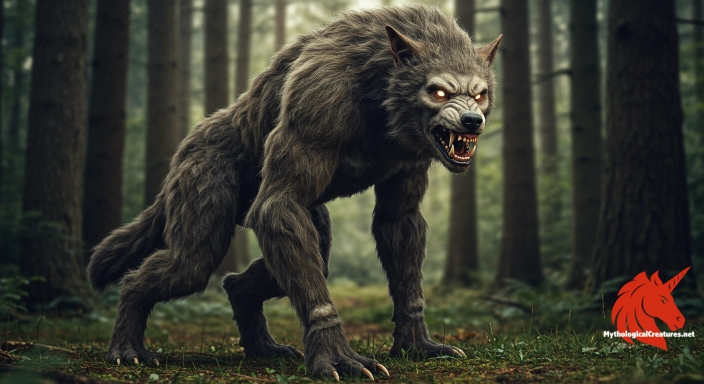
The physical depiction of the Beerwolf is a study in duality, merging both human and lupine characteristics into one formidable presence. Although early accounts focus more on its allegorical significance, later narratives offer striking visual details that amplify its terror. It is often portrayed as possessing a robust, muscular frame that hints at both human resilience and the raw power of wild canines. Glowing, penetrating eyes add an element of the otherworldly, suggesting an inner conflict raging between civility and savagery. Shaggy, unkempt hair blends seamlessly with distorted human features to create a visage that is both familiar and deeply unsettling. Prominent fangs and clawed hands are common motifs in depictions, symbolising the beast’s inherent capability for destruction. Variability in its size has been noted, with some renditions presenting the creature as an overbearing giant and others as a more lithe and dangerous predator. The tactile descriptions, from its rough fur to scarred, weathered skin, serve as visual allegories for the corrupting influence of power. Often captured in a state of transformation, the Beerwolf’s form is never completely static, mirroring the fluid boundary between humanity and monstrosity. In every portrayal, its physical manifestation is intended to warn of the dangers that lie in the subversion of both natural and social laws.
Where was the Beerwolf best known?
The portrayal of the Beerwolf varies widely across different regions, each adding its unique flavour to the legend. In central and northern Germany, the creature is deeply rooted in local folklore where it is often depicted as a cursed being, doomed to an eternal struggle between human decency and animalistic impulse. Some communities focus on the supernatural origins of the transformation, emphasising the inevitability of the curse. In nearby Eastern European tales, elements of shapeshifting and mysticism are interwoven with the core narrative, resulting in a creature that is as much an embodiment of local superstition as it is a symbol of resistance. French adaptations, influenced by the fervour of revolutionary sentiment, frequently stress the political dimensions of the myth. Alpine traditions, which highlight the harshness and isolation of mountainous life, sometimes merge the Beerwolf myth with local legends of wild spirits and errant souls. Such variations not only reflect geographical differences but also mirror the differing social and political climates. The regional adaptations enable the Beerwolf to serve as a versatile metaphor, capable of expressing local anxieties about power and corruption. This fluidity in depiction has allowed the mythos to endure, evolving to meet the needs of each community it touches. Ultimately, the diverse portrayals highlight how a singular myth can integrate multiple layers of meaning, enriched by the local colour of its retellings.
Beerwolf: Counterparts Around the World
An exploration of the Beerwolf in the context of European mythology reveals fascinating parallels with similar figures across the continent. Comparable legends, such as the Italian lupo mannaro and the Slavic varcolac, share with the Beerwolf a dual nature that oscillates between human frailty and bestial savagery. These myths, while differing in narrative details, all utilise the motif of transformation to explore themes of moral decay and the loss of identity in the face of overwhelming power. The Beerwolf’s function as both a literal and metaphorical beast distinguishes it, particularly when set against more traditional werewolf tales focused solely on horror. Unlike some counterparts that focus exclusively on the supernatural curse, the Beerwolf’s story intertwines political allegory with the motif of the beast. This synthesis of physical horror and ideological conflict creates a rich ground for comparative cultural analysis. Such figures consistently evoke a sense of dread that is as much about personal inner conflict as it is about external tyranny. Across various cultures, these myths serve as powerful commentaries on the nature of authority and the corruption that comes with absolute power. The dialogues between these legends underscore a shared cultural preoccupation with the thin line dividing civilisation from untamed nature. Ultimately, the Beerwolf stands as a unique yet resonant member of a larger tapestry of European folklore, linking mythic terror with the struggle for moral integrity.
Why is the Beerwolf still popular?
The evolution of the Beerwolf mirrors the changing tides of political ideology and the enduring allure of myth. Initially emerging as a stark metaphor for tyrannical rule during the Reformation, the creature’s legacy has gradually broadened to incorporate a wider spectrum of symbolic meanings. Over the centuries, it has been reimagined not only as a monstrous curse but also as an emblem of the right to resist unjust power. Its transformation from a literal beast to a complex political allegory highlights the flexibility of myth in adapting to societal needs. Throughout the post-Reformation era, the Beerwolf was adopted by various movements, including the Huguenots, as a rallying symbol against oppression. Modern interpretations continue to explore the creature’s duality, combining elements of gothic horror with incisive political commentary. Film, literature, and art have all found inspiration in its ambiguous nature, which challenges the viewer to confront the interplay between civilisation and savagery. Contemporary portrayals often delve into themes of inner conflict and the moral ambiguities inherent in the struggle against tyranny. As these narratives evolve, the Beerwolf remains a potent metaphor, reflective of both historical battles and modern dilemmas. Its legacy endures as a reminder of the timeless tension between order and chaos, making it a compelling figure for each successive generation.
Interesting Fact
Used metaphorically by Martin Luther to critique tyrannical authority, the Beerwolf combines myth and political symbolism.
Mythological Treasures
Norse Sagas: A field guide to the beasts of the Viking world
Drawn from the saga accounts themselves, with the powers, weaknesses and doom of each being set out.
Chinese Beasts: A field guide to the dragons and demon kings of Chinese myth
From river dragons to demon kings, with the legends that shaped five thousand years of storytelling.
Japanese Yokai: A field guide to the spirits and demons of Japanese folklore
Fifteen spirits, with the signs to watch for and what the old tales say to do if you meet one.
the legend in five swipes.
For authors, artists, and makers
Created something from the realm of myth?
If your book, deck, game, or artwork draws from legendary creatures and lore, you can showcase it here in a tasteful, year-round placement.
Share your projectQuick Creature Info
Origin:
Features:
Associations:
Our Mythic Legendary Rating:

Also Sometimes Known As:
Habitat:
Supernatural Powers:
Physical Attributes:
Abilities:
Behavior:
Weaknesses:
Lore:
Related Creatures, Tales or Lore
- LLoup-Garou
- LLycanthrope
- BBeast of Gévaudan
References
Discover Another Mythical Legend You May Not Have Heard Of?
Uncover the mysteries of ancient folklore and expand your knowledge of legendary beings from cultures around the world.
Dare to Meet the Nine-tailed turtle....

The Mythological Creatures Book Series
Yokai, Greek, Norse, Egyptian & Chinese. Five illustrated field guides to the creatures the old stories either warned or told you about.



Curated by the Mythological Creatures Team
Series editor: Mythological Creatures Directory
Primary desk: Northern & European Folklore Desk
(rev. November 2025)