
Beleth: Beleth is a fearsome demon king of Hell who commands 85 legions of demons.

Beleth
Beleth - Beleth is a central figure in demonological lore, renowned for his commanding presence and fear-inducing power as the king of Hell.
the legend in five swipes.
the legend in five swipes.
Where does Beleth come from?
Beleth stands as one of the most compelling figures in demonological lore, renowned for his imposing presence as a king of Hell. His origins are entrenched in medieval grimoires where he is depicted as a formidable entity commanding eighty-five legions of demons. Emerging in texts such as the Pseudomonarchia Daemonum and later the Dictionnaire Infernal, his early attestations intertwine biblical echoes with occult mystique. He is often portrayed riding a pale horse, with the eerie accompaniment of music that both heralds his arrival and serves as a portent to the summoner. His myth has been shaped by centuries of ritualistic interpretations, where his fearsome appearance functions as a test of a conjurer’s bravery. Beleth’s narrative is steeped in the cultural context of European occult traditions, drawing upon legends that merge ancient lore with medieval fascination for the infernal. His being is not merely that of a terror-inducing demon, but also reflects the sophisticated symbolism of power and authority in the nether realms. The enduring portrayal of Beleth, with its blend of regality and menace, continues to evoke intrigue and caution among both scholars and practitioners of the occult. Over time, his myth has adapted to shifting cultural and mystical paradigms while retaining the core elements of awe and dread.
Beleth in the Historical Record
The primary sources chronicling Beleth’s existence comprise seminal demonological texts that have guided occult practices for centuries. Detailed accounts in the Pseudomonarchia Daemonum recount how Noah’s son Ham is said to have invoked him post-diluvian, even crediting him with the inspiration for a mathematical treatise. In parallel, the Dictionnaire Infernal offers an elaborate set of instructions for summoning him, emphasising symbolic objects such as the silver ring worn on the middle finger. Various manuscripts and grimoires collectively build a multifaceted image of Beleth, each text introducing subtle nuances regarding his invocation and attributes. Divergent spellings like Bilet, Bileth, Byleth, or Bilith reflect the fluid transmission of his lore across different regions and time periods. Some accounts stress the necessity of using ritual implements like the hazel wand and drawing geometrical symbols to establish contact with his realm. The literature surrounding him not only records the practical aspects of conjuration but also embeds his persona within a broader mythological framework of power and terror. These texts serve as both practical guides and narrative explorations, offering multiple variants that enrich his story. Despite textual inconsistencies, each source converges on the idea of Beleth as a sovereign force whose presence demands both respect and a measure of courage.
What powers did Beleth have?
When depicted, Beleth is rendered with an aura of both regality and menace that befits his status as a demonic king. He is traditionally shown riding a pale, spectral horse, a striking image that symbolises his connection to both life and the void beyond. His visage is described as fierce and awe-inspiring, engineered to intimidate even the most resolute of conjurers. Certain descriptions imbue him with a blend of human features and unsettling bestial traits, suggesting a form that is both recognisable and otherworldly. His eyes, often portrayed as burning or luminous, seem to reflect the inner fires of the underworld and his dominion over myriad demonic forces. References to his appearance sometimes mention angular, almost sculptural facial features combined with a build that is both towering and imposing. The intricate details, from possible horn-like protrusions to an ambiguous crown or regal adornments, contribute to an image that is as symbolic as it is visual. Even his movement, arriving with a sound of layered, preternatural music, reinforces the impression of a being who straddles the boundary between the demonic and the majestic. Such detailed depictions not only serve to terrify but also encapsulate his commanding authority over the infernal hierarchy.
Where was Beleth best known?
Although originating from European demonological traditions, the portrayal of Beleth has been subject to diverse regional interpretations and adaptations. In many French occult manuscripts, subtle variations emerge, such as an increased emphasis on the ceremonial use of silver objects, which highlights local symbolic associations with purity and authority. Italian renditions during the Renaissance have occasionally interwoven elements of alchemy and astrology, thus imbuing his character with cosmic as well as infernal significance. In some German texts, the focus is placed on his martial presence and the rigorous structure of his demonic legions, aligning him with military hierarchies that were familiar to the period. Outside Western Europe, while direct references are sparse, similar demonic figures appear in Middle Eastern occult writings, where they are often portrayed as guardians of hidden knowledge. Modern Anglo-American occult circles have further adapted his myth, integrating traditional summoning rituals with contemporary esoteric interpretations. Each regional adaptation not only preserves the core aspects of Beleth’s myth but also colours his image with culturally specific symbols and rites. The evolution of his narrative across regions underscores the fluidity of myth and how local customs and beliefs can reshape the essence of a legendary figure. Such variations demonstrate that while his character remains consistently formidable, the details of his appearance and the rituals associated with him are finely tuned to local spiritual ecologies.
The Global Cousins of Beleth
Beleth’s character finds interesting parallels with other legendary figures within the vast tapestry of demonology and myth. His role as a king of Hell, commanding an army of demons, is reminiscent of the established hierarchies found in various occult traditions such as those featuring Asmodeus or Belial. Similar to these figures, he bridges the gap between chaos and order, embodying the archetypal ruler whose power is mediated through both ritual and terror. The musical motifs that herald his arrival evoke comparisons with other mythical beings whose presences are marked by supernatural sounds, thereby linking him to a broader cultural motif where music serves as a harbinger of the divine or the damned. Moreover, his detailed invocation rites and the use of specific ritual implements underscore a shared framework in ceremonial magic that transcends individual legends. Such comparative analysis highlights how various cultures have employed common symbols—such as the triangle, silver rings, and cardinal directions—to access or depict otherworldly forces. The intertextual similarities across different occult systems suggest that Beleth is part of a larger, interconnected network of mythic demonic figures. His attributes of noble menace and ritualistic exactitude also invite a comparison with celestial beings turned dark, further enriching the cross-cultural dialogue between light and shadow. Overall, the study of these parallels not only illuminates the commonalities in global occult traditions but also emphasises the unique stance Beleth occupies within the infernal pantheon.
Beleth: Modern Retellings and Reinventions
The historical evolution of Beleth reflects a complex interplay between enduring myth and evolving cultural sensibilities. In earlier grimoires, his depiction was starkly terrifying, with meticulously codified rituals that underscored the risks of meddling with forces beyond mortal comprehension. As centuries passed, his image has been reinterpreted to align with shifting paradigms in occult thought, often blending the fearsome with the enigmatic. Modern occult practices sometimes adopt a more nuanced view of Beleth, acknowledging him not merely as a source of terror but also as a symbol of controlled chaos and latent power. Contemporary portrayals in literature, films, and role-playing games have reimagined his attributes, often highlighting the intricate ritualism associated with his summoning. These adaptations have introduced new layers of symbolism, allowing modern practitioners and enthusiasts to explore the duality of his nature as both a tester of human resolve and an archetypal ruler of a shadowy order. His previous role as a strictly malevolent force is progressively giving way to interpretations that consider him a challenge and a mirror to the human condition, questioning the boundaries between courage and fear. The metamorphosis of Beleth’s image over time demonstrates how enduring mythic figures can be continually reshaped by successive generations. Ultimately, his legacy is a testament to the resilience of ancient lore, as it finds fresh expression in modern cultural and esoteric landscapes.
Interesting Fact
Beleth is uniquely associated with intricate summoning rituals that involve specific gestures and ritual symbols, underscoring his revered and fearsome status among demons.
Mythological Treasures
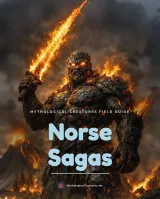
Norse Sagas: A field guide to the beasts of the Viking world
Drawn from the saga accounts themselves, with the powers, weaknesses and doom of each being set out.
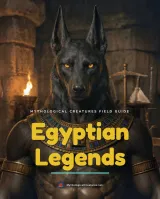
Egyptian Legends: A field guide to the gods and monsters of ancient Egypt
Guardians of the living and devourers of the dead, with the role each played in judgement.
Chinese Beasts: A field guide to the dragons and demon kings of Chinese myth
From river dragons to demon kings, with the legends that shaped five thousand years of storytelling.
the legend in five swipes.
Partner with us
Sponsor this space
Reach thousands of mythology enthusiasts with a curated placement on our creature pages.
Learn about sponsorshipQuick Creature Info
Associations:
Our Mythic Legendary Rating:

Also Sometimes Known As:
Habitat:
Supernatural Powers:
Physical Attributes:
Abilities:
Behavior:
Lore:
References
Discover Another Mythical Legend You May Not Have Heard Of?
Uncover the mysteries of ancient folklore and expand your knowledge of legendary beings from cultures around the world.
Dare to Meet the Pegasides....

The Mythological Creatures Book Series
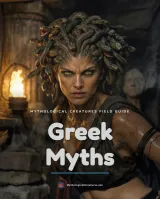
Yokai, Greek, Norse, Egyptian & Chinese. Five illustrated field guides to the creatures the old stories either warned or told you about.


Curated by the Mythological Creatures Team
Series editor: Mythological Creatures Directory
Primary desk: Hellenic & Ancient Mediterranean Desk
(rev. November 2025)