
Bezaliel: Bezaliel, also known as Busasejal or Basasael, is a fallen angel and one of the 20 Watchers detailed in the Book of Enoch.
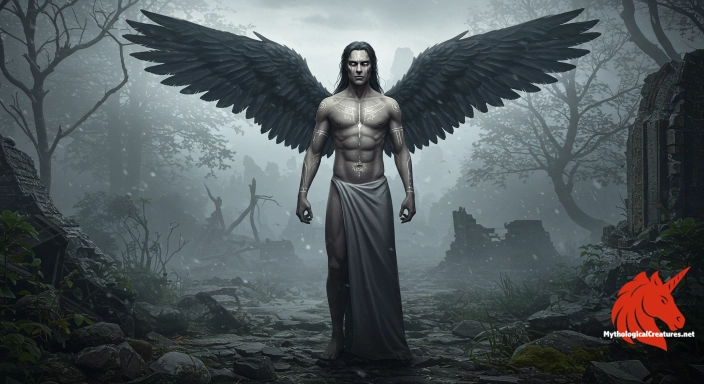
Bezaliel
Bezaliel - Bezaliel is a controversial figure among the 20 fallen angel leaders whose complex transmission in ancient texts highlights the challenges of apocryphal literature.
the legend in five swipes.
the legend in five swipes.
Who first told stories about Bezaliel?
Bezaliel, known also as Busasejal or Basasael, emerges from the ancient texts as a figure shrouded in enigma and moral complexity. His origins lie within the pantheon of fallen angels, where he is counted among the 200 watchers whose descent from grace profoundly altered the celestial order. The nuances of his character are further complicated by the multiple names and interpretations attributed to him, with some translations naming him as the "Shadow of God." This designation hints at an intrinsic connection between divine radiance and damaged perfection. His early attestations in the Book of Enoch contribute both to the allure and the controversy surrounding his mythic presence. The cultural context of his story reflects ancient attempts to rationalise the interplay between heavenly order and human sin. Despite the fragmentary nature of the surviving texts, Bezaliel's narrative offers insight into early angelology and the perils of pride. His tale, veiled in ambiguity, continues to prompt intrigue among those who study the mythic landscapes of antiquity.
What do the old texts say about Bezaliel?
The primary sources for Bezaliel’s legend are rooted in the apocryphal texts of the Book of Enoch, where he is listed among the fallen angels in a series of enigmatic accounts. Variations in manuscript traditions have resulted in multiple name derivations and a degree of textual uncertainty about his precise role. Some ancient translations, such as the R. H. Charles version from 1917, notably exclude him from the list of the 20 principal leaders, adding to the layers of controversy over his identity. His presence is also affirmed in later chapters, where his alternate name in chapter 69 cements his association with the concept of divine shadow. The fragmented nature of these texts means that the narratives surrounding him were passed down through generations with significant alterations. Certain lesser-known folkloric traditions have also alluded to his role, blending the lines between canonical scripture and oral myth. Every variant of his story provides unique interpretative challenges, inviting both scepticism and fascination. The collection of these diverse sources ultimately enriches the myth of Bezaliel, capturing the complexity of his fallen nature.
What powers did Bezaliel have?
While explicit physical descriptions of Bezaliel are sparse in the ancient manuscripts, later mythological interpretations have attempted to capture the essence of his celestial and corrupted form. He is often envisioned as an imposing presence, with an aura that glows with a once-divine light now tinged by the shadows of his fall. His wings, depicted in some artistic traditions as vast yet frayed, symbolise the tragic loss of heavenly grace. Iconography crafted over the centuries sometimes portrays him with a somber countenance, where eyes reflect both ancient wisdom and profound remorse. His form is occasionally rendered as both ethereal and formidable, suggesting that his stature could vary between being majestically expansive and hauntingly insubstantial. Some portrayals have introduced elements like a tattered cloak or subtle scars that hint at the spiritual decay within. The interplay of light and darkness in his imagined visage serves as a visual metaphor for the internal conflict inherent in his character. Despite the lack of uniform detail in primary texts, artistic depictions across cultures have imbued him with a dramatic, otherworldly quality that continues to inspire modern reinterpretations.
Where in the world is Bezaliel known?
Regional interpretations of Bezaliel’s myth reveal a tapestry of localised beliefs, each colouring his legend with distinctive cultural hues. In parts of the ancient Near East, he is sometimes portrayed with an air of tragic nobility, a fallen celestial being whose descent mirrors human vulnerability and error. In contrast, Byzantine traditions have adopted his Greek nomenclature to stress the philosophical implications of a divine luminescence tarnished by moral failings. Some Eastern Mediterranean texts depict him with more humanlike attributes, imbuing his character with both vulnerability and an enigmatic allure. Variations found in Jewish mystical literature often tie his existence to broader allegories about the dangers of overreaching ambition and the inevitable corruption that follows. Folk traditions from Eastern Europe further accentuate his spectral qualities, casting him as part of a broader narrative involving supernatural warnings during times of crisis. In these diverse cultural settings, regional narratives have adapted his story to address local moral and existential dilemmas. The convergence of these perspectives enriches the myth, demonstrating how Bezaliel’s essence has been continuously reimagined to suit the spiritual and cultural fabric of different communities.
Bezaliel: Counterparts Around the World
Bezaliel’s narrative finds compelling parallels in other mythological traditions that explore the themes of defiance and the downward spiral from divine exaltation. His story resonates with the broader archetype of the fallen angel, a motif that is also central to figures such as Lucifer in Christian lore. These analogous figures similarly embody the tragic conflict of rebellion against a higher order and the consequential loss of purity. In Near Eastern traditions, there are narratives of celestial beings who, like Bezaliel, have experienced irreversible damage through their defiant actions. The motif of a once-radiant entity now marked by corruption is a recurrent theme that bridges disparate mythologies. Comparisons can also be drawn with figures like Iblis in Islamic narratives, albeit with distinct underlying theological differences. This cross-cultural comparative lens underlines how ancient societies grappled with the complexities of pride, downfall, and redemption. Ultimately, Bezaliel’s myth serves as a testament to the universal human fascination with the interplay between light and shadow, a narrative thread found in many spiritual traditions across time and geography.
What happened to the legend of Bezaliel?
The evolution of Bezaliel’s myth over the centuries illustrates a dynamic reinterpretation of his once-tenuous presence in canonical texts. In early apocryphal works, he was a peripheral yet provocative figure whose ambiguities invited both caution and curiosity. As the medieval period unfolded, his story was increasingly interwoven with broader allegories addressing the nature of sin, redemption, and the human condition. In modern times, literary and artistic works have revivified his character, casting him not solely as a symbol of penance but as a complex emblem of existential loss and the duality of human nature. Modern reinterpretations often highlight his internal contradictions and the sorrow that accompanies divine alienation. His portrayal in various media—from novels to visual arts—has shifted focus to more introspective and symbolic dimensions, reflecting contemporary understandings of identity and morality. This evolving legacy has allowed Bezaliel to transcend simple categorisation, becoming a multifaceted icon that challenges the binary notions of good and evil. Thus, his enduring legacy continues to stimulate both academic debates and popular imaginations, ensuring that his myth remains alive in the cultural discourse of successive generations.
Interesting Fact
Although rarely mentioned in ancient texts, the meaning behind Bezaliel's name and his controversial status have spurred considerable scholarly debate regarding the true nature and role of fallen angels.
Mythological Treasures
Greek Myths: A field guide to the monsters of ancient Greece
Every monster here earned its place in legend, and each gets a full page of artwork and the story behind it.
Norse Sagas: A field guide to the beasts of the Viking world
Drawn from the saga accounts themselves, with the powers, weaknesses and doom of each being set out.
Egyptian Legends: A field guide to the gods and monsters of ancient Egypt
Guardians of the living and devourers of the dead, with the role each played in judgement.
the legend in five swipes.
Partner with Mythological Creatures
Bring your myth-based world into ours
From game settings to narrative worlds, we work with partners who treat myths with care. Share your project for a potential sponsor slot.
Partner with usQuick Creature Info
Associations:
Our Mythic Legendary Rating:

Also Sometimes Known As:
Habitat:
Supernatural Powers:
Physical Attributes:
Abilities:
Behavior:
Lore:
Related Creatures, Tales or Lore
- AAzazel
- SSemyaza
- AArakiel
References
Discover Another Mythical Legend You May Not Have Heard Of?
Uncover the mysteries of ancient folklore and expand your knowledge of legendary beings from cultures around the world.
Dare to Meet the Veles....
-c4e539dc-ddb2-4b73-be0d-8613d9631bb8_small.webp "Depiction of Veles")
The Mythological Creatures Book Series
Yokai, Greek, Norse, Egyptian & Chinese. Five illustrated field guides to the creatures the old stories either warned or told you about.


Curated by the Mythological Creatures Team
Series editor: Mythological Creatures Directory
Primary desk: Hellenic & Ancient Mediterranean Desk
(rev. November 2025)