
Bhaisajyaguru: Bhaisajyaguru, also known as the Medicine Buddha, is a central figure in Mahayana Buddhism revered for his healing powers.
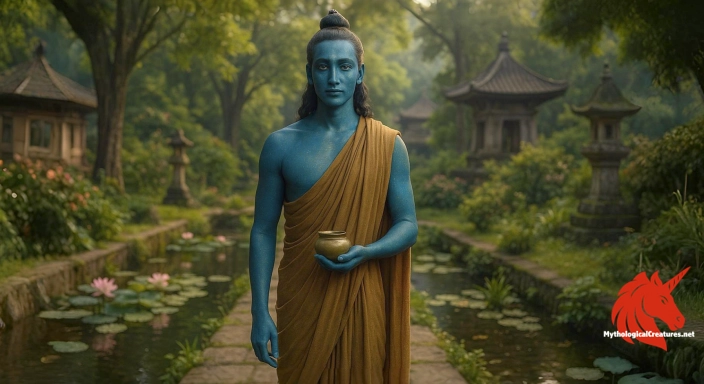
Bhaisajyaguru
Bhaisajyaguru - Represents the power of healing and the alleviation of suffering through enlightened teachings
Origins & First Encounters
Bhaisajyaguru, known widely as the Medicine Buddha, stands as a luminous embodiment of healing and wisdom within Mahāyāna Buddhism. His origins reach back to early Buddhist teachings where he came to be revered as the divine doctor capable of curing both the body and mind. Emerging from the rich spiritual and cultural milieu of ancient India, his first attestations appear in scriptures that blend philosophy with miraculous healing. The figure of the Medicine Buddha has since evolved into a powerful symbol across Asia, integrating elements of ritual, art, and devotion. His teachings present a transformative approach that addresses the dual nature of suffering and recovery through inner cultivation. Recognised in numerous languages and cultural traditions—from Sanskrit and Chinese to Japanese and Tibetan—Bhaisajyaguru's influence is both widespread and profound. His image, often adorned with elements that symbolise purity and life, underscores a timeless call to seek balance and wellbeing. Drawing on the interplay of physical remedies and spiritual insight, his legacy continues to inspire countless practitioners to alleviate suffering through mindful compassion.
Source Texts & Tale Variants
The stories of Bhaisajyaguru are found in a variety of ancient Buddhist texts that highlight his miraculous healing powers and his compassionate commitment to alleviating suffering. Among these scriptures, the Bhaiṣajyaguru-sūtra stands out as a primary source, offering detailed accounts of his vows, curative methods, and the transformative nature of his teachings. Additional textual traditions across different Buddhist schools expand on these narratives with creative embellishments and regional adaptations. In Tibetan, Chinese, Japanese, and Korean scriptural collections, variants of his legend emerge, each emphasising aspects of divine medicine and spiritual renewal. These manuscripts and oral traditions have been carefully preserved and transmitted over centuries, often with subtle differences that reflect local cultural and doctrinal influences. The diverse versions pay homage to his role as a sovereign of healing light, thereby enriching his mythos. Some accounts paint him as a celestial physician whose remedies extend beyond mortal ailments to spiritual malaise. In many narratives, his compassionate acts are narrated through the symbolic language of precious materials and celestial light, weaving a tapestry of myth and moral teaching.
Form & Powers
The iconography of Bhaisajyaguru is meticulously designed to convey both his otherworldly nature and the tangible power of healing. He is typically portrayed with an expression of serene compassion and an aura of calm that seems to transcend the ordinary. His form is often depicted in a Buddha-like pose, seated gracefully on a lotus pedestal that signifies transformational purity. A key attribute in his imagery is the holding of a gallipot or a medicinal jar, which symbolises his role as the dispenser of celestial remedies. The colour palette associated with him frequently features deep blues or lush greens, reminiscent of lapis lazuli, thereby reinforcing his designation as the King of Lapis Lazuli Light. Intricate details in his attire, including detailed robes and adornments of jewels and halos, further accentuate his divine presence and healing authority. Variations in his physical depiction can sometimes reveal subtle differences in posture or accessories, reflective of regional artistic traditions. These meticulously crafted details work synergistically to present a figure who is both accessible in compassion and exalted in spiritual mystique.
Regional Faces
Across the various regions that have embraced Buddhism, the depiction and veneration of Bhaisajyaguru manifest distinct regional flavours while maintaining his core identity as the Medicine Buddha. In Tibetan Buddhism, his portrayal is considerably ornate, often enriched with vibrant colours and intricate thangka artistry that highlight mystical symbols and mandala backgrounds. East Asian interpretations, particularly those in China and Japan, integrate local elements that resonate with indigenous healing practices, blending spiritual iconography with ritual medicine. Korean and Vietnamese traditions, while echoing the central themes of compassion and healing, reflect subtle stylistic modifications in facial expressions and garment details. Some regional adaptations even incorporate traditional medicinal philosophies, linking his divine interventions to local herbal practices and healing rites. In certain locales, he is not only revered as a healer but also celebrated as a guardian spirit, which enriches his worship during festivals and temple ceremonies. The evolution of his iconography in various regions demonstrates an impressive capacity to absorb and reflect the spiritual and cultural nuances of the local populace. This regional diversity has helped to sustain his enduring appeal across a wide spectrum of Buddhist communities.
Cultural Parallels
The role of Bhaisajyaguru as a divine healer finds resonances in the mythological traditions of diverse cultures around the world. Similar to the Greek deity Asclepius, who was honoured as the god of medicine, the Medicine Buddha represents an archetype dedicated to the alleviation of physical and spiritual afflictions. In ancient Sumerian lore, figures like Gula, the goddess of healing, also echo themes of cure and compassion, drawing intriguing parallels with Bhaisajyaguru’s restorative powers. Egyptian mythologies, with deities such as Serapis, further illustrate a shared spiritual pursuit where divine figures mediate between the realms of the corporeal and the transcendental. Across these traditions, a common narrative emerges: that of the divine physician whose intervention is essential in times of crisis and suffering. Bhaisajyaguru’s illustrative journey from the realm of myth to that of therapeutic symbolism mirrors these cross-cultural motifs of healing and regeneration. The shared iconographic and thematic elements underscore a universal desire to combat the uncertainty of illness and misfortune through spiritual means. These cultural intersections not only highlight similarities in ritual practices and symbolism but also enhance the global tapestry of healing mythology.
Legacy & Modern Evolution
Over the centuries, the representation of Bhaisajyaguru has undergone a remarkable evolution, mirroring broader transformations in Buddhist thought and artistic expression. Beginning with early Indian scriptures where his healing miracles were first recorded, his imagery evolved as it travelled along the Silk Road into vast East Asian territories. Traditional depictions have been continually reinterpreted by successive generations of artists and theologians, each adding new layers of symbolic meaning to his compassionate persona. In modern times, his image of serene healing is frequently invoked in meditation practices and wellness rituals, transcending purely religious boundaries to influence contemporary approaches to mental and physical health. His mantra, recited in a variety of settings from private meditation to international healing ceremonies, remains a powerful tool for spiritual rejuvenation. Modern Buddhist communities, alongside secular mindfulness practices, have embraced his symbolism as a metaphor for inner healing and resilience. Contemporary art forms—ranging from digital media to innovative sculpture—express a renewed interest in his iconography, instilling ancient imagery with fresh contemporary relevance. Ultimately, Bhaisajyaguru continues to inspire a bridging of ancient healing traditions with modern holistic practices, ensuring that the legacy of the Medicine Buddha remains a dynamic and enduring source of hope and restoration.
Interesting Fact
An interesting aspect of Bhaisajyaguru is that his identity as the Medicine Buddha sometimes leads to substitutions in temple iconography, as seen with the honzon change at Mount Kōya’s Kongōbu Temple where he replaced Akshobhya as the guardian of the East.
Support the directory
Promote your myth project and fund more research
Sponsor placements help keep this directory growing and free to use while giving your work a focused, relevant audience.
Learn how sponsorship worksQuick Creature Info
Associations:
Our Mythic Legendary Rating:

Also Sometimes Known As:
Habitat:
Supernatural Powers:
Physical Attributes:
Abilities:
Behavior:
Lore:
Related Creatures, Tales or Lore
- AAmitabha Buddha
- VVairocana Buddha
- SSakyamuni Buddha
References
Discover Another Mythical Legend You May Not Have Heard Of?
Uncover the mysteries of ancient folklore and expand your knowledge of legendary beings from cultures around the world.
Dare to Meet the Fjalar and Galar....

Curated by the Mythological Creatures Team
Series editor: Mythological Creatures Directory
Primary desk: Asian & Pacific Myth Cycles Desk
(rev. November 2025)