
Bisterne dragon: The Bisterne Dragon is a legendary dragon from the New Forest in England.
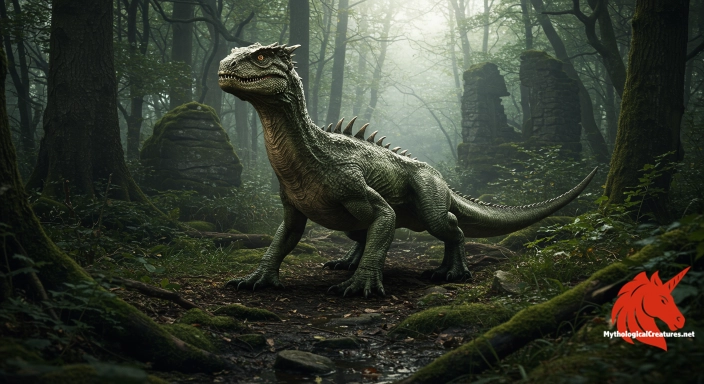
Bisterne dragon
Bisterne Dragon - One of the most famous pieces of folklore in the New Forest, symbolising the enduring spirit of local myth.
Origins & First Encounters
The Bisterne Dragon emerges from the mists of the New Forest with a compelling blend of wonder and awe. Its legend is deeply embedded in the local identity of Bisterne, weaving through the vernacular traditions of nearby Burley and Lyndhurst. The narratives surrounding this enigmatic creature seem to echo the ancient pulse of the British countryside. Born from a rich tapestry of oral lore, the legend hints at origins lost in the pre-modern era, yet its impact has lasted through countless generations. Local tradition suggests that the first murmurs of the dragon’s existence were shared by rural folk mindful of the wilderness’s mysterious power. Its story, handed down through intimate gatherings and whispered secrets, serves as a living reminder of nature’s untamed spirit. The creature’s myth has been nurtured by an environment steeped in history and superstition, reflecting the interplay between the natural and the supernatural. Over time, the Bisterne Dragon has come to symbolise the wild, eerie beauty of the New Forest and the enduring mystery of folklore. Its continuing appeal speaks of a culture that values both the frightening and the fascinating in its mythic heritage.
Source Texts & Tale Variants
The recorded accounts of the Bisterne Dragon are rooted in a blend of oral tradition and early folkloric manuscripts. Local chroniclers and storytellers have passed on varied narrations that capture the essence of this legendary beast. Some versions recount the dragon’s sudden emergence from the shadowy depths of the forest, while others detail encounters with courageous local figures. These episodic tales were often shared in community gatherings before being etched onto paper by diligent folklorists. A number of regional manuscripts, dating back to times when myth and reality intermingled, preserve the creature’s spectral presence. Each documented variant contributes its own nuances, adding layers to the lore without converging on a single definitive narrative. The creature’s story is as much a product of collective imagination as it is of historical memory. Oral accounts, maintained and modified by successive generations, have been key to its survival in cultural consciousness. The continuing recording and reinterpretation of these tales ensure that the Bisterne Dragon remains a vibrant element of local folklore.
Form & Powers
In detailed descriptions, the Bisterne Dragon is portrayed as a formidable and majestic creature, fusing raw power with an ethereal grace. Its elongated, sinuous body is covered in scales that seem to mirror the deep, shaded hues of the ancient forest. Tales abound of enormous, leathery wings that stretch wide enough to obscure the moon, hinting at the dragon’s ability to command the sky. A jagged row of spines along its back not only accentuates its fearsome silhouette but also suggests a natural armouring against foes. Its eyes, said to glow with an inner fire, project both a fierce intensity and a mysterious allure. Horns, curved and shadowed, crown its head, enhancing its imposing countenance. The creature’s tail, distinctive for its whip-like agility, has been attributed with both grace and latent menace. Variations in size are mentioned across different accounts, with some evoking the image of a colossal beast and others hinting at a more agile, mysterious figure. Each minute detail, recounted and embellished by local narrators, adds depth to the creature’s mythic portrayal.
Regional Faces
Regional interpretations of the Bisterne Dragon reveal a fascinating adaptability to local cultural environments. In the heart of Bisterne, the dragon is often depicted as a formidable guardian of ancient woods, embodying the raw and untamed essence of the natural world. In neighboring Burley, local lore tends to cast the creature in a more ominous light, as an unpredictable force whose arrival may portend significant changes. The communities in Lyndhurst, on the other hand, sometimes view the dragon with a sense of reluctant reverence, merging fear with respect. Each village appears to have tailored the myth to resonate with its unique historical and ecological context. The variations in narrative imbue the dragon with qualities that reflect local confrontations with nature and the unknown. Distinct accents in the story serve as cultural markers, linking the creature to regional identities and traditions. These adaptations illustrate how a single myth can traverse diverse contexts while remaining a symbol of power and mystery. Through these varied regional lenses, the Bisterne Dragon continues to be celebrated as a multifaceted emblem of local heritage.
Cultural Parallels
The legend of the Bisterne Dragon finds echoes in numerous draconic myths across Europe, where the symbolism of serpentine guardians is a recurring theme. Like its counterparts in Celtic lore, it is often portrayed as a powerful force, at once benevolent and perilous. Similar to dragons depicted in Nordic and Slavic traditions, the Bisterne variant embodies a connection to the wild and an unpredictable duality of creation and destruction. These cross-cultural parallels underscore a shared mythological vocabulary that has long linked the figure of the dragon to the elemental forces of nature. The creature’s role as both a protector and a harbinger of calamity resonates with widespread patterns in ancient storytelling. Its image, evolving with each retelling, aligns closely with the archetypal motif of loss and renewal found in many folklore traditions. In a broader comparative context, the Bisterne Dragon stands as a local reflection of universal themes such as the balance between civilization and the natural world. This synergy between regional uniqueness and common mythic motifs invites a broader exploration into the human fascination with dragons. The comparative study of such legends reveals a tapestry of symbolic meanings that traverse time and geography.
Legacy & Modern Evolution
Throughout the ages, the Bisterne Dragon has undergone a significant evolution in its portrayal and symbolic resonance. Early narratives cast the creature in a light that emphasised its terrifying presence and otherworldly might, reflecting the fears of a bygone era. In contrast, modern reinterpretations have softened this image, presenting the dragon as a complex emblem of nature’s resilience and a guardian of ancient landscapes. Contemporary art and literature have embraced the dual nature of the legend, portraying it as both awe-inspiring and enigmatic. Local festivals and cultural events in the New Forest now feature the dragon as a celebrated figure, bridging myth with the modern celebration of community heritage. This evolution demonstrates an increasing appreciation for the narrative depth and historical relevance of the creature. As traditional beliefs merge with modern environmental concerns, the legend has further developed into a metaphor for the enduring spirit of the wilderness. In a digital age that seeks to reconnect with roots, the Bisterne Dragon remains a potent symbol of local pride and the magic of folklore. Its legacy, continually adapted to the context of modern sensibilities, testifies to the timeless allure of myth-making.
Interesting Fact
Despite its menacing portrayal, the Bisterne Dragon remains one of the most cherished legends of the New Forest, symbolising the rich tapestry of local folklore and the mysterious allure of myth.
For indie creators
Give your myth project a permanent home
Indie authors, artists, small studios, and makers can secure an annual, non-intrusive sponsor slot that meets readers where they explore.
Obtain more informationQuick Creature Info
Origin:
Features:
Associations:
Our Mythic Legendary Rating:

Habitat:
Supernatural Powers:
Physical Attributes:
Abilities:
Behavior:
Lore:
Related Creatures, Tales or Lore
- SSt. George's Dragon
- WWawel Dragon
- WWelsh Dragon
References
Discover Another Mythical Legend You May Not Have Heard Of?
Uncover the mysteries of ancient folklore and expand your knowledge of legendary beings from cultures around the world.
Dare to Meet the Piasa....
Curated by the Mythological Creatures Team
Series editor: Mythological Creatures Directory
Primary desk: Northern & European Folklore Desk
(rev. November 2025)