
Bogle: The Bogle is a ghostly folkloric entity from Northumbrian, Cumbrian, and Scottish traditions, known for its elusive and perplexing nature.
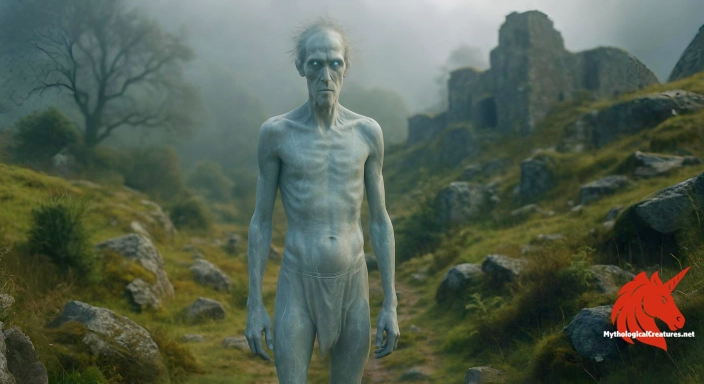
Bogle
Bogle - Represents the enigmatic and playful aspects of the supernatural in Northern British folklore
When was the Bogle first written about?
Bogles have long held a mysterious place in the folklore of northern Britain, emerging from the rich tapestry of Northumbrian, Cumbrian, and Scottish legends. They are known by several names including boggle and bogill, reflecting the variety of local linguistic traditions. Their earliest attestations lie in the oral narratives passed down from medieval times, where they were often recounted around hearths in remote hamlets. The creature is celebrated not as an agent of terror but as a playful, enigmatic spirit dedicated solely to perplexing humanity. Intricate tales intertwine the bogle with the natural essence of the rugged landscapes, evoking the wild, untamed character of the countryside. As time has advanced, the bogle has been embraced as a symbol of mysterious forces that operate beyond the boundaries of ordinary experience. Its role has evolved from that of a simple ghostly mischief-maker to a more complex emblem of the liminal spaces between the known and the unknown. The enduring presence of bogles in folklore is reflective of a broader cultural tendency to imbue everyday landscapes with otherworldly significance. Their narrative has been passed on through generations as both a source of amusement and as a caution against taking the mundane for granted. The bogle, in its various forms, continues to evoke wonder and bemusement among those who hear its legend.
Which books and scrolls describe the Bogle?
Early records and local manuscripts provide the foundation for our current understanding of the bogle, drawing heavily on oral tradition and local lore from Northumbria, Cumbria, and Scotland. These primary sources include a variety of chapbooks, anecdotal collections, and early folkloric studies that sought to capture the elusive nature of this spirit. Local ballads and regional diaries offer detailed—if sometimes inconsistent—accounts of encounters with bogles, highlighting their role in perplexing those who dare to wander near their haunts. Some versions of the tales place the bogle among a host of other supernatural entities such as Shellycoats and Barghests, blurring the lines between different types of folkloric beings. Variants found in recorded folklore emphasise that the bogle is not merely an apparition but a deliberate trickster, whose mischief often has no malevolent intent. Alternate narratives also link bogles to giants and ettins, extending their mythic presence into the realm of larger-than-life beings. The eclectic nature of these sources has allowed the bogle’s legend to grow in complexity over time. Transcriptions from the eighteenth and nineteenth centuries have preserved numerous regional expressions of the bogle myth, ensuring that its myriad forms have not been lost to time. Detailed accounts in local periodicals and folklore anthologies have provided scholars with snapshots of regional belief systems. These diverse narrative strands weave together a rich tapestry that continues to inform contemporary interpretations of the bogle.
Did the Bogle have any weaknesses?
The physical form of the bogle is as elusive and mutable as its myth, often appearing in a haze of indistinct features and shifting outlines. Many descriptions portray the creature as a spectral figure with a pallid, almost translucent complexion that seems to absorb the light around it. Witnesses have occasionally noted that the bogle’s features are blurred by the natural mists of the countryside, lending it an ethereal quality. Some accounts describe it as sporting ragged, earth-toned garments that merge with the shadows, while other tales suggest it may wear an otherworldly cloak woven from the very fabric of night. Its eyes, when discernible, are said to sparkle with an impish glint that betrays its intent to bewilder rather than harm. The phenomenon of its shape-shifting nature is a recurring theme, with the bogle sometimes appearing diminutive in one moment and imposing in another, an attribute that underscores its supernatural flexibility. In certain narratives, the creature’s form appears blurred, as if it were partly insubstantial or even a trick of the light. There is an enduring suggestion that the bogle’s physical appearance is intimately tied to the natural rhythms of its environment, adapting subtly to the terrain or weather. The ambiguity in its visual portrayal remains one of its most compelling and debated features. This spectral vagueness allows the bogle to traverse the boundary between the corporeal and the ethereal with ease, ensuring that its physical image is ever a subject of fascination and speculation.
Bogle: The Same Figure in Different Places
Regional interpretations of the bogle underscore its adaptability to local landscapes and cultural contexts, resulting in a diverse array of depictions across northern Britain. In Northumberland, tales often merge the bogle with the imagery of ancient giants, where slight, elusive figures give way to formidable yet capricious beings reminiscent of ettins. Cumbria, with its deep-rooted connection to nature, frequently portrays the bogle as a woodland spirit whose playful pranks both entertain and confound local inhabitants. Scottish renditions, on the other hand, sometimes blend the bogle with faerie lore, emphasising its connection to the mystical and the unexplained. In certain rural areas, the bogle is interwoven with supernatural creatures like Shellycoats and Barghests, creating a complex folklore that shares common threads with other spectral beings. Each regional narrative adapts the bogle’s characteristics to reflect local environmental features, from rugged moorlands to ancient forests. Variations in physical description and behavioural traits highlight the creature’s chameleon-like capacity to assume the character of its surroundings. The differing local accounts demonstrate how geographic and cultural influences can colour the portrayal of an otherwise singular mythic idea. Local festivals and ghost walks often celebrate these unique interpretations, ensuring that the bogle remains a living part of regional storytelling. Across these areas, the bogle’s essence as a perplexing and enigmatic figure is maintained, even as its details shift subtly with each retelling.
Legends Comparable to That of the Bogle
When compared with similar mythological entities from other cultures, the bogle occupies a distinctive niche marked by its playful mischief rather than malevolence. It shares certain characteristics with the Irish banshee, yet diverges significantly due to its focus on creating confusion rather than signalling impending doom. Elements of its behaviour and appearance also draw parallels with the Brownie in British folklore, though the bogle is less concerned with domestic tasks and more inclined towards confounding passers-by. In continental Europe, one might find echoes of the bogle in the spectral poltergeist, a spirit known for its unpredictable interventions in the human environment. The bogle’s shape-shifting and elusive traits resonate with global narratives about trickster spirits, echoing figures such as the Norse Loki, albeit with a much lighter spirit. Similarities can also be observed with the Welsh coblynau and the Cornish knockers, whose roles as both custodians of the natural world and playful pranksters closely mirror the bogle’s essence. These cross-cultural comparisons underline a universal human fascination with beings that straddle the line between the tangible and the transcendent. Each of these mythic figures, while rooted in different regional traditions, encapsulates the enduring motif of the spirit who exposes the vulnerabilities of human understanding. The bogle, with its capacity for both whimsy and mystique, thus reinforces the idea that supernatural tricksters are a nearly ubiquitous part of global folklore. In sum, the bogle serves as a rich point of convergence in mythological studies, highlighting the shared intuitive responses to the unknown across diverse cultures.
Bogle: From Folklore to Pop Culture
The characterisation of the bogle has evolved considerably from its early, simplistic portrayals as a mere mischief-maker to a complex symbol of the interplay between the natural and the supernatural. In ancient times, it was primarily seen as an inexplicable force in the natural world, a spirit whose sole purpose was to confound human expectations. Over the centuries, narrative elaborations have imbued the bogle with layers of symbolism that reflect shifting societal attitudes towards the mysterious. During the Romantic period, its stories were embraced as a counterpoint to the rational, industrial age, with poets and writers celebrating its ambiguous and elusive nature. In modern contexts, the bogle has been reimagined through various media, including literature, film, and art, where it is often portrayed as a benign guardian of cultural heritage. Contemporary storytellers have also appropriated the bogle’s image to question the boundaries of reality and myth, symbolising the enduring allure of the inexplicable. Its transformation from a local ghost to a figure of broader cultural significance highlights the dynamic nature of folklore in adapting to modern sensibilities. The bogle continues to inspire creative reinterpretations, from theatrical portrayals to community festivals, which celebrate its mythic origins and its capacity for playful subversion. Today, it stands as a testament to the evolution of mythmaking, serving both as an entertaining enigma and as an emblematic figure bridging past and present. This evolving legacy ensures that the bogle remains a vivid reminder of the power and persistence of traditional folklore in the modern world.
Interesting Fact
A distinctive feature of the Bogle is its sole dedication to baffling humans, making its otherwise ghostly existence uniquely paradoxical in that it neither harms nor aids, but simply confounds.
Reach myth fans
Connect your myth-driven brand with this audience
Our readers are writers, educators, gamers, and collectors who care about mythology. Enquire about a limited sponsor placement on creature pages.
Enquire about sponsorshipQuick Creature Info
Our Mythic Legendary Rating:

Also Sometimes Known As:
Habitat:
Supernatural Powers:
Physical Attributes:
Abilities:
Behavior:
Lore:
Related Creatures, Tales or Lore
References
Discover Another Mythical Legend You May Not Have Heard Of?
Uncover the mysteries of ancient folklore and expand your knowledge of legendary beings from cultures around the world.
Dare to Meet the Alcis....
-9b226505-6648-4c78-9fde-6693d431974f_small.webp "Depiction of Alcis")
Curated by the Mythological Creatures Team
Series editor: Mythological Creatures Directory
Primary desk: Northern & European Folklore Desk
(rev. November 2025)