
Boroboroton: The Boroboroton is a tattered futon possessed by a malevolent spirit.
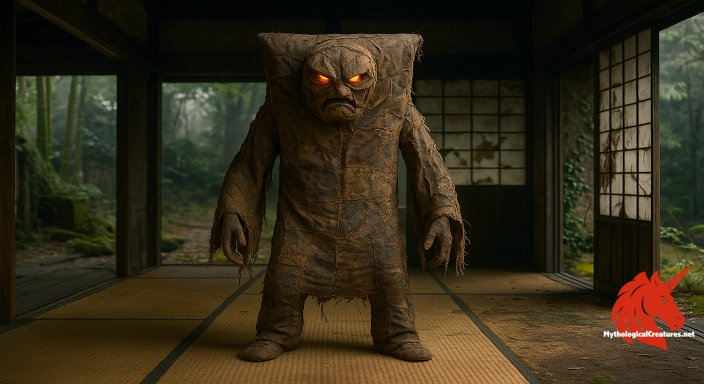
Boroboroton
Boroboroton - Embodies the animistic fear and retribution associated with neglected household objects
Origins & First Encounters
Boroboroton emerges from the enigmatic realm of tsukumogami, where even the most ordinary objects acquire a spirit when forgotten or neglected. Its name, meaning "tattered futon," hints at a humble origin as everyday bedding that has gradually transformed into a dangerous, sentient force. This yōkai is said to have been born out of the prolonged service and eventual wear of a once cherished futon, which, in its decay, absorbed a malevolent energy. Stories concerning its existence appear to mingle with the rich tapestry of Japanese folklore, where objects are more than mere tools—they echo the impermanence of life itself. Over the centuries, the belief in such animate artifacts has reflected deeper cultural attitudes toward material respect and the sanctity of household items. The transformation of the futon into a Boroboroton symbolises the delicate boundary between the useful and the uncanny. Though early mentions are sparse, its chilling presence has been passed down through generations as a reminder of the unforeseen consequences of neglect. The narrative of Boroboroton thus encapsulates both a moral warning and an enduring fascination with the hidden lives of the inanimate.
Source Texts & Tale Variants
Ancient manuscripts and pictorial collections from the Edo period occasionally hint at the existence of household spirits, among which Boroboroton features as a lesser-known yet intriguing example. Folk compilations and scrolls that catalogue everyday objects turned malevolent provide a fragmented but compelling record of its myth. Some traditional depictions, possibly influenced by early illustrated encyclopaedias of the uncanny, offer scant details that have since been elaborated upon by oral tradition. Various story variants describe it not only as a pure force of malice but also as a capricious prankster against unwary humans. Local recitations at small community gatherings have enriched its backstory with elements of both sorrow and retribution. The process by which an object like a futon transforms into a living spirit is recounted in multiple, sometimes conflicting, narratives that highlight accidental neglect or deliberate disregard. Although written sources are not abundant, the scattered textual references have been woven together by storytellers across regions. This melding of archival fragments and folk oratory ensures that the legend of Boroboroton continues to evolve with each retelling.
Form & Powers
The physical manifestation of the Boroboroton is as unsettling as it is symbolic, reflecting the wear and tear of its former utilitarian life. Frayed edges, threadbare patches, and faded textile patterns hint at a past when the futon served as a comforting presence in a household. The fabric is often depicted as appearing almost translucent under dim, flickering light, revealing a ghostly texture that moves with a life of its own. In some portrayals, subtle hints of embroidered faces or eyes seem to emerge from the tatters, conveying both a tragic history and an eerie sentience. Its overall form may appear fluid, as if the remnants of a once solid object are now in a state of perpetual decay and regeneration. The contrast between the softness of the cloth and the hard, relentless energy it exudes adds to its spectral allure. Variations in size have been noted in different tales, with some accounts describing a diminutive, almost overlooked presence, while others envision a futon so vast it casts a long shadow over its surroundings. Ultimately, the Boroboroton’s physicality serves as a vivid reminder that beauty, functionality, and danger may reside within even the most unassuming household item.
Regional Faces
Regional accounts of Boroboroton reveal a fascinating spectrum of interpretations that reflect local traditions and beliefs. In some parts of Japan, particularly in rural communities, the spirit of the tattered futon is seen as a cautionary figure—a silent reminder of the consequences of abandoning cherished possessions. In districts with long-standing rituals centred on domestic purity, the Boroboroton has occasionally been depicted with a mix of fear and pity. Urban legends, especially those circulating in the shadowy corners of old towns, suggest that the futon spirit lurks in abandoned inns and forgotten homes, embodying a more aggressive and vindictive nature. Distinct regional adaptations even hint that the futon might exhibit different temperaments depending on the local customs regarding household reverence. Some coastal communities have interwoven its legend with maritime superstitions, imagining it as a spectral visitor carried inland by the tides of change. Regional artworks, carved in wood and painted on scrolls, often capture the entity with subtle local stylistic nuances, blending horror with local nostalgia. The varied retellings across provinces underscore a broader cultural dialogue on respect for the past and the unforeseen life that everyday objects may inherit.
Cultural Parallels
The legend of Boroboroton shares intriguing thematic parallels with similar tales of household objects coming to life in other cultures. In parts of Europe, for instance, haunted dolls and decaying artefacts have long been considered vessels of retribution or sorrow, echoing the dual nature of utility and malice seen in Boroboroton. Across Asia, numerous traditions recount the emergence of spirits from neglected or abandoned items, suggesting a universal caution about the treatment of personal belongings. While the Japanese tsukumogami focus on the transformation of utilitarian objects, European folklore often centres around possessed heirlooms or relics imbued with tragic histories. Both narrative traditions emphasise the delicate balance between reverence and disregard for material things, reflecting a deep-seated belief in the persistence of life even after physical decay. The uncanny animation of inanimate objects, whether they be a battered futon or a cursed mirror, connects these diverse cultural motifs. More than mere horror tales, these stories serve as allegories for the consequences of neglect and the inescapable presence of history. In blending indigenous myth with global awe towards haunted artefacts, the legend of Boroboroton finds a rich ground for comparative analysis that spans continents and epochs.
Legacy & Modern Evolution
Over time, the depiction of Boroboroton has evolved from modest folkloric whispers into a vibrant symbol featured in modern horror, art, and literature. Early references grounded the spirit in a cautionary tale about the fate of neglected household objects, while more recent retellings have amplified its eerie characteristics to suit contemporary tastes. The transition from a quiet, almost wistful presence into a force of both malice and melancholic curiosity mirrors changing societal views on consumer culture and the life cycle of objects. In modern creative circles, the Boroboroton is often portrayed in manga, anime, and independent cinema as a harbinger of disrupted domesticity and forgotten memories. Digital art and online folklore have further expanded its mythos, blending traditional elements with a modern aesthetic steeped in nostalgia and horror. Exhibitions and cultural festivals occasionally include reinterpretations of tsukumogami, with the Boroboroton featured as an emblem of the unexpected life inherent in discarded things. This evolution reflects a broader cultural renegotiation of history, materiality, and the supernatural. The creature now stands as a complex metaphor for obsolescence, environmental decay, and the inexorable passage of time. Its enduring presence in both historical texts and modern media continues to captivate audiences, ensuring that the legend of the tattered futon remains a dynamic and multifaceted part of Japan’s rich mythical heritage.
Interesting Fact
An intriguing aspect of the Boroboroton is its embodiment of the tsukumogami concept, where everyday objects, once neglected and abandoned, gain sentience and an often sinister purpose.
For serious mythcraft
Your project belongs among the legends
If your work deepens how people understand, play with, or teach mythology, a sponsor placement here keeps it in front of the right readers all year.
Submit a sponsorship enquiryQuick Creature Info
Features:
Our Mythic Legendary Rating:

Also Sometimes Known As:
Habitat:
Supernatural Powers:
Physical Attributes:
Abilities:
Behavior:
Lore:
Related Creatures, Tales or Lore
- KKarakasa-obake
- CChochin-obake
- TTsukumogami (general concept)
References
Discover Another Mythical Legend You May Not Have Heard Of?
Uncover the mysteries of ancient folklore and expand your knowledge of legendary beings from cultures around the world.
Dare to Meet the Orang Minyak....

Curated by the Mythological Creatures Team
Series editor: Mythological Creatures Directory
Primary desk: Asian & Pacific Myth Cycles Desk
(rev. November 2025)