
Bugbear: The bugbear is a legendary hobgoblin-like creature from folklore, traditionally used to frighten disobedient children.
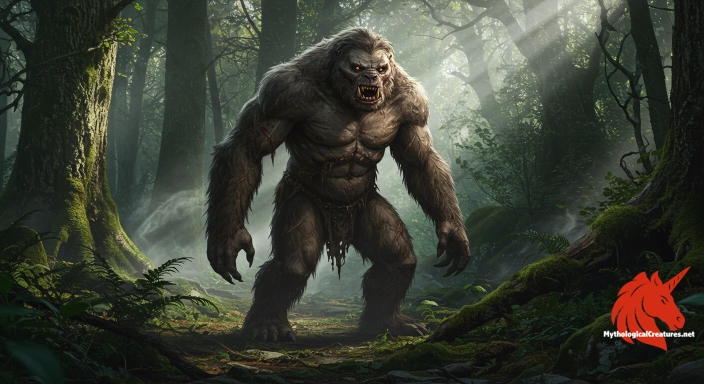
Bugbear
Bugbear - Represents the fear of the unknown during nighttime and serves as a tool for parental discipline in folklore.
Where does the Bugbear come from?
Bugbears have intrigued the popular imagination for centuries, emerging from the shadowy realms of medieval folklore to serve as both a figure of dread and a tool of discipline. Their origins lie in the rich tapestry of European myth, where they were initially conceived as elusive hobgoblins whose primary purpose was to caution wayward children. Rooted in cultural practices that sought to maintain social order, these creatures were invoked to explain the mysterious and often frightening aspects of the unknown. Their narrative, passed down through oral traditions and early manuscripts, presents a being that is at once ambiguous and formidable. The bugbear occupies a liminal space between a menacing night terror and a cautionary tale for the young, underscoring the power of myth in everyday life. Over time, their image has come to reflect both the fear of inexplicable dangers and the whimsical elements of a supernatural world. This creature seamlessly blends grotesque characteristics with a shadowy presence that haunts the darker corners of folklore. Even as modern narratives adapt and reinterpret its form, the bugbear continues to symbolise the intersection of fear, morality, and the mysterious forces that govern human behaviour.
Bugbear: Variants Across the Sources
The early accounts of the bugbear are not confined to any single document but rather weave through a network of medieval manuscripts, local ballads, and oral traditions. Various folklore collections reference this creature under different monikers, each version reflecting the local concerns and customs of its origin. In some early texts, the bugbear appears as an unnamed spectre responsible for the misbehaviour of children, its identity evolving over subsequent retellings. Diverse storytellers imbued the bugbear with qualities that ranged from the mischievously elusive to the downright terrifying, thus contributing to an ever-expanding lore. In certain regional compilations, the figure is detailed as a dark presence lurking at the fringes of everyday life, its narrative intertwined with moral admonitions. Alternative versions of the tale sometimes present the bugbear as a bizarre caricature, blending aspects of human frailty with the supernatural. Although not as prominently featured as other mythical beings in classical literature, its recurring appearance in folk narratives underscores its importance as a cultural symbol. These myriad accounts combine to form a rich mosaic that has been adapted and expanded through centuries of storytelling.
Bugbear: Powers, Strengths and Vulnerabilities
The physical portrayal of the bugbear is as diverse as the regions that celebrate its myth, frequently capturing the imagination with its unsettling features. Often imagined as a hulking, shadowy figure, its robust frame is accentuated by a thick, matted covering of hair that seems to absorb the light of its surroundings. In many depictions, the creature’s visage merges human and bestial traits, presenting a face with exaggerated features such as a crooked smile, sunken eyes, and a snarling expression that hints at underlying menace. Its limbs may be elongated and disproportionate, ending in claw-like appendages that further emphasise its inhuman appearance. Some accounts describe it as having oversized hands and feet, contributing to its lumbering, yet agile movements through the darkness. There are also portrayals where its facial features include a tangle of untidy hair and patchy facial hair, suggesting a wildness that defies taming. Despite the inconsistent details, the prevailing image is one of a creature that embodies the ancestral fear of the uncontrolled wild. Each iteration, with slight variations in size and form, reinforces the bugbear’s role as an ever-changing symbol of the unknown.
Where was the Bugbear best known?
Across the varied cultural landscapes of Europe and beyond, the bugbear emerges with distinct regional adaptations that mirror local beliefs and values. In the British Isles, it is often depicted as a dark, elusive entity that lurks in shadowy corners, a spectral enforcer of child conduct. In the Iberian and Latin American traditions, parallel figures like the cucuy share a striking resemblance, serving the same function of instilling discipline through the promise of night-time terrors. Meanwhile, in parts of Eastern Europe, similar creatures assume forms that are both cunning and grotesque, reflecting a blend of superstition and folklore unique to those regions. These local adaptations frequently incorporate environmental details—rumoured sightings near ancient woodlands or mist-covered hamlets enhance its mystique in each setting. The bugbear’s attributes can shift from one locale to another, sometimes presenting as more human-like or even imbued with a subtle trickster quality depending on regional storytelling norms. Such variations underscore the universal nature of the myth, while simultaneously celebrating cultural uniqueness. In every adaptation, the bugbear remains a potent symbol of the fears and parental disciplines that thread through community narratives worldwide.
Bugbear: Counterparts Around the World
The bugbear finds itself in dialogue with a broad spectrum of mythological figures across various cultures, each embodying the universal motif of a fearsome guardian of morality. Much like the boogeyman known in many Western traditions, the bugbear was designed to encapsulate the abstract fears of the unknown in a tangible form, making the intangible threat more relatable. In Hispanic traditions, the cucuy occupies a similar narrative space, serving as a nocturnal menace that haunts the dreams of misbehaving children. Additionally, figures such as the bugaboo or babau in other cultures highlight a shared archetypal role wherein these entities are both cautionary and mysterious. This intertextuality among disparate myths reveals the enduring human penchant for using personified fears as mechanisms for enforcing societal norms. The parallels extend further into the realm of hobgoblins and other mischievous creatures, each reinforcing messages of discipline and caution. Despite regional nuances in their portrayal, these figures collectively illustrate a cross-cultural consensus on the role of myth in shaping behavioural expectations. Such comparative analysis not only enriches our understanding of the bugbear but also highlights the interconnected web of traditions that span the globe.
What happened to the legend of the Bugbear?
The bugbear’s journey through time illustrates a fascinating evolution from a tool of parental caution to a multifaceted symbol in contemporary culture. Once a spectral warning to those who strayed from societal norms, it has morphed into an emblem of the darker, unspoken fears that continue to resonate within modern narratives. Contemporary literature, film, and even video games have reimagined the bugbear as a complex creature that straddles the boundary between horror and dark comedy. This transition reflects broader cultural shifts, where traditional folklore is reinterpreted to address contemporary anxieties. Modern adaptations often fuse the ancestral terror of the bugbear with new stylistic elements, resulting in portrayals that are as psychologically complex as they are visually striking. Its presence in modern media serves as both a nod to its folkloric roots and a commentary on the evolving nature of fear in an increasingly uncertain world. In academic and popular discourse alike, the bugbear has become a symbol of that which lurks at the edges of our collective imagination—a reminder of how myths adapt in response to societal change. Ultimately, the enduring legacy of the bugbear underscores its role as a dynamic figure, perpetually reshaped by the demands and creative impulses of each successive generation.
Interesting Fact
The term 'bugbear' has evolved over time and is now frequently referenced in modern fantasy games and literature as a nod to its fearsome folkloric origins.
For publishers and studios
Your next readers are already here
Many of our visitors are looking for books, campaigns, and resources that deepen their journey into myth. Position your title or setting here.
Discuss a placementQuick Creature Info
Origin:
Features:
Our Mythic Legendary Rating:

Also Sometimes Known As:
Habitat:
Supernatural Powers:
Physical Attributes:
Abilities:
Behavior:
Lore:
Related Creatures, Tales or Lore
- BBoogeyman
- HHobgoblin
- CCucuy
References
Discover Another Mythical Legend You May Not Have Heard Of?
Uncover the mysteries of ancient folklore and expand your knowledge of legendary beings from cultures around the world.
Dare to Meet the Tezcatlipoca....
Curated by the Mythological Creatures Team
Series editor: Mythological Creatures Directory
Primary desk: Northern & European Folklore Desk
(rev. November 2025)