
Tezcatlipoca: Tezcatlipoca is a central Aztec deity associated with the night sky, conflict, and natural phenomena such as hurricanes and obsidian.
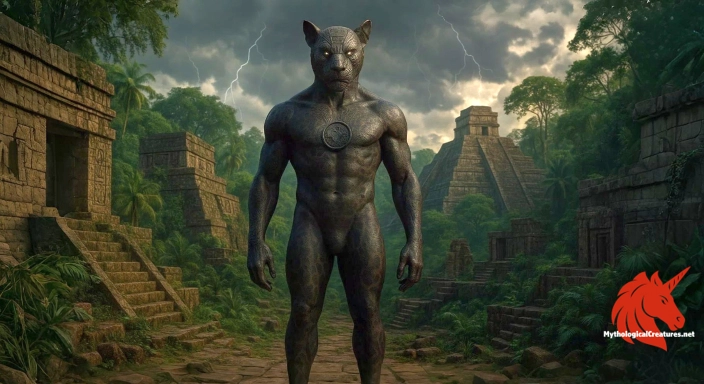
Tezcatlipoca
Tezcatlipoca - Central to Aztec cosmology and ritual, symbolising both creation and destruction
the legend in five swipes.
the legend in five swipes.
The Origin Story of Tezcatlipoca
Tezcatlipoca emerges as one of the most enigmatic figures in Aztec lore, celebrated as a deity of the night sky, obsidian, hurricanes, and conflict. His origins are interlaced with the primordial narrative of the cosmos, being born as a child to the dual deities Ometecuhtli and Omecihuatl, a lineage that echoes the themes of balance and duality. He occupies a central role in a religious tradition where forces of creation and destruction are inextricably linked. His worship was marked by the intense and dramatic festival of Toxcatl, a time when the interplay between life and sacrifice was profoundly experienced. The divine persona of Tezcatlipoca embodies both benevolence and ferocity, challenging the boundaries between order and chaos. The deity’s influence extended to the realms of fate and time, as evidenced by his integration into the intricate Aztec calendar system. His portrayal in art and ritual underscored a rich legacy that connected cosmic phenomena with the everyday human experience. The multifaceted nature of his character continues to captivate audiences, as his myth bridges the gap between the celestial and the terrestrial. Tezcatlipoca’s narrative is as much about the unpredictable forces of nature as it is about the struggles inherent in human existence. His enduring presence in myth reflects a complex tapestry of ritual, symbolism, and cultural identity that still intrigues modern scholars and enthusiasts alike.
How did the story of Tezcatlipoca change over time?
Ancient codices and manuscripts provide a window into Tezcatlipoca’s multifarious existence, offering a variety of depictions that explore his role as a celestial and terrestrial force. Illustrations in texts such as the Codex Borgia and the Codex Fejéváry-Mayer display him encircled by day signs, symbolising his dominion over time and fate. Varied narratives, found in both pre-Columbian artefacts and later colonial accounts, reveal differing emphases on his powers and attributes. Stories handed down orally across generations further embellish his myth, creating a rich diversity of interpretations that coexist with the written sources. Ritual texts associated with the festival of Toxcatl capture moments of both divine benevolence and ruthless retribution, underscoring his dualistic nature. In some variants, he is portrayed as a mediator among warring gods, while in others his violent aspect is foregrounded to illustrate the unpredictability of fate. The corpus of surviving documents, although fragmentary in parts, serves as both a historical record and an evolving narrative canvas. These sources together form a complex mosaic that continues to challenge and inspire interpretations of Tezcatlipoca’s role in Aztec cosmology. Diverse textual traditions contribute layers of insight into his multifaceted character, reaffirming his status as a self-contained symbol of cosmic dynamism. Each account, whether inscribed on ancient bark or woven into oral recital, enriches the myth with nuances that reflect both ritual practice and cultural identity.
Tezcatlipoca: What Manner of Being?
Tezcatlipoca is traditionally represented with a striking visage that marries both beauty and an intimidating presence. His countenance is often rendered with features reminiscent of dark, polished obsidian—a substance symbolic of reflection and hidden truths. In many depictions, a smoky mirror or disc plays a crucial role, serving as both a manifestation of his prophetic vision and a symbol of duality. Elaborate headdresses and regalia, adorned with celestial and jaguar motifs, further emphasise his connection to the night and natural forces. His eyes, intense and penetrating, seem to convey both wisdom and the potential for merciless retribution. The presence of the jaguar in his iconography, particularly as his nagual, reinforces the idea that his power is both animalistic and elemental. Artistic renditions vary from youthful, agile warrior depictions to more aged and ponderous forms that evoke the inevitability of fate. Intricate carvings and codex images imbue his attire with designs echoing swirling storms and geometric patterns reflective of the cosmos. Each portrayal communicates his confluence of destructive strength and creative power. The evolving artistic expressions of his body serve as a visual narrative that encapsulates the unpredictable nature of the forces he embodies.
What do different regions call Tezcatlipoca?
Regional depictions of Tezcatlipoca reveal how local traditions infused his myth with specific cultural flavours and interpretations. In the heart of the Aztec empire, his persona is strongly aligned with the tumultuous aspects of nature, such as violent storms and cosmic cycles, which resonate with the region’s ritualistic practices. In more arid and northern regions, his attributes often sharpen to mirror the stark and unforgiving character of the landscape, enhancing his depiction as a fierce, uncompromising force. Conversely, in the highlands and areas with agrarian traditions, subtle shifts in his imagery suggest a balancing act between destruction and the nurturing rhythms of the earth. Neighboring cultures further adapted his myth by incorporating local symbols and animal counterparts, thus enriching the broader Mesoamerican tapestry. The Olmec and Maya, for example, integrated aspects of his mythology into their own traditions, leading to overlapping iconographic themes of sacrifice and cosmic balance. In some regions, Tezcatlipoca’s aggressive traits are emphasised, while in others, his enigmatic and transformative power takes precedence. These local adaptations allowed communities to personalise their relationship with the divine, echoing environmental realities and unique sociocultural challenges. The fluidity of his image across regional boundaries underscores the dynamic interchange between shared cultural symbols and localized myth-making. Thus, his legacy is not fixed but continually reshaped by the evolving identities and needs of diverse Mesoamerican peoples.
Do other traditions know Tezcatlipoca by another name?
Comparative mythological analysis reveals considerable parallels between Tezcatlipoca and deities from adjacent Mesoamerican cultures. Striking similarities emerge between him and the K’iche’ Maya deity Tohil, particularly in the shared symbolism of obsidian, sacrifice, and the jaguar. Both figures capture the essence of duality, with narratives that oscillate between creative benevolence and formidable destructive power. In parallel comparisons, the Classic Maya god K’awiil also echoes elements reminiscent of Tezcatlipoca, particularly in his association with lightning, thunder, and transformative energies. These correlations are not coincidental but rather illustrate a broader cultural exchange of ideas where sacred themes and symbols transcended regional and ethnic boundaries. Elements of cosmic retribution, inequality of fate, and the cyclical nature of time are common threads woven through these diverse mythological traditions. Tezcatlipoca’s narrative, much like his counterparts in neighbouring cultures, reflects the universal human endeavour to understand and personify the unpredictable forces of nature. The shared iconographic motifs across Mesoamerica highlight the common anxieties and aspirations that ancient societies projected onto their gods. Through such cross-cultural comparisons, one can discern a network of symbolic interrelations that underpin the spiritual fabric of pre-Columbian societies. This vibrant interplay of myth not only reinforces a collective identity but also showcases the adaptive nature of ancient religious thought.
How has the image of Tezcatlipoca evolved?
The historical trajectory of Tezcatlipoca’s myth illustrates a fascinating evolution from ancient ritual to modern reinterpretation. Over the centuries, his image gradually transcended the boundaries of traditional Aztec religious practice to become a symbol imbued with both fear and admiration. In the colonial and post-colonial eras, scholars and artists rediscovered his narrative, reinterpreting his dualistic nature to resonate with contemporary themes of power and transformation. Modern visual and literary arts have embraced his enigmatic persona, often portraying him as a figure who challenges the established order while embodying the eternal struggle between order and chaos. Today, his symbolism is frequently adapted to comment on modern issues such as the unpredictability of life and the impact of human actions on the environment. This transition from a deity of ritual sacrifice to an icon of cultural and philosophical introspection illustrates the enduring adaptability of his myth. His legacy, replete with both awe-inspiring fear and compelling beauty, continues to stimulate debate and inspire reinterpretation. Museums, academic discourses, and popular media have all played a part in reviving and recontextualising his ancient imagery. The journey of Tezcatlipoca’s myth from sacred codices to contemporary cultural discourse testifies to the timelessness of his archetypal story. As interpretations continue to evolve, his presence remains a powerful reminder of the rich and complex heritage of Mesoamerican spirituality.
Interesting Fact
Tezcatlipoca’s multifaceted identity challenges conventional moral categories, as he simultaneously embodies creation, destruction, and the cyclical nature of time.
Mythological Treasures
Norse Sagas: A field guide to the beasts of the Viking world
Drawn from the saga accounts themselves, with the powers, weaknesses and doom of each being set out.
Egyptian Legends: A field guide to the gods and monsters of ancient Egypt
Guardians of the living and devourers of the dead, with the role each played in judgement.
Chinese Beasts: A field guide to the dragons and demon kings of Chinese myth
From river dragons to demon kings, with the legends that shaped five thousand years of storytelling.
the legend in five swipes.
Sponsor this space
Tasteful, fixed-fee placements for myth projects
No bidding wars or flashing banners. We offer simple placements for a small set of creators and brands aligned with our readers.
Request further detailsQuick Creature Info
Origin:
Associations:
Our Mythic Legendary Rating:

Also Sometimes Known As:
Habitat:
Supernatural Powers:
Physical Attributes:
Abilities:
Behavior:
Lore:
Related Creatures, Tales or Lore
- TTohil
- KK'awiil
- HHuitzilopochtli
References
Discover Another Mythical Legend You May Not Have Heard Of?
Uncover the mysteries of ancient folklore and expand your knowledge of legendary beings from cultures around the world.
Dare to Meet the Muut....
The Mythological Creatures Book Series
Yokai, Greek, Norse, Egyptian & Chinese. Five illustrated field guides to the creatures the old stories either warned or told you about.
Curated by the Mythological Creatures Team
Series editor: Mythological Creatures Directory
Primary desk: Americas & Indigenous Traditions Desk
(rev. November 2025)