
Muut: Muut is the Native American personification and messenger of death in Cahuilla mythology.
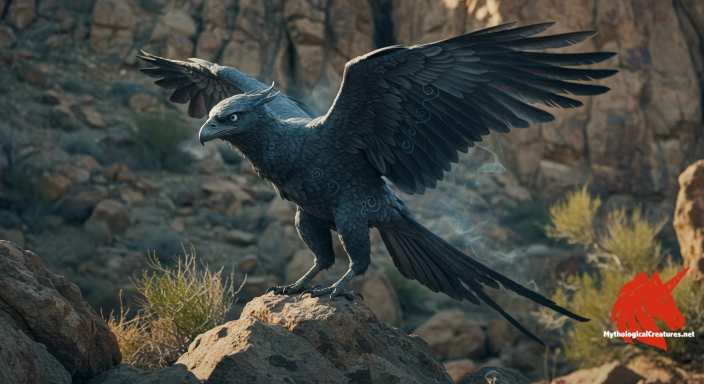
Muut
Muut - Embodies the balance between life and death, guiding souls through the natural cycle of mortality.
How did Muut enter folklore?
Muut embodies an enigmatic figure within the rich spiritual tapestry of the Cahuilla people, serving as both the personification and messenger of death. He originated in an era when the dualities of life and death were seen as intrinsically interwoven, a balance essential to existence. His first attestation emerges from deeply rooted oral traditions of southern California and northern Mexico, where the natural world was revered as a living narrative. This mythic figure was entrusted with a gentle yet pivotal role, guiding souls through transitions while symbolising the necessary passage from life to the beyond. The story of Muut is interlaced with the act of creation itself, as he was crafted during the primordial moments when Mukat, the Creator, established the cosmic order. Within these early cultural accounts, Muut is not a fearsome reaper but a dignified facilitator of the natural cycle of rebirth and decay. His character reflects a sophisticated understanding of mortality that is both respectful and celebratory. The narratives surrounding him encourage acceptance of death as a formative part of life's continuous journey. Muut's enduring presence highlights the harmony between renewal and cessation, an idea that has resonated for generations. His myth continues to symbolise balance and the gentle inevitability of nature's cycles.
How many versions of the Muut story are there?
The narrative of Muut is preserved through a wealth of oral traditions passed down over countless generations. His role as a messenger of death is captured in stories recited by elders and woven into the cultural practices of the Cahuilla community. Early ethnographic observations and later scholarly enquiries have uncovered versions of these myths, each imbued with layers of symbolic meaning. The accounts often reveal a complex character who is both a guide and a witness to the cycles of existence. Variants of the story have been recorded in community rituals, where the hooting of owls is celebrated as an auspicious sign. Though written records are limited, the steadfast oral tradition maintains a vibrant continuity of Muut’s character. These diverse sources offer a glimpse into how the Cahuilla people integrated cosmic truths about life and death into daily existence. Contemporary cultural studies have also played a role in reexamining these narratives, presenting new perspectives on his influence. Each retelling adds nuance and depth, reflecting not only mythological elements but also the lived experiences of the people. The multiple layers of Muut’s story have ensured that his legacy remains an integral part of cultural identity and belief.
How would you recognise Muut?
Muut is most commonly envisioned as an owl, a creature whose mysterious allure mirrors the depths of the night. His depiction is laced with the symbolism of twilight, where each detail of his form speaks to an unseen world beyond mortal comprehension. The plumage is often described as dark and shadowy, yet interwoven with subtle glints of light that hint at otherworldly beauty. Many traditions speak of his luminous eyes that, in their reflective gaze, suggest a profound empathy and awareness. The soft, measured hoots that accompany his presence add to this aura, evoking a soundscape that is as gentle as it is stirring. Descriptions sometimes blend avian characteristics with an ineffable aura, creating a figure that seems both animal and spirit. Artistic representations frequently capture a silhouette that embodies calm dignity and serene guidance, reinforcing his role as a mediator between life and the afterlife. The physical portrayal transcends ordinary natural forms, making him a symbol charged with metaphorical power. Variability in the visual details across different accounts only enriches his enigmatic status. Through these compelling physical attributes, Muut emerges as a timeless emblem of the delicate interplay between life and death.
What do different regions call Muut?
The portrayal of Muut exhibits nuanced differences across various locales within his cultural sphere, reflecting the rich diversity of the regional imagination. In some Cahuilla narratives, his presence is accentuated by the serene quietude of the desert nights, where his silent watchfulness is celebrated with reverence. Other regional variants paint him as a more active guide, whose gentle hooting reassures communities facing the uncertainties of change. The influence of local geography, with its rugged landscapes and starlit skies, has led to descriptive variations that mirror the natural surroundings. In northern regions where the interplay of light and shadow is particularly dramatic, Muut is often depicted with even greater emphasis on his ethereal and luminous qualities. The integration of indigenous symbols from neighbouring tribes occasionally blends with the traditional narratives, enriching his iconography. Each local adaptation highlights a distinct aspect of his character—whether it be wisdom, mystery, or consolatory guidance. Such variations underscore how environmental factors and community traditions shape the evolving image of this mythic guide. The regional discourse about Muut thus becomes a vibrant dialogue between the core myth and the unique cultural imprint of each community. These diverse retellings have fortified Muut’s position as both a unifying and a locally distinct spiritual symbol.
What parallels exist to Muut in other traditions?
Muut stands in intriguing contrast and comparison to other iconic figures found throughout global mythologies. His identity as a psychopomp resonates strongly with traditions where messengers of death are portrayed as caretakers of mortal transitions. Similar to the revered owls in various cultures, his form is often associated with wisdom and the passage of time. Comparisons can be drawn with deities and spirits in other indigenous and ancient traditions, where the divide between life and death is navigated by compassionate guides. In some cultures, comparable figures are cloaked in mystery and imbued with a gentle authority over the threshold of the afterlife, a sentiment that aligns with Muut’s own attributes. The prominence of the owl as a symbol in myth can be observed across continents, reinforcing the universal connection between nocturnal creatures and the supernatural. This cross-cultural motif accentuates the shared human experience of grappling with mortality and the unknown. Despite these similarities, Muut remains a distinct embodiment of the Cahuilla ethos, uniquely combining local natural phenomena and spiritual beliefs. The interplay between these comparative elements reveals common threads of symbolic thought while celebrating the individuality of each mythic tradition. In his comparisons with other cultures, Muut shines as both a familiar and distinctive archetype in the global lexicon of myth and legend.
Why does Muut still matter?
Over time, the figure of Muut has grown to represent far more than a mere messenger of death; he has become a timeless symbol of natural order and the cyclical nature of life. Contemporary interpretations often highlight his role as a gentle guide, whose presence infuses modern narratives with a sense of calm inevitability about mortality. The myth has been adapted in art, literature, and performance, where the owl imagery serves as a bridge between the ancient and the modern. His character continues to inspire creative expression, with artists reimagining his form to evoke both mystery and empathy. In modern spiritual circles, Muut is sometimes revered as a reminder to embrace the natural progressions of life and death with dignity and understanding. The transformation of his myth reflects an ongoing dialogue between traditional indigenous wisdom and the broader currents of modern thought. As cultural practices evolve, so too does the symbolic richness of Muut, ensuring his enduring presence in both academic and popular discourse. New media and digital storytelling have played significant roles in reinvigorating interest in his legend, making it accessible to a global audience. The reinterpretation of his myth contributes to a more compassionate understanding of mortality, celebrating death as an essential, transformative part of existence. In this way, Muut continues to live on as a powerful emblem of balance, resilience, and the timeless interconnectedness of all life.
Interesting Fact
Muut is unique among death deities for being both a gentle guide for souls and a vivid reminder of life's cyclical nature, often evoked by the haunting call of the night owl.
Sponsor this space
Tasteful, fixed-fee placements for myth projects
No bidding wars or flashing banners. We offer simple placements for a small set of creators and brands aligned with our readers.
Request further detailsQuick Creature Info
Origin:
Associations:
Our Mythic Legendary Rating:

Habitat:
Supernatural Powers:
Physical Attributes:
Abilities:
Behavior:
Lore:
References
Discover Another Mythical Legend You May Not Have Heard Of?
Uncover the mysteries of ancient folklore and expand your knowledge of legendary beings from cultures around the world.
Dare to Meet the Cihuatecayotl....
Curated by the Mythological Creatures Team
Series editor: Mythological Creatures Directory
Primary desk: Americas & Indigenous Traditions Desk
(rev. November 2025)