
Cihuatecayotl: Cihuatecayotl is the West Wind god of Aztec mythology.
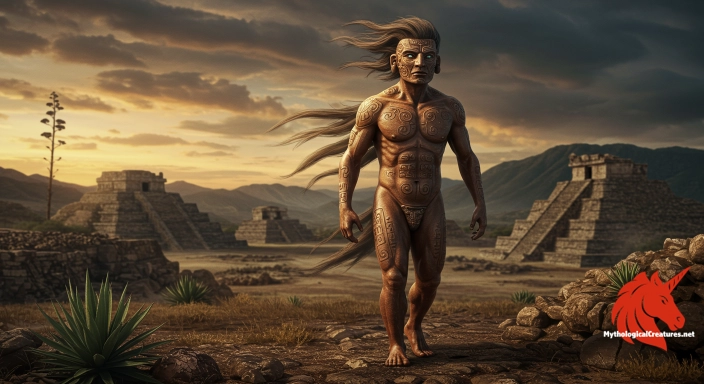
Cihuatecayotl
Cihuatecayotl - Represents the forces of the west wind and plays a crucial role in the natural order and weather cycles within Aztec cosmology.
Where does the story of Cihuatecayotl begin?
Cihuatecayotl emerges as a captivating figure within the rich tapestry of Aztec mythology, embodying the vigorous spirit of the west wind. His origins are interwoven with the cosmological beliefs of pre-Columbian Mesoamerica, where every cardinal direction held symbolic importance. He is first attested through indigenous oral traditions that were later recorded in early codices and ceremonial depictions. His essence is portrayed as merging tangible breezes with mystical energies that marked the transition between day and night. He complements his brothers—those governing the north, east, and south winds—thus forming an integral part of the elemental cycle. In the cultural context of the Aztecs, the west was associated with both endings and renewal, qualities reflected in his character. His depiction illustrates an understanding of nature where every phenomenon is imbued with divine purpose. Rituals and art celebrated his presence as a herald of seasonal change and cosmic balance. The duality of his nature, being both gentle and formidable, encapsulates the unpredictable temperament of the wind. Through centuries of tradition and surviving artefacts, Cihuatecayotl continues to captivate scholars and cultural enthusiasts alike.
How many versions of the Cihuatecayotl story are there?
Ancient codices and early post-conquest manuscripts offer vital glimpses into the narrative of Cihuatecayotl, even if his story survives only in fragmentary accounts. Multiple sources hint at his central role in ceremonial rites which celebrated the cosmic order of wind deities. Distinct narrative strands, collected from oral traditions and illustrated documents, add layers to his multifaceted identity. These varied accounts reveal a deity interwoven with symbolic representations that reflect the deeper philosophies of nature and life. Early Spanish chroniclers recorded descriptions of wind gods, although their interpretations were often steeped in cultural translation. Codices preserved in central Mexican collections intermittently highlight his association with the western horizon. Poetic recitations and ritual chants ensured that his name was passed down across generations. Different versions of his myth emphasise his role as a catalyst in the cycle of life and natural events. Artefacts and sculptures, though often abstract, are interpreted as bearing his symbolic imprints. Together, these diverse sources weave a rich and enduring tapestry that deepens our appreciation of his myth and significance.
Cihuatecayotl: What Manner of Being?
Visual depictions of Cihuatecayotl, though sparse, suggest a deity who embodies the fluid and ever-changing nature of the west wind. His form is often imagined as slender and ethereal, as if sculpted by the very breeze he commands. Ancient imagery portrays him with flowing hair and billowing robes that echo the dynamic movement of air currents. Some artistic interpretations include feathered adornments that allude to avian grace and a celestial connection. His visage frequently blends human features with ephemeral, almost abstract elements, invoking an otherworldly presence. Symbolic motifs such as the setting sun and swirling wind patterns often decorate his form, underscoring his dominion over the western skies. His eyes and countenance are depicted with a mix of serenity and latent energy, suggesting both calm and imminent storm. Variations in detail and scale across different regions highlight local artistic imprints. Intricate designs merge natural elements with spiritual iconography to capture his enigmatic essence. Overall, his physical representation serves as an artistic bridge between the tangible and intangible aspects of nature.
What do different regions call Cihuatecayotl?
Across the varied landscapes of the Aztec empire, the perception of Cihuatecayotl exhibits notable regional adaptations. In highland communities, his symbolic attributes are closely linked to agricultural cycles and the rhythms of seasonal change. Local indigenous groups have often infused his image with elements drawn from their specific environmental experiences. In coastal and lowland narratives, his portrayal tends to integrate motifs of open skies and sudden storms. Artisans across regions reimagine his iconography to reflect both the strength and gentleness of the west wind. Regional ritual practices further lend him a context-specific identity that blends localized traditions with the overarching Aztec cosmology. Some local depictions emphasise his role in weather regulation and the nurturing aspects of nature. In other areas, he is presented more abstractly, highlighting his unpredictable and transformative qualities. These diverse portrayals underscore a creative interplay between local myth-making and pan-Aztec spiritual ideals. The regional variations thus enrich his myth, offering multiple lenses through which his mysterious power is celebrated.
What figures resemble Cihuatecayotl?
Cihuatecayotl shares striking parallels with wind deities from various mythological traditions, prompting a compelling comparative exploration. His embodiment of the west wind invites comparisons with Zephyrus, the gentle yet potent deity of the west wind in Greek mythology. Both figures epitomise the delicate balance between calm and storm, serving as agents of seasonal transition. Their narratives highlight an enduring theme: the wind as a mediator between the natural and the spiritual realms. Similar motifs recur in other cultures, where wind deities are celebrated for ushering in renewal and change. In many traditions, these deities are portrayed as both nurturing and unpredictable, mirroring the dual nature of the wind. Such cross-cultural comparisons illuminate a shared human recognition of nature’s cyclical forces. The thematic parallels extend to the use of natural phenomena in ritual and art across different societies. This synthesis of ideas reveals a common admiration for the mysterious power of wind. Ultimately, Cihuatecayotl stands as a culturally enriched counterpart to his mythological peers, each celebrating the enigmatic vitality of nature.
Why does Cihuatecayotl still matter?
The evolution of Cihuatecayotl’s image reflects the dynamic interplay between ancient myth and modern reinterpretation. His early role as a divine personification of the west wind was deeply entwined with the spiritual and natural rhythms of Aztec life. Over time, colonial narratives and evolving scholarship have reshaped his character, adding new dimensions to his myth. Contemporary interpretations blend traditional iconography with innovative artistic expressions that address modern ecological and cultural themes. Indigenous artists and cultural historians now evoke his figure to celebrate heritage and the restless spirit of nature. Festivals, academic discussions, and modern art have gradually revived his presence as a symbol of resilience and change. His imagery is frequently updated, merging pre-Hispanic aesthetics with current artistic innovations. Modern reinterpretation challenges audiences to reconsider the timeless bond between humanity and the elemental forces. The enduring myth of Cihuatecayotl continues to spark dialogue on cultural identity and environmental stewardship. In this way, his legacy bridges millennia, uniting ancient cosmology with contemporary reflections on nature and society.
Interesting Fact
An interesting note is that the concept of wind deities is a recurring theme across cultures, with Cihuatecayotl standing alongside figures such as Zephyrus in Greek mythology, highlighting universal archetypes in myth.
For myth educators and toolmakers
Built a resource for mythology learners?
If you offer courses, teaching tools, or research platforms focused on myth and folklore, consider a discrete placement on our reference pages.
Introduce your resourceQuick Creature Info
Origin:
Features:
Associations:
Our Mythic Legendary Rating:

Habitat:
Supernatural Powers:
Abilities:
Behavior:
Lore:
References
Discover Another Mythical Legend You May Not Have Heard Of?
Uncover the mysteries of ancient folklore and expand your knowledge of legendary beings from cultures around the world.
Dare to Meet the Rabisu....
Curated by the Mythological Creatures Team
Series editor: Mythological Creatures Directory
Primary desk: Americas & Indigenous Traditions Desk
(rev. November 2025)