
Rabisu: The Rabisu are vampiric, demonic spirits from Akkadian mythology known as 'the lurker'.
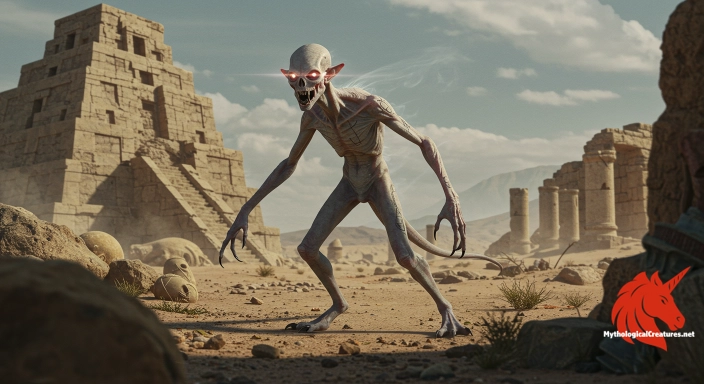
Rabisu
Rabisu - Their presence, though ambiguous, is feared as it often signifies impending doom or a marked destiny, intertwining mortal fate with divine retribution.
the legend in five swipes.
the legend in five swipes.
Rabisu: Where the Legend Started
The Rabisu are enigmatic entities embedded deeply within the ancient tapestry of Akkadian mythology, emerging from a culture where the boundaries between the human and the divine were fervently explored. Their name, which translates to 'the lurker' or simply 'lingerers', encapsulates an aura of quiet menace and mysterious presence. Fables from a long‐lost era speak of these beings as ethereal watchers, whose silent vigils were believed to oversee the fate of wayward souls. They were integrally connected to cosmic events, often mentioned in contexts that straddled both reward and retribution. In narratives infused with the weight of divine judgement, the Rabisu appeared as both harbingers of misfortune and as unintentional witnesses to mortal transgressions. Their association with the deity Enlil added a layer of divine sanction to their actions, highlighting a complex interaction between human morality and celestial oversight. Emerging during a period when natural and supernatural forces intertwined in everyday life, these spirits have come to symbolise the inescapable presence of fate in the realm of mortals. Over millennia, the Rabisu have transformed from mere mythic footnotes to emblematic figures that continue to incite fascination and caution in cultural memory.
Rabisu: The Written Sources
Ancient cuneiform tablets and ritual inscriptions provide fragmented glimpses into the lore of the Rabisu, revealing a legacy interwoven with both myth and mystery. Multiple texts, penned in the Akkadian language, mention these beings in contexts that range from ominous watchers to agents of divine intervention. A recurring motif in these sources is the duality of their purpose, where they are sometimes depicted as benign observers and at other times as bringers of ill fortune. Variations in name, including references to Rabasa and parallels with the Sumerian Maškim, underscore the evolving nature of their myth over centuries. These textual remnants, though sparse, offer an insight into the role they played during the Curse of Akkad—a moment when the divine wrath was thought to descend upon humankind. Intricate stories and fragmented legends, passed down through generations, reveal that the Rabisu were not confined to a single narrative thread but instead featured in a variety of allegorical episodes. Diverse accounts from different regions of ancient Mesopotamia have contributed to constructing a composite image of these elusive beings. The multiplicity of sources continues to fuel scholarly debate and imaginative reinterpretation to this day.
What did people say the Rabisu looked like?
Descriptions of the Rabisu are notably elusive, with surviving texts offering only hints about their physical nature through metaphor and allegory. They are often portrayed as shadow-like entities, whose forms defy the rigidity of human anatomy in favour of a fluid, ever-shifting presence. Some accounts suggest hints of a corporeal outline, reminiscent of a gaunt figure with elongated limbs disappearing into darkness, while others imply an entirely insubstantial essence. This nebulous quality only adds to their mystique, permitting them to traverse the boundary between the visible and the unseen. Occasional references to a faint, otherworldly glow hint at some residual connection to ethereal energy. Their appearance is less a matter of precise physical traits and more a symbol of the unknown, challenging any definitive attempt at visualisation. The Rabisu's capability to remain virtually undetectable in the light of day has made them enduring subjects of fear and fascination. This hybrid quality—being at once almost human yet profoundly spectral—enshrines them as icons of elusive terror and transformative myth.
How did location shape the story of the Rabisu?
Throughout ancient Mesopotamia and its neighbouring regions, the portrayal of the Rabisu has been subject to various regional reinterpretations and adaptations. In the heartland of Akkad, these entities were perceived as agents of fate—quietly observing and influencing the moral course of individuals. In Babylonia, cultural nuances shifted their image, imbuing them with an aspect of dually auspicious and ominous presence that depended on one’s spiritual state or divine favour. Regional narratives sometimes emphasised their role as protectors of sacred spaces, while in other local traditions they embodied the perils of straying from societal norms. As myth travelled and interacted with different linguistic and cultural communities, the Rabisu absorbed local colour, sometimes merging with legends of other spectral beings. Their portrayal in various local texts reflects a dynamic interplay between universal themes of cosmic justice and region-specific concerns of order and chaos. Despite these variations, a persistent theme across cultures is their role as silent observers, lurking on the periphery of human experience. Local adaptations continue to enrich the Rabisu myth, affirming their status as a multi-faceted figure in early mythological thought.
Rabisu: Cross-Cultural Comparisons
In the broad panorama of supernatural folklore, the Rabisu occupy a comparative niche as entities that blur the boundaries between daemons, spirits, and the undead. They share common ground with figures from other mythic traditions who similarly linger at the thresholds of human existence and the inexplicable supernatural. Much like certain European legends of nocturnal predators or the enigmatic revenants found in Eastern narratives, the Rabisu evoke a timeless fear of the unseen dangers that reside in twilight spaces. Their depiction as both observers and occasional instigators of cosmic retribution draws parallels with demonic intermediaries and other liminal creatures in ancient lore. These comparisons indicate that, while the specifics of their character vary, a convergent human experience of dread and awe underpins the myths surrounding such beings. In this way, the Rabisu have much in common with other culturally distinct yet thematically similar guardians of moral and existential boundaries. Their evolving image aligns with a broader tradition that seeks to articulate the unanswerable questions of fate, spirituality, and the afterlife. Cross-cultural parallels underscore their enduring resonance as symbols of both divine oversight and mortal vulnerability.
How did the Rabisu survive into the modern world?
The Rabisu's journey from the recesses of ancient lore to their modern reinterpretations highlights a profound legacy that transcends time and geography. Their myth, once embedded in the ritualistic and moral fabric of early Mesopotamian society, has gradually morphed into a symbol resonating with modern themes of ambiguity and existential dread. Contemporary portrayals often accentuate their vampiric and spectral qualities, aligning them with popular horror imagery and the archetypal fears of the unknown. This ancient myth continues to inspire artists, writers, and filmmakers who use it to explore themes of hidden malevolence and the eternal watchfulness that lurks at society's fringes. In modern occult philosophies, the Rabisu emerge as emblems of the inescapable forces that govern both life and the hereafter. Their gradual evolution—from shadowy mythic figures to characters in modern gothic narratives—demonstrates the fluid adaptability of ancient myths in addressing contemporary anxieties. The convergence of old and new in their depiction has allowed the Rabisu to remain a potent symbol of the mysterious, unpredictable forces that shape the human condition. In sum, their legacy endures as a bridge connecting the ancient spiritual world with the modern quest for meaning in a complex, ever-changing universe.
Interesting Fact
An intriguing aspect of the Rabisu is that they may not actively seek to harm; instead, their presence serves as a portent of destiny, blurring the lines between messenger and malefactor.
Mythological Treasures
Norse Sagas: A field guide to the beasts of the Viking world
Drawn from the saga accounts themselves, with the powers, weaknesses and doom of each being set out.
Egyptian Legends: A field guide to the gods and monsters of ancient Egypt
Guardians of the living and devourers of the dead, with the role each played in judgement.
Chinese Beasts: A field guide to the dragons and demon kings of Chinese myth
From river dragons to demon kings, with the legends that shaped five thousand years of storytelling.
the legend in five swipes.
For publishers and studios
Your next readers are already here
Many of our visitors are looking for books, campaigns, and resources that deepen their journey into myth. Position your title or setting here.
Discuss a placementQuick Creature Info
Origin:
Our Mythic Legendary Rating:

Also Sometimes Known As:
Habitat:
Supernatural Powers:
Physical Attributes:
Abilities:
Behavior:
Weaknesses:
Lore:
Related Creatures, Tales or Lore
- LLilu
- EEkimmu
- SStrigoi
References
Discover Another Mythical Legend You May Not Have Heard Of?
Uncover the mysteries of ancient folklore and expand your knowledge of legendary beings from cultures around the world.
Dare to Meet the Monaciello....

The Mythological Creatures Book Series
Yokai, Greek, Norse, Egyptian & Chinese. Five illustrated field guides to the creatures the old stories either warned or told you about.
Curated by the Mythological Creatures Team
Series editor: Mythological Creatures Directory
Primary desk: Hellenic & Ancient Mediterranean Desk
(rev. November 2025)