
Tohil: Tohil, also known as Tojil, is the Maya god of fire and a central deity of the K'iche Maya.
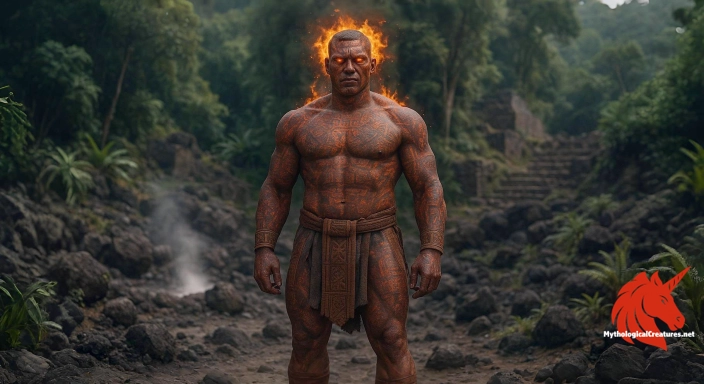
Tohil
Tohil - Central figure in Maya ritual practices; his worship and the accompanying sacrifices played a key role in the cultural identity and historical conflicts between the K'iche and Kaqchikel peoples.
Tohil: First Encounters and Early Records
Tohil stands out as a central deity in the pantheon of the ancient Maya, embodying the elemental force of fire and the fierce spirit of war. His origins are deeply rooted in the myths of the K'iche' Maya during the Late Postclassic period, where he emerged as a symbol of both sustenance and transformation. With early attestations found in foundational narratives such as the Popul Vuh, his cult quickly became intertwined with ritual and political authority. His dual nature as a creator and destroyer underscored the divine mandate behind the practice of sacrifice. Often revered as the bringer of fire and a potent warrior, Tohil commanded respect and fear in equal measure. His complex persona was closely linked with the cycles of day and night, illustrating the eternal tension between light and darkness. As the patron deity of the K'iche', he demanded blood offerings that maintained cosmic balance and reaffirmed community identity. The interplay between his nurturing aspects and his warlike temperament encapsulated the Maya understanding of life, death, and renewal. His myth not only provided a religious framework but also shaped the cultural identity of his worshippers. The legacy of Tohil remains a testament to the intricate tapestry of Maya spirituality and social order.
Tohil: The Written Sources
Primary accounts of Tohil are vividly preserved in the sacred narratives of the Popul Vuh, where his demand for blood sacrifice is rendered with rich symbolism. Ancient codices and inscriptions further offer insights into the rituals and ceremonies that celebrated his fiery nature. Early artistic depictions, ranging from sculptures to temple reliefs, attest to his pivotal role in Maya religious life. Oral traditions, passed down through generations, have added layers of nuance to his myth, providing variant accounts that highlight regional and cultural differences. Some narratives emphasise his role as both a giver and a taker of life, while others underline his connection to the transformative power of fire and war. These multifaceted story variants reveal a deity whose characteristics evolved alongside the shifting social and spiritual landscapes of the Maya. The blending of Tolteca influences with indigenous Maya customs in these texts further emphasizes his composite identity. Each source, whether carved in stone or spoken in village lore, enriches our understanding of his demanding and awe-inspiring presence. Over the centuries, these diverse accounts have coalesced into a robust and enduring mythos that continues to fascinate scholars and descendants alike.
Tohil: Form, Powers and Weaknesses
Visual representations of Tohil are imbued with symbolism that marries human features with serpentine elements to capture his divine power. His depictions frequently reveal a resolute face that appears to emerge from the jaws of a serpent, an image that bridges the natural world with the supernatural realm. The use of flame motifs and radiant, gleaming eyes in his iconography conveys the impression of an inner fire that both illuminates and intimidates. Detailed carvings on stelae and temple facades show an athletic, warrior-like build that underscores his role as a combatant deity. Intricate ornamentation, often reminiscent of ceremonial regalia, punctuates his form, reinforcing the sanctity of his divine authority. Size and scale vary significantly in the surviving artefacts, from modest figurines meant for private altar spaces to monumental carvings that dominate public ritual areas. Each artistic depiction is laden with meaning, showcasing subtle interplays of light and shadow that evoke the dual forces of creation and destruction. The careful integration of serpentine curves with human contours in these images not only symbolises his control over elemental fire but also marks him as a bridge between humanity and the cosmos. Every line and detail in his portrayal invites viewers to contemplate the mystery of divine power and the sacred nature of sacrifice. Such rich physical representations have ensured that Tohil remains a vivid presence in the visual culture of the Maya.
How does Tohil differ by region?
Mythological interpretations of Tohil vary considerably across the diverse regions of Mesoamerica, each adding its own local flavour to his divine persona. In the highlands among the K'iche', he is venerated as a multifaceted god whose fiery disposition is inextricably linked to the rugged landscapes and imposing mountains. Local communities have adapted his myth to resonate with their immediate experiences of nature, emphasising his role as both a nurturer and a formidable war deity. In some regions, his rituals centred on human sacrifice and blood offerings are imbued with a sense of communal responsibility and cosmic balance. Conversely, neighbouring groups such as the Kaqchikel have reinterpreted his legacy, with legends even describing them as 'fire thieves' in defiance of his rigid demands. These contrasting regional narratives illustrate how localized customs and beliefs can reshape the features of a broadly revered deity. Artistic and ceremonial expressions across different communities further highlight subtle differences in his portrayal, from the emphasis on his warlike vigour to his benevolent, life-affirming aspects. The fluidity of his myth across regions underscores both the adaptability of ancient belief systems and the enduring significance of Tohil in local cultural identity. Regional festivals and indigenous rituals continue to celebrate his image in ways that honour both ancient traditions and contemporary interpretations. This regional diversity enriches the overall tapestry of his myth, demonstrating that Tohil’s influence transcends geographical boundaries while remaining deeply personal to each community.
Is Tohil unique, or found elsewhere?
The multifaceted character of Tohil invites intriguing comparisons with similar deities from across Mesoamerica and beyond. His dominion over fire, war, and sacrificial rites naturally draws parallels with the Aztec god Xiuhtecuhtli, another deity whose realm is defined by the transformative power of flame. Early iconographic studies also point to a close relationship with Q'uq'umatz, as both deities share serpent imagery and themes of renewal, even though they eventually diverged into separate cults with distinct priesthoods. This blending of attributes reflects a broader mythological trend where deities embody multiple, sometimes paradoxical, natural forces. Tohil’s dual role as a nurturer and destructor is echoed in various sun and elemental gods, highlighting a universal approach to encapsulating the forces of nature in divine form. Comparisons extend further when considering the symbolism of fire in almost every ancient civilization—a reminder of its capacity to both sustain and devastate. In exploring these cross-cultural connections, one witnesses how ancient societies articulated similar fears and hopes through parallel deific representations. Such comparative study not only broadens our perspective on Tohil's significance but also reinforces the idea of a shared human impulse to understand and mythologise elemental power. The intricate web of similarities and differences among these deities provides a richer context for appreciating the diverse manifestations of spiritual belief. Ultimately, the cross-cultural parallels serve to highlight the universal resonance of fire as a transformative and sacred force.
Where do you see Tohil today?
Over the centuries, the myth of Tohil has evolved, mirroring the shifting political landscapes and cultural transformations of Mesoamerica. The arrival of the Spanish, along with their concerted campaign to eradicate human sacrifice, significantly altered the way Tohil was perceived and worshipped. Despite these efforts to suppress his cult, fragments of his legacy have endured in the oral traditions and ceremonial practices of modern Maya communities. Today, reinterpretations of his image appear in contemporary art, literature, and cultural festivals that aim to reconnect with pre-Columbian identities. His narrative has been reshaped into a symbol of resistance, embodying both the resilience of indigenous tradition and the painful memories of colonial conquest. Modern scholars and activists alike invoke his myth to highlight the continuity of cultural heritage and the enduring power of ancestral symbols. Reimagined through the lens of current artistic expression, Tohil offers a dynamic example of how ancient deities can be reborn within modern spiritual movements. In academic circles, his evolving myth serves as a case study in the survival and recontextualisation of sacred traditions. Each reinterpretation reinforces his status as a bridge between the ancient past and contemporary cultural identity. Thus, Tohil remains a powerful emblem of transformation, a reminder of the timeless interplay between tradition, sacrifice, and the elemental forces of nature.
Interesting Fact
Tohil’s legacy endures in the cultural memory of Maya civilisation, and his role in demanding blood sacrifice ignited key historical conflicts between the K'iche and Kaqchikel peoples.
Partner with us
Sponsor this space
Reach thousands of mythology enthusiasts with a curated placement on our creature pages.
Learn about sponsorshipQuick Creature Info
Origin:
Features:
Associations:
Our Mythic Legendary Rating:

Also Sometimes Known As:
Habitat:
Supernatural Powers:
Physical Attributes:
Abilities:
Behavior:
Lore:
Related Creatures, Tales or Lore
- QQ'uq'umatz
- XXiuhtecuhtli
- AAgni
References
Discover Another Mythical Legend You May Not Have Heard Of?
Uncover the mysteries of ancient folklore and expand your knowledge of legendary beings from cultures around the world.
Dare to Meet the Papinijuwari....
Curated by the Mythological Creatures Team
Series editor: Mythological Creatures Directory
Primary desk: Americas & Indigenous Traditions Desk
(rev. November 2025)