
Papinijuwari: Papinijuwari are one-eyed giants from Tiwi mythology, known for stalking the heavens like shooting stars.

Papinijuwari
Papinijuwari - They embody the fear of death and illness, serving as a predator that preys on the vulnerable in Tiwi mythology.
the legend in five swipes.
the legend in five swipes.
What are the origins of the Papinijuwari?
Papinijuwari are formidable one‐eyed giants from Tiwi mythology whose legend has been passed down through centuries. Their mysterious abode is said to be a vast hut located at the very edge of the sky, a place where the boundaries between the earthly and the celestial dissolve. Rooted in the rich oral traditions of the Tiwi people in northern Australia, these beings embody both spirit and nature. They first emerged in communal stories meant to explain the natural phenomena and the trials of sickness and death.
Many tales describe these creatures as spectral hunters who dash across the heavens like shooting stars, brandishing a burning firestick in one hand and a fighting club in the other. Their presence in myth symbolises the precarious balance between health and decay, life and death. The Papinijuwari is revered not only as an omen but also as a powerful reminder of the forces that influence natural cycles. Communities have long used these narratives to caution against neglecting the spiritual as well as the physical. The stories, steeped in symbolism, celebrate mystery while instilling both awe and fear. As such, the Papinijuwari remains an enduring emblem of the complex interplay between the known world and the dimensions beyond everyday life.
Where is the Papinijuwari written about?
The primary sources for the Papinijuwari are predominantly drawn from the oral traditions of the Tiwi people, enriched through generations of shared storytelling. Early cultural records and field notes, though sparse, have captured fragments of these myths during interviews with tribal elders and community historians. These narratives have been relayed during night-time gatherings and ritual ceremonies, helping to cement the creature’s place in Tiwi cosmology. Minor variations in the tales often emerge depending on the storyteller, each adding colourful details about its supernatural deeds.
Other folklore collections, though limited in written form, provide insights into the creature’s ability to sense the unwell and to vanish before the human eye. Some records focus on its hideous habit of drawing blood without a visible wound, while others emphasise its transformation into a near‐invisible predator able to infiltrate a body. Despite the absence of extensive ancient texts, the persistence of these oral accounts across diverse Tiwi communities underscores their historical importance. Over time, sporadic mentions in anthropological studies have helped preserve these legends, ensuring that even subtle nuances have not been lost. Consequently, the Papinijuwari’s story survives as a multi‐layered narrative passed down in small yet significant cultural fragments.
Papinijuwari: Appearance and Abilities
The Papinijuwari is most strikingly depicted as a colossal being with a single, unblinking eye that seems to radiate an eerie intensity. Its form is robust and muscular, evoking an image of unparalleled strength juxtaposed with a spectral presence. The creature’s skin is often described as weathered and imbued with earthen hues, mirroring the harsh, rugged landscapes of its native territory. In one hand, it carries a burning firestick whose glow is both mesmerizing and foreboding, symbolising its connection to the celestial realm.
In its other hand, a heavy fighting club emphasises its role as both hunter and warrior. Accounts suggest that the Papinijuwari possesses the uncanny ability to alter its size, shrinking to become small enough to slip inside human mouths. This transformative power, combined with its stealth, makes it an even more formidable foe. Detailed descriptions in various retellings often mention scar-like markings that narrate its long history of cosmic battles. The overall physical portrayal is one of an amalgamation of raw power, mysticism, and an ability to exist between different states of being, reflecting an enigmatic duality inherent in its myth.
Where is the legend of the Papinijuwari strongest?
The depiction of the Papinijuwari varies subtly across different Tiwi communities and neighbouring indigenous groups in northern Australia. While its core attributes remain consistent, regional storytellers have adapted aspects of its appearance and behaviour to better reflect local environmental conditions and cultural values. In some regions, the creature is portrayed not only as a fearsome predator but also as a guardian of sacred spaces at the boundaries of the cosmos. The variation in narrative details, such as the colour of its eye or the exact dimensions of its celestial hut, reveals how local traditions have shaped the myth over time.
Other communities have merged elements of the Papinijuwari legend with broader themes of transformation and healing, sometimes even attributing prophetic qualities to the creature. In certain renditions, the Papinijuwari is seen as a necessary agent of spiritual cleansing, while in others it stands as a warning against neglect of one’s health. These adaptations highlight the dynamic nature of oral tradition, in which stories evolve to suit the moral and environmental context of each group. As such, the creature becomes a versatile symbol that can convey multiple messages across adjacent cultural landscapes. This regional diversity reinforces the idea that myth, far from being static, is a living tradition influenced by time, place, and communal experience.
Which other cultures tell a story like that of the Papinijuwari?
When comparing the Papinijuwari with mythological figures worldwide, intriguing parallels come to light. Its single, penetrating eye finds echoes in the Cyclops of Greek mythology, where a lone eye symbolises an altered state of perception and power. Similarly, its blood-sucking modus operandi is reminiscent of vampiric legends found in various cultures, highlighting universal fears associated with illness and the unknown. Such parallels extend to other traditions in which spirits harvest life force or vitality as a means of asserting dominion over the mortal realm.
The creature’s ability to vanish and transform in size also mirrors shape-shifting entities from other mythological systems, underlining a common narrative of hidden threats and unpredictable power. Comparisons with demonic figures in Central and Eastern European folklore further accentuate themes of decay, transformation, and supernatural intervention. Although firmly rooted in the Tiwi cultural landscape, the Papinijuwari shares with these other beings a symbolic role in expressing and managing communal anxieties about death and disease. These cross-cultural connections emphasise how different societies use myth to articulate similar existential concerns. Ultimately, analysing these similarities deepens the understanding of how universal themes in human experience can give rise to varied yet resonant mythic figures.
Where does the Papinijuwari appear in films and games?
Over the centuries, the myth of the Papinijuwari has evolved to reflect both enduring traditions and modern sensibilities. Early oral accounts, steeped in ritual and the mysticism of ancient Tiwi society, have laid the groundwork for contemporary reinterpretations. In recent years, artists, writers, and filmmakers have reimagined this one-eyed giant as a complex symbol bridging the past and the present. These modern renditions often juxtapose its ancient, fearsome image with new themes, such as vulnerability and the impact of modern epidemics on community life.
The creature has been portrayed in visual art with an innovative blend of traditional iconography and contemporary aesthetics. In literature and film, the Papinijuwari is presented not merely as a monstrous entity but also as a metaphor for internal and societal struggles. Cultural festivals and exhibitions in Australia continue to celebrate the myth, ensuring its place within a living tradition. Furthermore, academic discussions now analyse the creature not only as a relic of ancient belief but also as a dynamic symbol that adapts to changing cultural and social landscapes. In this way, the legacy of the Papinijuwari is both historical and modern, serving as a bridge between ancestral fears and today’s symbolic explorations of human frailty.
Interesting Fact
An intriguing aspect of the Papinijuwari is how they intertwine the celestial with the corporeal, manifesting as both shooting stars and as formidable giants with the ability to become invisible.
Mythological Treasures
Greek Myths: A field guide to the monsters of ancient Greece
Every monster here earned its place in legend, and each gets a full page of artwork and the story behind it.
Norse Sagas: A field guide to the beasts of the Viking world
Drawn from the saga accounts themselves, with the powers, weaknesses and doom of each being set out.
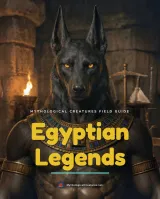
Egyptian Legends: A field guide to the gods and monsters of ancient Egypt
Guardians of the living and devourers of the dead, with the role each played in judgement.
the legend in five swipes.
For serious mythcraft
Your project belongs among the legends
If your work deepens how people understand, play with, or teach mythology, a sponsor placement here keeps it in front of the right readers all year.
Submit a sponsorship enquiryQuick Creature Info
Origin:
Associations:
Our Mythic Legendary Rating:

Habitat:
Supernatural Powers:
Physical Attributes:
Abilities:
Behavior:
Lore:
Related Creatures, Tales or Lore
References
Discover Another Mythical Legend You May Not Have Heard Of?
Uncover the mysteries of ancient folklore and expand your knowledge of legendary beings from cultures around the world.
Dare to Meet the Goliath....

The Mythological Creatures Book Series
Yokai, Greek, Norse, Egyptian & Chinese. Five illustrated field guides to the creatures the old stories either warned or told you about.




Curated by the Mythological Creatures Team
Series editor: Mythological Creatures Directory
Primary desk: Asian & Pacific Myth Cycles Desk
(rev. November 2025)