
Goliath: Goliath is a towering Philistine giant known for his imposing stature and formidable strength.
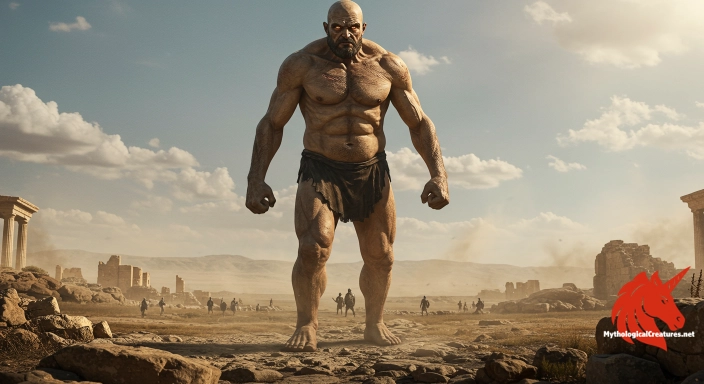
Goliath
Goliath - Goliath's confrontation with David symbolizes the triumph of the underdog and questions of rightful leadership, notably highlighting King Saul's inadequacy.
Origins & First Encounters
Goliath emerges as one of the most formidable figures in biblical lore, embodying the colossal adversary whose very presence challenged the might of a nation. His origins, rooted in the tumultuous culture of the ancient Near East, reflect a blend of historical narrative and mythic exaggeration. Emerging in the Book of Samuel, his first attestation provided a vivid contrast between his gargantuan stature and the seemingly insurmountable odds faced by his opponents. The narrative situates him not merely as a warrior but as a living symbol of chaos and overwhelming power in a world grappling with divine intentions. Over time, his character has served as a metaphor for larger forces at play in society, reflecting both human fear and admiration for the unknown. The story is embedded within the larger cultural context of the Philistine people, whose own traditions and values coloured his depiction. His legacy has been interwoven with broader themes of courage, faith, and the transformative struggle between the weak and the mighty. As such, Goliath persists not only in ancient texts but also in the cultural memory, serving as a reminder that even the most daunting challenges can be confronted by unexpected heroes. His narrative acts as a mirror to the complexities of power and the enduring nature of myth in human civilisation. Ultimately, the figure of Goliath continues to resonate, transcending its original context to inspire debates on strength and vulnerability in society.
Source Texts & Tale Variants
The primary account of Goliath appears in the biblical texts of Samuel, where his encounter with David captures the imagination of readers and reverberates through centuries of interpretation. Various ancient manuscripts attest to his role as a test of both physical might and divine favour, with subtle discrepancies hinting at alternative origins and outcomes. Some sources have even suggested that the original slayer of the giant might have been Elhanan, a detail that points to an evolving tradition within early scripture. This multiplicity of accounts reveals that his story was subject to oral transmission and later textual refinement, creating a rich tapestry of narrative variants. In addition to canonical texts, rabbinical literature and extra-biblical commentaries have reexamined his tale, imbuing it with layers of symbolism and cultural critique. These textual traditions have served to expand his role from that of a mere opponent in battle to a broader emblem of chaos versus order. The enduring interest in his character has led to numerous reinterpretations across different time periods, each adding unique nuances to his myth. Early historians and scribes used his figure as a means to explore themes of heroism and mortality. The persistence of differing accounts underscores the dynamic nature of myth-making in antiquity. Ultimately, the diverse sources of Goliath's story highlight the complex interplay between historical record and legendary narrative.
Form & Powers
Goliath is typically portrayed as a towering figure whose physicality dwarfs that of ordinary men, evoking a sense of awe and dread. Ancient texts present his height ambiguously, with figures ranging from 6 ft 9 in to nearly 10 ft, thus leaving ample room for artistic embellishment. His physique is rendered as both robust and formidable, with a muscular build that speaks to countless battles fought on unforgiving terrains. Classical depictions often adorn him in heavy, elaborately decorated armour which accentuates not only his strength but his role as a seasoned warrior. Artists have captured his intense gaze and weather-beaten features, lending an air of ancient gravitas and martial determination to his image. The scale of his form is often juxtaposed with his opponent’s slight build, creating a visual metaphor for the overwhelming odds he presented in combat. Despite the variable numerical descriptions of his stature, every portrayal highlights an almost otherworldly blend of human strength and mythical exaggeration. His body, marked by scars and the rigours of combat, reflects a longstanding tradition of heroic narrative in which physical prowess is paramount. The interplay of numerical detail and legendary flourish in his descriptions has cemented Goliath’s status as one of mythology’s most physically imposing figures. In essence, his detailed physical portrayal encapsulates the timeless allure of giants in myth and literature.
Regional Faces
Across different cultures and regions, the tale of Goliath has been adapted to align with local beliefs and artistic conventions, resulting in a variety of portrayals. In the ancient Near Eastern context, he is often intertwined with tales of primordial chaos and divine retribution, reflecting regional concerns of order versus the unknown. Medieval European traditions depicted him as a savage symbol of barbarism, a foil against which the virtues of smaller, righteous heroes were dramatically highlighted. In Jewish and Islamic traditions, subtle shifts in emphasis—from his physical might to his symbolic challenge—render his figure as a complex test of spiritual as well as martial resolve. Regions with a rich heritage of oral storytelling have expanded upon his legend, integrating local motifs of giants and heroes into the narrative fabric. From Mediterranean frescoes to Middle Eastern poetry, the giant’s image has been reinterpreted to mirror contemporary passions and political ideals. Certain local legends even weave his story into broader mythological cycles, suggesting that his legacy resonated with ancient cosmologies of conflict and renewal. This adaptive quality ensures that Goliath remains a potent symbol across cultures, ever-morphing to reflect the society that retells his story. Thus, regional variations of his myth add layers of interpretative complexity, hinting at a universality that transcends his biblical roots. His myth continues to serve as a canvas upon which communities project their unique historical experiences and aspirations.
Cultural Parallels
Goliath occupies a distinctive niche among mythological giants, striking a notable parallel with other legendary titans such as the Nephilim and even the Greek Titans. His narrative, which pits a mighty beast of war against a resourceful underdog, recurs in various cultural traditions that celebrate the triumph of wit over brute force. In many traditions, giants serve as embodiments of chaos and excess, a role that Goliath fulfils with exceptional clarity. Similar to European ogres or the formidable Cyclopes, his character represents the collision between the human and the monstrous. The theme of a giant adversary features prominently in comparative mythology, where legends across continents converge on the idea of an overwhelming challenge that inspires profound moral and societal lessons. His story shares common ground with figures like the Norse jotunn and the monstrous enemies of African oral traditions, all of whom symbolize the ever-present tension between order and disorder. These cross-cultural parallels highlight the universality of the giant motif as a narrative device to explore human vulnerability and resilience. Goliath’s enduring image resonates with modern reinterpretations that recast giants as metaphors for insurmountable obstacles in personal and public life. This comparative analysis reveals that, despite differences in cultural specifics, the motif of the giant transcends regional boundaries and speaks to a shared human experience. Ultimately, his myth becomes a common language for expressing the eternal struggle between the overpowering forces of nature and the delicate strength of the individual spirit.
Legacy & Modern Evolution
Over the centuries, Goliath’s image has evolved from a mere character in ancient scripture to a universal symbol of daunting challenges and the unexpected potential of the underdog. His early depictions, rooted deeply in biblical narratives, served as moral and theological lessons that celebrated faith and the triumph of the small over the mighty. During the medieval period, his story was frequently adapted in art and literature to reflect the dynamic interplay between divine providence and human frailty. In modern times, the phrase ‘David and Goliath’ has entered everyday parlance as a metaphor for any contest where a minor force faces an overwhelmingly powerful adversary. His legacy has permeated popular culture, inspiring films, literature, and political discourse that stress the value of courage in the face of colossal odds. Contemporary adaptations often reframe his character, sometimes imbuing him with a tragic element or even presenting him as an antihero caught within the forces of destiny. Artists and innovators have reinterpreted Goliath’s myth to comment on modern societal dilemmas, thus sustaining his relevance in the collective consciousness. His enduring presence in cultural and artistic expressions underscores the timeless allure of legends that challenge conventional definitions of strength. The evolution of his portrayal mirrors broader societal shifts in understanding power, vulnerability, and resistance. In summary, Goliath remains a potent cultural touchstone whose myth continues to inspire debate, art, and reflection on the nature of overcoming adversity.
Interesting Fact
Goliath's defeat not only marked a pivotal moment in biblical history, but his story also laid the foundation for the enduring metaphor of 'David and Goliath,' highlighting that true strength often lies in courage and intelligence rather than just sheer physical power.
Partner with us
Sponsor this space
Reach thousands of mythology enthusiasts with a curated placement on our creature pages.
Learn about sponsorshipQuick Creature Info
Origin:
Features:
Associations:
Our Mythic Legendary Rating:

Also Sometimes Known As:
Habitat:
Supernatural Powers:
Physical Attributes:
Abilities:
Behavior:
Weaknesses:
Lore:
Related Creatures, Tales or Lore
- OOg of Bashan
- AAnakim
- CCyclops
References
Discover Another Mythical Legend You May Not Have Heard Of?
Uncover the mysteries of ancient folklore and expand your knowledge of legendary beings from cultures around the world.
Dare to Meet the Horae....

Curated by the Mythological Creatures Team
Series editor: Mythological Creatures Directory
Primary desk: Hellenic & Ancient Mediterranean Desk
(rev. November 2025)