
Horae: The Horae are the Greek goddesses embodying the natural divisions of time and the seasonal cycles.
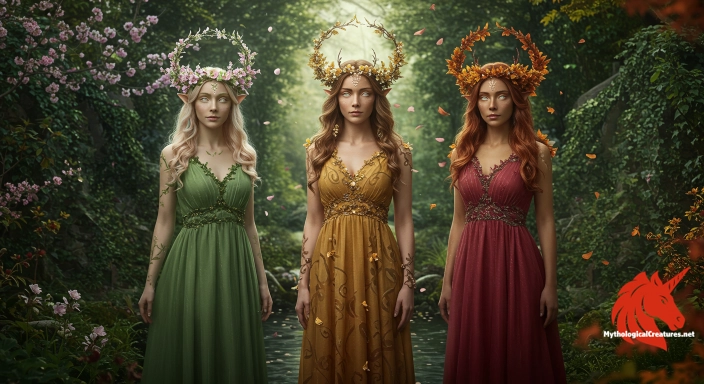
Horae
Horae - They symbolise the orderly progression of nature and the inherent balance between the divine and mortal worlds.
Origins & First Encounters
The Horae emerge as timeless figures in the fabric of Greek mythology, celebrated as divine embodiments of the seasonal cycle and the subtle flow of time. Their origins, steeped in ancient cosmogonies, suggest that they were either born of Zeus and Themis or sometimes even Gaia, thereby linking nature directly with the celestial order. They were revered not only as goddesses overseeing the literal frost, bloom, decay, and renewal of the earth but also as custodians of cosmic rhythm and human society. Their earliest depictions in classical literature and art captured an essence of elegant dynamism that mirrored the changing landscapes of Greece. In myth, they artfully balanced the forces of growth and decline, ensuring that the cycles of the natural world resonated with social harmony. Their presence offered a divine explanation for the regularity of the seasons, reinforcing the idea that even nature was subject to an ordered design. Celebrated in various festivals and rites, the Horae symbolised both the physical and the moral continuity that underpinned ancient Greek life. Over time, the evolving narratives surrounding them underscored the intricate interplay between human cultural practices and the inevitable progression of time.
Source Texts & Tale Variants
Ancient literature provides the earliest records of the Horae in texts where poetic imagery and allegorical narrative merge to exalt natural order. Hesiod’s works stand out as one of the primary sources that embed their significance within the genealogy of gods, establishing them as integral to both nature and society. Variants of their stories appear in fragments of lost works and in lesser-known Orphic hymns that delve into their ritualistic importance. These sources frequently portray the Horae as multifaceted deities, whose roles extend beyond seasonal changes to encompass aspects of justice and civic well-being. Diverse storytellers and dramatists across periods adapted their myths to reflect shifting cultural and environmental understandings. Many classical artworks, from vase paintings to relief sculptures, further amplify their narrative by visualising their delicate balance with nature. Such adaptations highlight local nuances within the overarching framework of Greek myth, enriching their mythos with layers of interpretation. Each narrative strand, while unique in its focus, reinforces the Horae’s status as arbiters of time and natural law, inviting a continuous reevaluation in the light of new mythopoeic expressions.
Form & Powers
Artistic renditions of the Horae capture figures imbued with an ethereal beauty, often illustrated with flowing, diaphanous robes that mirror the transient essence of each season. They are depicted with soft, graceful features and an inherent radiance that seems to capture the natural light of spring mornings and the golden hues of autumn. Classical sculptures and vases showcase them in dynamic poses, each gesture echoing the gentle transition from one part of the year to another. Their garments and accessories often carry symbolic motifs—floral garlands for spring, sunlit attributes for summer, falling leaves for autumn, and hints of frost for winter—that vividly mark the passage of time. The balance in their features and posture is reflective of the harmonious order they are meant to represent. Artists have frequently depicted them with subtle expressions of calm and serenity, reinforcing their role as steady guides through the shifting celestial clock. In some representations, delicate halos and ornamental scepters further accentuate their divine status. The recurring themes in their iconography not only celebrate the beauty of seasonal change but also underscore their position as metaphors for both renewal and continuity in the natural order.
Regional Faces
The depiction and veneration of the Horae subtly shift across various regions of the Greek world, where local customs imbue them with distinctive characteristics. In certain city-states, their presence was interwoven with the agricultural calendar, making them central to festivals that celebrated both the bounty and the hardships of the land. Regional variations often emphasise their dual role as both natural and civic guardians, with local traditions fusing their influence with that of other minor deities. In Athens, for example, the Horae were sometimes integrated into civic rites that were meant to symbolise the order and discipline of daily life. The scenic landscapes of different regions further influenced their depictions, with rural settings accentuating their role as nurturers of the land. Some local cults adapted their iconography, portraying them with specific attributes that resonated with regional flora and seasonal peculiarities. This adaptive portrayal allowed the Horae to maintain a universal appeal while also reflecting the unique environmental and social contexts of each locale. Such regional adaptations create a tapestry of narratives where the eternal cycle of time is celebrated with both local colour and pan-Hellenic significance.
Cultural Parallels
The themes embodied by the Horae find resonances in mythologies beyond ancient Greece, creating fascinating parallels across diverse cultural landscapes. In Roman tradition, similar deities preside over time and seasonal change, with echoes of the Horae’s functions enriching the narratives of time and order. Across Europe, figures from agricultural and seasonal cults resonate with their symbolism, reflecting an enduring human need to personify the cyclical patterns of nature. Comparative mythology often draws attention to the thematic links between these figures and those found in Eastern mythologies, where goddesses embody aspects of renewal, decay, and rebirth. The Horae’s dual identity, straddling the domains of nature and societal order, finds a kindred spirit in deities that symbolise both the rhythm of the seasons and the moral structure of human communities. Shared visual symbols, such as the use of natural motifs and cyclical imagery, further underline the cosmopolitan appeal of such divine figures. These parallels invite a broader reflection on how cultures across time and space have sought to explain the inevitable progression of time through personified forms. In this way, the Horae serve not only as a hallmark of Greek myth but also as a universal symbol that threads through the fabric of global mythological traditions.
Legacy & Modern Evolution
The narrative of the Horae has continued to evolve, reflecting changing cultural attitudes towards nature, time, and order over many centuries. In their earliest depictions, they symbolised the pristine and immutable cycles of nature, a theme that found nuance in later interpretations incorporating justice and moral order. As artistic styles shifted from the classical to the Renaissance, the gentle grace of the Horae became a popular allegory for the harmonious interplay between human endeavour and the natural world. Modern reinventions in literature, cinema, and visual arts have reimagined them as icons of cyclical renewal and ecological balance, resonating with contemporary concerns about environmental sustainability. Their symbolic association with the regularity of the seasons has transcended myth, offering a timeless metaphor for change and continuity in a complex world. Today, cultural festivals and artistic installations often draw upon the imagery of the Horae to evoke both heritage and hope, bridging ancient wisdom with modern sensibilities. Debates and discussions in scholarly circles continue to explore how their representation has shifted in response to the evolving human understanding of time and nature. The Horae’s enduring legacy, therefore, stands as a powerful reminder of the perpetual rhythm of life—a motif that remains as relevant now as it was in the dawn of Greek myth.
Interesting Fact
An intriguing aspect of the Horae is their dual role as both regulators of time and as symbols of seasonal fertility, highlighting the ancient Greek intertwining of natural cycles with moral and cosmic order.
For serious mythcraft
Your project belongs among the legends
If your work deepens how people understand, play with, or teach mythology, a sponsor placement here keeps it in front of the right readers all year.
Submit a sponsorship enquiryQuick Creature Info
Origin:
Associations:
Our Mythic Legendary Rating:

Also Sometimes Known As:
Habitat:
Supernatural Powers:
Physical Attributes:
Abilities:
Behavior:
Lore:
Related Creatures, Tales or Lore
- MMoirai
- DDemeter
- TThallo, Auxo, and Carpo
References
Discover Another Mythical Legend You May Not Have Heard Of?
Uncover the mysteries of ancient folklore and expand your knowledge of legendary beings from cultures around the world.
Dare to Meet the Oncius....
Curated by the Mythological Creatures Team
Series editor: Mythological Creatures Directory
Primary desk: Hellenic & Ancient Mediterranean Desk
(rev. November 2025)