
Calybe: Calybe is a nymph from Greek mythology, recognized as a wife of Trojan king Laomedon and mother of Bucolion.
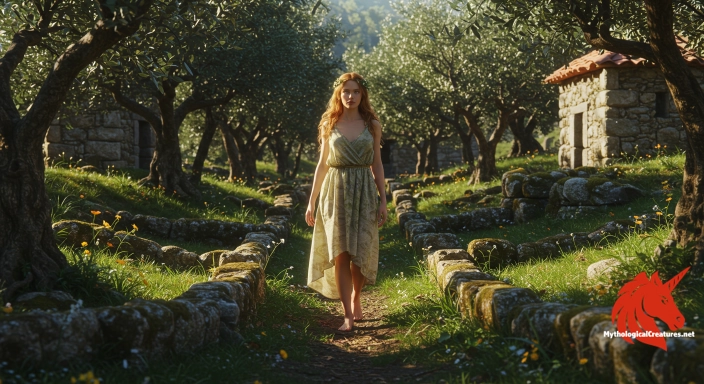
Calybe
Calybe - Calybe is significant for her role in Trojan lineage and her embodiment of natural, rustic aspects within Greek mythology.
Origins & First Encounters
Calybe emerges from the tapestry of Greek mythology as a figure whose very name evokes the charm of a modest, rustic dwelling. In a mythic tradition where even minor figures cast long shadows, she is remembered as a nymph allied to the legendary Trojan king Laomedon and celebrated as the mother of Bucolion. Her origins are steeped in the mystique of nature, with her name suggesting a deep connection to the humble, unadorned aspects of life. Born from the same fertile backdrop that nourished many of the earth’s minor divinities, Calybe was revered for embodying the natural beauty of the countryside. Her earliest attestations, though brief, hint at a character who served as a bridge between wild nature and the structured world of mortal royalty. Embedded within the pagan ethos of early Trojan culture, she symbolised the bountiful and sometimes unpredictable power of nature. Over time, the scant references to her have invited later generations to imagine a profound depth behind her serene countenance. Even with limited narrative records, her myth endures as a quiet yet compelling reminder of the intrinsic link between the divine and the rustic realms of existence.
Source Texts & Tale Variants
The scant primary sources that mention Calybe originate from the fragmented scholia and later mythographical compendiums that seek to catalogue every facet of Trojan lore. Although her narrative does not dominate the epic tradition, the brief mentions in these ancient texts offer fertile ground for variation among storytellers. Some literary traditions hint at her dual identity, where her character merges traits of both a celestial nymph and a local nature spirit. In a select few accounts, she is portrayed as a guardian of rustic sanctuaries rather than merely a consort of royalty. Beyond the earliest references, Renaissance compilations and later folkloric retellings expanded her story, imbuing her character with pastoral significance and subtle mysticism. Diverse versions of her tale underscore the thematic element of nature’s quiet resilience, framing her as an emblem of the natural world ensconced within the Trojan myth. Variations in genealogies, where some texts give her a more elevated divine origin and others depict her as a humble spirit, enhance the intrigue surrounding her portrayal. These layered narratives suggest that while the primary sources are limited, they effectively invite multiple interpretations, encouraging a richer understanding of her mythic role.
Form & Powers
Though ancient texts spare few details about her physical form, the essence of Calybe is often hinted at through the typical attributes of a nymph in Greek mythology. One can envision her as being endowed with an ethereal beauty; her features might have been as delicate as the blossoms of a spring garden, reflecting the immaculate grace of the natural world. Artists and storytellers, inspired by her pastoral name, have often portrayed her with flowing tresses that capture the hues of autumn, evoking the rustic essence of weathered cottages. Her eyes could be imagined as luminous pools, mirroring the glistening dew on verdant meadows at dawn. In many retellings, she appears as a slender figure, almost otherworldly in her poise, with a radiance that gently underscores her divine origins. The fabrics she is thought to wear are imagined as light and airy, seamlessly blending with the unblemished environment of nature. Some artistic depictions, although rare, suggest that she possessed an almost luminous aura, a subtle glow that set her apart from mortal beauty. Even in the absence of detailed canonical descriptions, the mythical portrait of Calybe is one of gentle, natural splendour and an enduring, ageless charm.
Regional Faces
The character of Calybe, though rooted in the Trojan tradition, has seen her myth adapt across various regions and local cultural landscapes. In certain areas of Asia Minor, she is revered not merely as a nymph but as a local spirit associated with the rustic and the humble, often linked to the protective deities of small, rural communities. Some local festivals, held in the shadow of ancient stone relics, celebrated her as a patron of modest dwellings and fertile fields, emphasising her role as a guardian of the rural way of life. In other traditions, she is interwoven with the lore of earth goddesses, where her name lends itself to allegories of shelter and the nurturing aspects of the land. Artistic representations in Hellenistic regions frequently reflect a blend of classical beauty with local aesthetics, thereby reinforcing her association with rustic charm. In Byzantine retellings, her story becomes a subtle reminder of the local heritage, merging elements of pastoral reverence with the grand myth of Troy. Such variants highlight not only the adaptability of myth but also the enduring appeal of figures who connect divine mythologies to everyday life. Each regional adaptation, while preserving her core attributes, adds a layer of cultural nuance that enriches her overall legacy.
Cultural Parallels
Calybe’s role as a nymph who bridges the gap between the celestial and the earthly finds resonances in many other cultural mythologies. Comparable to the dryads of Greek lore, who personify the spirit of trees and nature, her gentle presence echoes across the panorama of nature deities. In Roman mythology, figures such as Diana capture a similar essence of the natural and the pastoral, albeit with a stronger emphasis on the hunt and the wilderness. Likewise, the Celtic traditions, with their own pantheon of woodland spirits, often celebrate entities that guard rural spaces much like Calybe is imagined to do. These parallel figures underscore an ancient human yearning to connect with the natural environment through divine embodiment. The narrative of Calybe also shares affinities with lesser-known local spirits in various Mediterranean folklores that champion the rustic and the unpretentious. Through these comparisons, one can see how the motif of a nature-bound divine figure transcends individual cultures. Such cross-cultural connections demonstrate a common pattern in myth-making where the mystery of nature is personified through a luminous guardian, echoing the timeless allure of rustic divinity.
Legacy & Modern Evolution
Over the centuries, Calybe’s character has transitioned from a fleeting mythological mention into a subtle emblem of pastoral and rural beauty. Early traditions regarded her as a simple yet potent link between the divine and the elemental, a figure whose understated presence enriched the vast pantheon of Greek myth. As later generations revisited Trojan lore, she was occasionally celebrated in art and literature as a symbol of natural serenity and the enduring charm of the countryside. During the Renaissance, a renewed interest in classical myths saw artists and writers imbuing her with more detailed pastoral imagery and emotional depth. In modern times, while she remains a relatively obscure figure, there has been a quiet revival of interest among scholars and enthusiasts of mythology, who appreciate her role in the broader narrative of human and nature interactions. Contemporary reinterpretations sometimes cast her as a metaphor for sustainable living and the preservation of natural beauty in an increasingly industrial world. Small cultural events and niche literary works have embraced her legacy, suggesting that even minor mythological figures can acquire significant symbolic value. Her transformation from a marginal character to one celebrated in modern folkloric discourse highlights the dynamic nature of myth and its persistent capacity to inspire renewed creativity.
Interesting Fact
Calybe’s name meaning 'rustic hut' uniquely ties her identity to the landscape, highlighting the intimate relationship between natural settings and Greek myth.
For authors, artists, and makers
Created something from the realm of myth?
If your book, deck, game, or artwork draws from legendary creatures and lore, you can showcase it here in a tasteful, year-round placement.
Share your projectQuick Creature Info
Origin:
Our Mythic Legendary Rating:

Habitat:
Supernatural Powers:
Physical Attributes:
Behavior:
Lore:
References
Discover Another Mythical Legend You May Not Have Heard Of?
Uncover the mysteries of ancient folklore and expand your knowledge of legendary beings from cultures around the world.
Dare to Meet the Kanglā shā....
Curated by the Mythological Creatures Team
Series editor: Mythological Creatures Directory
Primary desk: Hellenic & Ancient Mediterranean Desk
(rev. November 2025)