
Calyce: Calyce, also known as Calycia, is a Greek mythological nymph from the group of Nysiads who nursed Dionysus.
-f078df30-c479-4b93-a13b-b6a5c1fc1b42_small.webp "Calyce - Calyce represents the divine nurturing aspect of nature, a key element in the myth of Dionysus within ancient Greek tradition.")
Calyce
Calyce - Calyce represents the divine nurturing aspect of nature, a key element in the myth of Dionysus within ancient Greek tradition.
the legend in five swipes.
the legend in five swipes.
Calyce: Origins and First Sightings
Calyce stands as a graceful emblem of nurturance within the rich tapestry of Greek mythology. Rooted in ancient tradition, she is celebrated as one of the Nysiads, entrusted with the divine task of caring for the infant god Dionysus. Her presence in myth highlights a delicate balance between the mortal and the divine, symbolising natural fertility and the mysticism of nurture. Emerging from the interplay of poetic imagination and sacred religious rites, her character reflects both beauty and benevolence. Although several figures share her name, this Calyce is distinguished by her tender guardianship and deep connection to the regenerative forces of nature. Ancient narratives evoke an image of her as a vital participant in the cyclical renewal of life, often interwoven with the celebratory rituals of Dionysian worship. Her gentle yet powerful influence served to bridge the realms of humanity and divinity. Over time, her enduring myth has been woven into the fabric of Greek lore, offering a subtle yet significant insight into the perennial themes of growth, care, and the natural order. Her story continues to inspire interpretations that celebrate both the mystique and the nurturing spirit inherent in the natural world.
Which texts first mention Calyce?
Ancient literary fragments and poetic traditions provide the primary glimpse into Calyce’s character, though explicit references remain sparse. Early mythographers included her among the revered Nysiads, whose role in nurturing Dionysus was recounted in various scattered texts. Some later Hellenistic compilations hint at her importance through allegorical and symbolic narratives. Inscriptions and regional cult practices have also contributed to piecing together her fragmented myth, suggesting a more prolonged and cherished presence in local religious observances. Oral traditions enriched these accounts by interweaving additional layers of anecdote and local colour that amplified her nurturing qualities. Variants of her tale appear in disparate sources, each adapting the core motif of divine caregiving to unique local contexts. The diversity of these narrative strands highlights the flexible nature of myth, where details often evolved with retellings. Even though explicit details are limited, the cumulative evidence from both literary and folkloric sources attests to her integral role in the Dionysian mythos. This mosaic of accounts underlines the challenges inherent in consolidating ancient lore while confirming her place within the broader Greek mythological tradition.
Calyce: Size, Shape and Strange Features
Depictions of Calyce evoke an image of ethereal beauty and natural elegance that is both striking and tender. Her form is traditionally rendered as delicate and lithe, reflecting the gentle harmonies inherent in the natural world. Luminous eyes, reminiscent of the early morning dew, are often described as capturing the subtle radiance of dawn. Artists have portrayed her with flowing, wavy hair that cascades like a pristine mountain stream, intermingled with hints of the soft colours of blossoming flora. Her skin is frequently depicted as radiant and smooth, evoking the soft glow of twilight and the gentle caress of moonlight. Embellishments such as garlands of ivy or floral motifs adorn her figure, reinforcing her deep affiliation with nature. Some artistic traditions accentuate her fragility and ethereal quality, while others highlight a more robust vitality befitting a divine nurturer. Her attire, often simple yet elegant, is suggested to be woven from the very fabrics of nature, emulating the textures and hues of a bountiful landscape. These timeless artistic interpretations coalesce to form a portrait of Calyce that is both vividly mortal in charm and unmistakably divine in grace.
Calyce: One Legend, Many Local Versions
The narrative of Calyce has been richly adapted across diverse cultural landscapes within the ancient Greek world. In many mainland traditions, her portrayal remains closely tied to the ritualistic upbringing of Dionysus, emphasising her role as a divine caretaker. On various islands and coastal regions, local cults have imbued her character with additional layers of symbolism associated with water and fertility. In parts of Asia Minor, indigenous influences have merged with the traditional myth, featuring her as both a nurturing figure and a guardian of life-giving springs. Some regional variations even portray her as a more autonomous nature deity, merging the lines between nurse and protector of the natural realm. Local art and vernacular literature have, on occasion, adapted her story to reflect regional customs and environmental features, lending her a unique local flavour. These adaptations highlight not only the porous boundaries of myth but also the flexible interplay between pan-Hellenic traditions and local religiosity. The fluidity in her regional portrayals speaks to the creative reinterpretations encouraged by diverse cultural practices. Overall, the variations in her depiction across regions underscore the dynamic and evolving nature of myth, wherein local identity and universal archetypes intertwine harmoniously.
What figures resemble Calyce?
Calyce invites intriguing comparisons with nurturing deities and spirits across a range of mythological traditions. Her role as a caretaker of a young god resonates with the archetypal motif of divine nursing, akin to figures such as Amalthea in other strands of Greek lore. In a broader Indo-European context, similar embodiments of feminine guardianship and natural fertility appear in various cultural narratives, emphasising a shared mythic blueprint. Roman traditions, for instance, present nymphs associated with Bacchus whose tender attributes mirror those of Calyce. Parallels can also be drawn with certain Celtic and Eastern Mediterranean spirits, where the interplay of nature and care forms the essence of their mythic representation. Such cross-cultural reflections highlight a universal reverence for the energies that nurture and preserve life. The comparative study of these deities sheds light on how ancient societies across different regions celebrated the qualities of nourishment, growth, and cyclic renewal. Despite the regional variations, the underlying themes of nurturing and protection remain constant, reinforcing her relevance in a global mythological context. This shared heritage underscores how Calyce, and figures like her, continue to inspire artistic and literary expressions that celebrate the transcendent power of care.
Calyce in Modern Culture
The legacy of Calyce has evolved subtly through the shifting landscapes of myth and cultural reinterpretation. In early mythic accounts, she was revered primarily for her nurturing role in the life of Dionysus, a depiction that resonated through ancient rituals and artistic expressions. Renaissance painters and poets, drawn to the pastoral beauty and divine tenderness of her character, occasionally revived her image to symbolise an idyllic communion with nature. In modern times, artistic reinterpretations have further explored her as an emblem of natural beauty and the transformative power of caring in a sometimes fragmented world. Contemporary cultural expressions, from literature to visual arts, have embraced her as a figure embodying ecological stewardship and feminine resilience. Her myth has been recontextualised in narratives that emphasise sustainability and the enduring necessity of human connection with the natural world. Academic and popular discourses alike have begun to illuminate the layered symbolism in her character, linking ancient themes with today’s environmental and social reflections. The evolution of her portrayal—from a nurturing guardian in sacred rituals to a modern symbol of nature’s delicate balance—illustrates the dynamic interplay between myth and contemporary consciousness. In this way, Calyce continues to inspire creative reimaginations that bridge the gap between antiquity and the modern era.
Interesting Fact
An interesting observation about Calyce is that her contribution to the upbringing of Dionysus highlights the vital role of nymphs in Greek mythology, serving as both caregivers and embodiments of nature’s enduring beauty.
Mythological Treasures
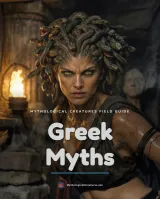
Greek Myths: A field guide to the monsters of ancient Greece
Every monster here earned its place in legend, and each gets a full page of artwork and the story behind it.
Egyptian Legends: A field guide to the gods and monsters of ancient Egypt
Guardians of the living and devourers of the dead, with the role each played in judgement.
Chinese Beasts: A field guide to the dragons and demon kings of Chinese myth
From river dragons to demon kings, with the legends that shaped five thousand years of storytelling.
the legend in five swipes.
Reach myth fans
Connect your myth-driven brand with this audience
Our readers are writers, educators, gamers, and collectors who care about mythology. Enquire about a limited sponsor placement on creature pages.
Enquire about sponsorshipQuick Creature Info
Origin:
Our Mythic Legendary Rating:

Also Sometimes Known As:
Habitat:
Supernatural Powers:
Physical Attributes:
Abilities:
Behavior:
Lore:
References
Discover Another Mythical Legend You May Not Have Heard Of?
Uncover the mysteries of ancient folklore and expand your knowledge of legendary beings from cultures around the world.
Dare to Meet the Nemea....
-f08b0061-cb31-43fd-a3de-2c13ceb9b6c2_small.webp "Depiction of Nemea")
The Mythological Creatures Book Series
Yokai, Greek, Norse, Egyptian & Chinese. Five illustrated field guides to the creatures the old stories either warned or told you about.




Curated by the Mythological Creatures Team
Series editor: Mythological Creatures Directory
Primary desk: Hellenic & Ancient Mediterranean Desk
(rev. November 2025)