
Cecrops I: Cecrops I is the legendary, serpentine king of Attica and founder of Athens.
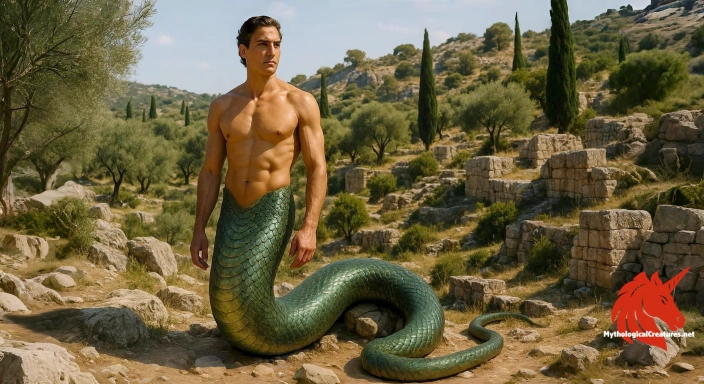
Cecrops I
Cecrops I - Cecrops I is celebrated as the first king of Athens and a civilising force, credited with introducing essential cultural practices.
Origins & First Encounters
Cecrops I emerges in myth as one of the most seminal figures in ancient Attica, envisioned as a ruler whose very existence bridged the natural and the divine. His legendary reign is interwoven with the earliest embryonic stages of civilisation in Athens, where he is credited with founding practices that shaped the culture for generations. He is often depicted as a being with the upper body of a man and the lower body of a serpent, a form that symbolises the fusion of humanity with the primal forces of nature. His story has been passed down through centuries, with early attestation in sources such as the Parian Chronicle securing his lasting legacy. The mythical king not only lent his name to the region—transforming Attica into Cecropia—but also instilled in the people the essential arts of marriage, literacy, and ceremonial rites. Themes of order emerging from chaos run deep in his legend, reflecting the early human endeavour to tame the capricious natural world. The narrative surrounding Cecrops I has long served as the backbone of Athenian identity, imbuing the city with a sense of divine origin and cultural destiny. Over time, his myth has been celebrated in literature and art as embodying the birth of civic life and the ritual fundamentals that underpin society. His enduring tale continues to fascinate those who seek the origins of Western civilisation and the timeless struggle between nature and culture.
Source Texts & Tale Variants
The figure of Cecrops I is anchored in a rich tapestry of ancient literary and pictorial sources, with the Parian Chronicle standing as one of the earliest references. Various texts recount his reign as the inaugural chapter of Athenian history, often describing his contributions to establishing social order in Attica. Several local traditions and ancient writings render his origins with an earthy authenticity, sometimes linking him directly to the soil from which civilisation sprang. Diverse story variants exist that either accentuate or downplay his serpentine characteristics, reflecting regional tastes and shifting cultural values over time. In some accounts, the legendary king is portrayed as emerging from the land itself, fashioned by the forces of nature rather than born through conventional means. Artistic representations on vase paintings and early coins further embellish his iconography, offering visual narratives that complement the literary tales. These primary sources, though varying in detail, converge on the idea of Cecrops as a transformative culture hero whose influence shaped the earliest rituals and customs. Mythologists have noted that the concentration of symbolic elements in his story reinforces his stature as a divine mediator between mortals and the gods. The evolution of these texts over the centuries has enriched his mythos, ensuring that his presence remains vivid in the collective memory of ancient Greece.
Form & Powers
Cecrops I is most famously depicted as a striking hybrid, with the dignified upper half of a man merging seamlessly into a lower half that takes on the form of a serpent. This duality is not merely a curiosity of form; it encapsulates the synthesis of human ingenuity with the untamed powers of nature. His human features are conveyed with a sense of gravitas, often illustrated by a thoughtful gaze and a countenance that exudes both wisdom and authority. The serpentine portion, detailed in art and literature with intricate scales and supple curves, symbolises a deep connection to the earth and its mysterious forces. Variations in artistic renditions sometimes highlight the fluidity and sinuous grace of his lower body, suggesting that even in physical form he was a mediator between two worlds. In some interpretations, his depiction is enhanced by attributes such as a flowing beard and a serene composure that reflects his role as a civilising figure. The hybrid anatomy of Cecrops I has been subject to extensive allegorical interpretation, with each element of his form representing different facets of societal order and natural law. This memorable iconography not only set a precedent for later mythological hybrids but also contributed to an enduring visual language in the portrayal of foundational deities. His physical portrayal continues to inspire modern artists who explore themes of duality and transformation in myth.
Regional Faces
The legend of Cecrops I finds varied expression throughout the regions of ancient Greece, showcasing local adaptations that give his myth a multifaceted character. While Athens heralds him as the quintessential founding king, neighbouring communities have woven their own nuances into the narrative, sometimes elevating different aspects of his persona. In some parts of Attica, Cecrops is celebrated not only as a king but as a primordial figure whose spirit pervades the land itself. Alternative names and epithets appear in regional lore, underscoring how his image was reshaped to better align with local customs and religious practices. Certain locales emphasise his chthonic attributes, viewing him as a bridge between the living world and the mysterious realms beneath the earth. Local festivals and cultic rituals celebrated in antiquity incorporated variants of his myth, each reflecting the distinct spiritual and social priorities of the community. This regional diversity illustrates the dynamic nature of myth-making, in which a single legendary figure can acquire many different layers of meaning. Through art, oral storytelling, and ritual practice, the tale of Cecrops I adapted to the cultural and environmental particularities of each area. Such variations enrich our understanding of his legacy, highlighting how myth evolves to meet the needs of diverse local traditions.
Cultural Parallels
In the broader panorama of mythology, Cecrops I stands alongside other legendary founders whose narratives interlace divine interventions with the establishment of human civilisation. His hybrid form, combining human rationality with serpentine mystique, finds echoes in other ancient figures whose dual natures symbolise the union of earth and spirit. Parallels can be drawn with Erichthonius, another early Athenian icon, whose ambiguous origins also underline the transformation from nature to culture. Similar stories of founders with animalistic characteristics appear in diverse mythologies, suggesting a shared ancient motif of combining nature’s raw power with human insight. The way in which Cecrops I is portrayed has often been compared to other cultural heroes who embody the transition from primordial chaos to organised society. This common thread hints at a universal mythological theme, where creatures brimming with elemental power assume roles that define the structure of civilization. His story can also be viewed in relation to other Indo-European myths in which figures with mixed forms serve as mediators between realms. The comparisons drawn across mythic traditions not only highlight the uniqueness of his tale but also underscore the widespread human fascination with the origins of order and culture.
Legacy & Modern Evolution
Over the centuries, the myth of Cecrops I has evolved from a simple foundation tale to a complex symbol of Athenian identity and the broader achievement of civilisation. His story was enriched and reinterpreted through successive epochs, from the classical period through Hellenistic times and into the modern era. The enduring aura of his legend has made him a touchstone in the cultural memory of Athens, with his name once lending identity to the entire region of Attica. Over time, artists and writers have reimagined him as a paragon of civil order, whose contributions heralded the dawn of organised societal practices. The dual nature of his form has come to represent the eternal interplay between the earthly and the divine, a theme that continues to resonate with modern audiences. In the Renaissance and in contemporary reinterpretations of classical myth, Cecrops I is often portrayed as a symbol of cultural rebirth and renewal. His image has been commemorated in literature, visual art, and scholarly discourse as emblematic of the transformative power of myth in shaping communal values. As modern perspectives re-examine ancient tales, Cecrops I is celebrated not only as a historical myth but as an enduring metaphor for the birth of civilisation. The legacy of his myth remains a source of inspiration and debate, inviting each generation to reflect on the origins of societal norms and the mystical underpinnings of cultural heritage.
Interesting Fact
Cecrops I is uniquely portrayed as a human-serpent hybrid, embodying both the mortal and the earthbound elements of early Greek myth, which underscores the ancient belief in the intrinsic connection between nature and civilization.
Reach myth fans
Connect your myth-driven brand with this audience
Our readers are writers, educators, gamers, and collectors who care about mythology. Enquire about a limited sponsor placement on creature pages.
Enquire about sponsorshipQuick Creature Info
Origin:
Features:
Associations:
Our Mythic Legendary Rating:

Also Sometimes Known As:
Habitat:
Supernatural Powers:
Physical Attributes:
Abilities:
Behavior:
Lore:
References
Discover Another Mythical Legend You May Not Have Heard Of?
Uncover the mysteries of ancient folklore and expand your knowledge of legendary beings from cultures around the world.
Dare to Meet the Jackalope....

Curated by the Mythological Creatures Team
Series editor: Mythological Creatures Directory
Primary desk: Hellenic & Ancient Mediterranean Desk
(rev. November 2025)