
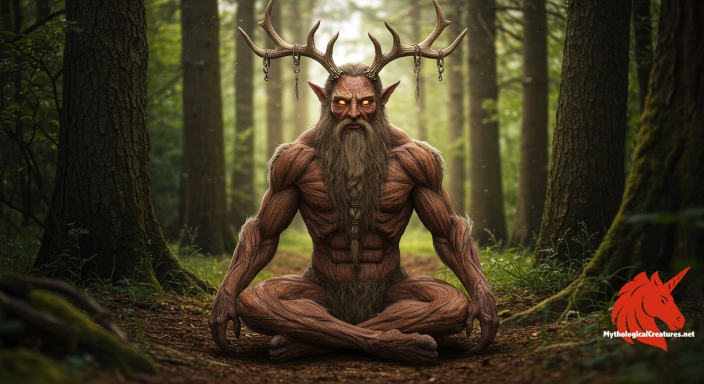
Cernunnos: Cernunnos is a Celtic god of nature, fertility, and the underworld, depicted as an aged, horned figure adorned with torcs.
Cernunnos
Cernunnos - - Cernunnos is a Celtic god of nature, fertility, and the underworld, depicted as an aged, horned figure adorned with torcs. His image, attested on the 1st-century CE Pillar of the Boatmen, underscores his ancient origins. Despite Roman conquest, his cult maintained a distinct and unassimilated identity within Celtic culture.
Origins & First Encounters
Cernunnos emerges from the mists of Celtic mythology as one of its most enigmatic and compelling deities. His presence is anchored in the earliest surviving artefacts, notably the 1st-century Pillar of the Boatmen from Paris, which presents him as an antlered, venerable figure adorned with torcs. This striking iconography underscores his deep connections to nature, fertility, and the mysteries of life and death. His origins are deeply embedded in the Gaulish cultural milieu, where the natural world and its cycles held powerful symbolic importance. The imagery of his antlers and cross-legged posture reflects a duality of the earthly and the divine, as well as an awareness of the continual transformations in nature. While his precise roles—whether as a deity of fertility, the underworld, or bi-directionality—remain open to interpretation, his impact on Celtic spirituality is undeniable. His image resonates with themes of regeneration and eternal cycles, which transcended the Roman conquest without significant alteration. Over the centuries, the god has maintained an aura of mystery and fascination, inspiring both ancient worship and modern reinterpretations.
Source Texts & Tale Variants
The principal evidence for Cernunnos is found on the Pillar of the Boatmen, a 1st-century monument that serves as a cornerstone for understanding his iconographic legacy. This singular inscription, though brief, has sparked extensive discussion regarding the identity and role of the antlered figure in Celtic art. Additional sources include a collection of roughly 25 identified depictions that cluster around similar symbolic motifs such as torcs, serpents, and wild beasts. These images, carved or cast in various media, have been discovered across north-eastern Gaul and even as far afield as Italy and Denmark. While written narratives in the form of ancient texts are sparse, the visual language of these artworks creates a rich tapestry of myth and ritual. Each variant, whether portraying him with crossed legs or entwined with animal symbolism, expands the mystery surrounding his true nature. The diversity of artistic impressions has allowed modern historians to piece together a multifaceted picture of his cult. As a result, the study of primary sources for Cernunnos emphasises both the power of visual lore and the enduring appeal of his mythological persona.
Form & Powers
Cernunnos is most recognisable by his magnificent antlers, which crown his head and immediately signal his association with the wild and untamed forces of nature. His depiction often includes ornate torcs that embellish these antlers, serving as symbols of authority and connection to the spiritual realm. The god’s countenance is frequently rendered as aged and wise, with lines and features that suggest a long history of mythical existence. His body is robust and muscular, sometimes portrayed in a stance with crossed legs that implies meditative balance and grounded power. The integration of animal elements, such as serpents and wild beasts, further accentuates his connections to both life and the cyclical nature of death. While his size and proportions may vary among depictions, the consistent presence of natural motifs reinforces his role as a guardian of the forests. Intricate carvings reveal a textured representation that merges the corporeal with the mystical. In artistic portrayals, every detail—from the rugged lines of his face to the adornments on his horns—contributes to an image that is both formidable and deeply symbolic.
Regional Faces
The imagery of Cernunnos exhibits notable regional variation, reflecting a broad Celtic influence that spans across different cultural landscapes. In north-eastern Gaul, where his depictions are most prolific, the god is portrayed with an earthy authenticity that mirrors the natural environment of local communities. In contrasting cultural settings, such as those evident in parts of Italy like Val Camonica, elements of refined artistry intertwine with the established Celtic motifs. Danish representations, such as those found on the Gundestrup cauldron, emphasise fluid forms and incorporate dynamic artistic influences that hint at broader European exchanges. Each region adapts his iconography to express local values, whether highlighting fertility, the mysteries of the underworld, or the raw power of nature. Variations in style, from the detailed rendering of torcs to subtle differences in the horn shapes, highlight the diversity of his worship. Despite these variations, a consistent thread runs through all depictions—a sense of ageless wisdom, mystery, and an intimate relationship with the natural world. These regional adaptations underscore how Cernunnos was embraced not only as a local guardian but also as a unifying symbol of pan-Celtic spirituality.
Cultural Parallels
A comparative exploration of mythological figures reveals several cultural parallels to Cernunnos, particularly in the embodiment of nature and fertility. Horned deities appear in various European mythologies, and the imagery of antlers is a recurring symbol associated with wildlife and the cycles of the natural world. Similar figures, such as the Greek god Pan, share attributes of wildness and an affinity for the forest, though Cernunnos is distinctly rooted in a Celtic framework. His symbolic duality between life and the underworld finds echoes in other cultures that honour the cyclical process of growth, death, and regeneration. Furthermore, the incorporation of animal motifs such as serpents and deer in both his depiction and those of his counterparts underlines a shared admiration for nature’s mysteries. While each mythology develops unique narratives around these figures, the underlying theme of reconnection with primordial forces is a common thread. Comparative analysis shows that these deities served not only as embodiments of natural elements but also as mediators between the human and the divine. Thus, Cernunnos stands as part of a broader pan-European reverence for symbols that reflect the intimate interplay between humanity and the natural environment.
Legacy & Modern Evolution
The evolution of Cernunnos through the ages reflects a dynamic interplay between ancient myth and modern reinterpretation. Initially revered in early Celtic societies as an embodiment of nature’s potency, his image has gradually transcended time, adapting to the changing narratives of cultural identity. Medieval depictions introduced nuanced variations, with elements of heroism and mysticism interwoven into his ancient iconography. Over the centuries, his enduring presence has been a touchstone for those seeking connections to a pre-Christian, nature-centred spiritual tradition. In contemporary times, Cernunnos has been embraced by modern artists, writers, and environmental advocates as a symbol of a return to the wild and a celebration of natural cycles. His image has found a place in popular culture, serving as a reminder of the deep-seated links between humanity and the natural world. These modern reinterpretations often combine historical motifs with new artistic visions, ensuring that his legacy remains vibrant and relevant. As debates over environmental and spiritual renewal continue, the timeless figure of Cernunnos endures as a beacon of ancient wisdom and enduring mystery.
Interesting Fact
Cernunnos is one of the few deities whose iconographic style transcends regional boundaries, with depictions found from Gaul to Denmark, underscoring his widespread cultural impact.
For serious myth projects
Feature your work alongside the legends
From academic works to story-rich games, we highlight projects that respect world mythologies. Talk to us about a measured, long-term placement.
Start a conversationQuick Creature Info
Type:
Origin:
Features:
Our Mythic Legendary Rating:

Supernatural Powers:
Physical Attributes:
Abilities:
Behavior:
Related Creatures, Tales or Lore
- GGreen Man
- HHerne the Hunter
- OOther Horned God Archetypes
References
Discover Another Mythical Legend You May Not Have Heard Of?
Uncover the mysteries of ancient folklore and expand your knowledge of legendary beings from cultures around the world.
Dare to Meet the Ergene iyesi....
Curated by the Mythological Creatures Team
Series editor: Mythological Creatures Directory
(rev. November 2025)