
Ergene iyesi: Ergene iyesi is an underground spirit from Turkic mythology known for protecting mine pits and its ability to transform into animal form.
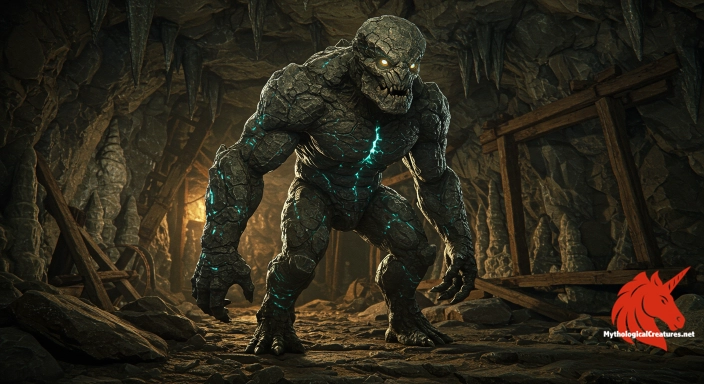
Ergene iyesi
Ergene iyesi - Ergene iyesi represents the protective forces of the underground, especially in mining contexts, and illustrates the Turkic belief in spirits managing natural domains.
Origins & First Encounters
The Ergene iyesi emerges as a fascinating underground spirit within the tapestry of Turkic mythology, a guardian deeply connected with the very roots of the earth. Its role as the protector of mine pits reflects a centuries-old reverence for the forces that lie beneath the surface, serving both as a warning and a blessing for those who seek to harness the earth’s hidden treasures. Its early presence in oral traditions hints at a primordial belief in the sanctity of natural spaces and the spirits that inhabit them. This spirit appears to have evolved from ancient animistic beliefs, where every natural feature possessed its own soul or master. The dual capacity to assume an animal form and to safeguard the subterranean realms highlights an unparalleled integration of nature and the supernatural. Ergene iyesi, sometimes referred to as Shakhta iyesi, stands as a symbolic bridge between the physical and metaphysical worlds. The linguistic roots of the term emphasize a sense of ownership and mastery over the underground, a notion that resonated with early mining communities. Its depiction has not only served as a cultural emblem of respect towards natural forces but also as a personification of the unpredictable nature of the earth’s bounty.
Source Texts & Tale Variants
Accounts of the Ergene iyesi have mostly been preserved through a rich oral tradition, with references scattered across various folklore collections in Turkic regions. Historical records, though scarce, suggest that the spirit was mentioned in early ethnographic surveys and tales passed from generation to generation in rural mining communities. Variants of its story are often told informally by miners and locals who regard the spirit with both awe and caution. Over time, small narratives evolved, portraying it as both benevolent and potentially vengeful, depending on how the earthly domains were treated. Some versions depict the spirit as a subtle guide to safe excavation, while others warn of dire consequences should the sanctity of the mine be disturbed. Its presence has also been noted in comparative studies of subterranean deities, highlighting cross-cultural exchanges between neighbouring traditions. Although the Ergene iyesi does not feature prominently in a wide array of ancient texts, snippets of its legend have been interwoven with regional histories. The mutations in its tale reflect shifts in environmental, economic, and social conditions as communities interacted with the dangerous womb of the earth, resulting in a mosaic of story variants that enrich its mythos.
Form & Powers
The physical form of the Ergene iyesi is as fluid and enigmatic as the underground passages it guards. Descriptions often place it in a state of metamorphosis, where it can transition seamlessly from a vague, spectral outline into the more familiar guise of an animal. Some narrations portray the spirit as a being composed of shifting shadows and faint luminescence, reminiscent of the reflective glint off wet miner’s rocks. At times, it is described as possessing an almost amorphous body that organically mirrors the textures of stone and earth. Variations in size are noted; in certain tales, the creature looms large, embodying the formidable force of nature, whereas in others it is slight and elusive, barely distinguishable from the dark penumbra of the mine. Its eyes, when visible, are sometimes depicted as suddenly bright, piercing through the gloom to warn intruders. The amalgamation of animalistic features with corporeal elements of the subterranean world imbues it with an unsettling beauty. These diverse physical manifestations underline the creature’s inherent otherness, a chameleon-like nature that adapts to its surroundings and the fears of those who witness it.
Regional Faces
Across the vast regions of Turkic influence, the Ergene iyesi assumes a variety of local characteristics that mirror the distinctive cultural and environmental contexts. In Turkish lore, the spirit is often interwoven with a sense of domestic guardianship, reflecting deep-rooted traditions of protecting communal spaces. Azerbaijani interpretations elevate its mysterious nature, emphasising elusive appearances and an otherworldly connection with the subterranean. In Tatar regions, where it is known as Shakhta iyesi, the creature is celebrated in local rituals and folk narratives, often embodying both protector and warning to miners. Variations in its temperament—ranging from benevolent helper in some accounts to a more unpredictable force in others—highlight the strong regional influences on its myth. These local adaptations underscore a shared human effort to explain the capricious nature of underground environments, lending the spirit an air of regional authenticity. Tales among Siberian Turkic tribes sometimes infuse the spirit with the ruggedness of the harsh northern landscape, while those closer to Anatolia might focus on its subtle role as a silent guardian. Each regional narrative contributes to a richer mosaic of understanding, portraying the Ergene iyesi as a multifaceted entity shaped by local beliefs and the demands of a life spent close to nature’s raw power.
Cultural Parallels
When one examines the Ergene iyesi alongside similar mythic entities from other cultures, striking parallels emerge that speak to a universal fascination with subterranean guardians. Its role as a protector spirit resonates with the Cornish knockers of British mining folklore, where supernatural beings are believed to guide and warn miners through the dark recesses of the earth. Likewise, the creature bears a resemblance to certain chthonic deities in Greek mythology, who were revered as custodians of the underworld’s secrets. Comparisons can also be drawn with Norse dwarfs, legendary craftsmen born of the earth who symbolised both creation and the unpredictable forces of nature. In each tradition, the creature embodies the dual nature of the earth—capable of nourishing life while harbouring latent dangers. These cross-cultural connections point to a common human desire to personify the mysteries hidden beneath the surface, making abstract natural forces more relatable. Such comparative analysis not only highlights shared motifs but also illuminates the cultural specificity of each tradition’s protective legends. The recurring theme of transformation, seen in the Ergene iyesi’s ability to change form, further aligns it with a broader mythological framework that celebrates metamorphosis as a sign of divine interaction with the natural world.
Legacy & Modern Evolution
Historically, the Ergene iyesi has undergone a transformation in representation that mirrors the changing attitudes towards nature and industrial progress. In earlier times, miners and local communities might have seen the spirit as a real, intervening force that demanded respect and careful stewardship of the land. Over the centuries, as the world modernised and scientific thought began to dominate, its depiction gradually shifted from a literal guardian to a potent symbol of nature’s enduring mystery. Modern portrayals often cast the spirit in a more allegorical light, reflecting both the romanticisation of ancient myth and the caution about exploiting natural resources without reverence. Contemporary literature and visual arts have reimagined the Ergene iyesi, endowing it with a surreal and sometimes enigmatic presence in fantasy narratives and cultural critiques. Its mystique continues to capture the imagination, serving as a metaphor for the unpredictable and often uncontrollable power of nature. This evolution in depiction underscores a broader cultural reassessment of humanity’s relationship with the earth, balancing between technological advancement and respect for ancient wisdom. Today, the Ergene iyesi lives on as an enduring symbol in folklore festivals, art exhibitions, and even in popular media, where it continues to influence perceptions of both the natural world and the supernatural realms that lie hidden within it.
Interesting Fact
The term 'İye' signifies ownership or mastery in Turkic languages, reflecting the spirit's role as the possessor of its underground domain and highlighting its integral connection to the land.
Partner with us
Sponsor this space
Reach thousands of mythology enthusiasts with a curated placement on our creature pages.
Learn about sponsorshipQuick Creature Info
Origin:
Features:
Associations:
Our Mythic Legendary Rating:

Also Sometimes Known As:
Habitat:
Supernatural Powers:
Physical Attributes:
Abilities:
Behavior:
Lore:
Related Creatures, Tales or Lore
- KKobold
- YYer iyesi
- DDomovoi
References
Discover Another Mythical Legend You May Not Have Heard Of?
Uncover the mysteries of ancient folklore and expand your knowledge of legendary beings from cultures around the world.
Dare to Meet the Nessus....
-15420a3b-df48-4055-bad7-40f2815cc023_small.webp "Depiction of Nessus")
Curated by the Mythological Creatures Team
Series editor: Mythological Creatures Directory
Primary desk: Asian & Pacific Myth Cycles Desk
(rev. November 2025)