
Chalkydri: Chalkydri are colossal, composite creatures from apocryphal texts, renowned for their copper-like appearance, crocodile head, lion attributes, and twelve majestic wings.
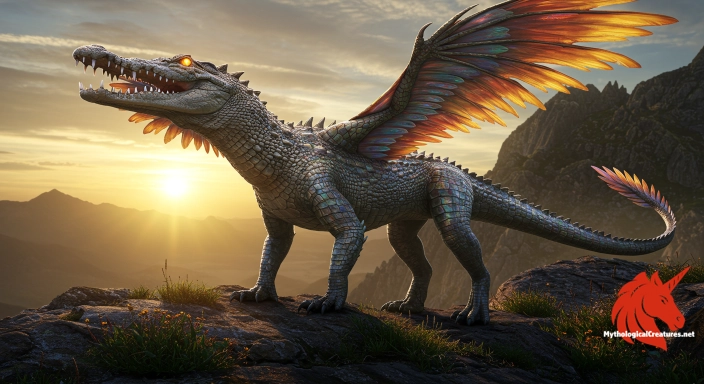
Chalkydri
Chalkydri - They embody the fusion of celestial phenomena with divine intervention, celebrated as angelic beings whose song signals the renewal of each day.
Origins & First Encounters
Chalkydri are wondrous mythological beings whose origins weave together strands of ancient Greek linguistic ingenuity and early apocryphal Christian mysticism. They first emerge in the enigmatic pages of the Second Book of Enoch, where celestial beings and cosmic forces intermingle in vivid narratives. Their very name, derived from the Greek words for brass or copper and hydra, hints at a fusion of metallic brilliance with serpentine mystery. Early accounts cast them as dwellers near the Sun, harmoniously accompanying its journey as it brings heat and dew to the Earth. These beings occupy a liminal space between the divine and the natural, serving as guardian figures that signal the break of a new day with their resounding songs. Emerging in a period rich with apocalyptic imagery and symbolic allegories, they capture a blend of awe and reverence among ancient audiences. Their myth reflects a shared cultural understanding that celebrates hybrid forms and celestial duty, bridging Greco-Roman mythologies with Judaeo-Christian symbolism. Over time, Chalkydri have come to represent both the power of the natural world and the mystery of heavenly order. Their legacy continues to inspire a sense of wonder, resonating with the eternal human quest to understand the forces that govern life. This enduring presence in myth encapsulates both ancient divinity and the transformative power of nature.
Source Texts & Tale Variants
The primary narrative of the Chalkydri unfolds in the apocryphal Second Book of Enoch, a text steeped in evocative imagery and cosmic symbolism. The account portrays these creatures as integral elements of the celestial machinery, operating in tandem with other magnificent beings such as phoenixes. In a parallel vein, the Greek Apocalypse of Baruch offers a variant narrative where a large, sun-guarding bird is identified with similar qualities, thus broadening the interpretative landscape. Multiple manuscripts and textual traditions have preserved these stories, each contributing subtle nuances to the Chalkydri’s character and function. These ancient sources, though emerging from different cultural milieus, converge on themes of protection, renewal, and the cyclical nature of daylight. Some accounts even suggest that their harmonious chorus at sunrise was intended to signal the rejuvenation of the Earth. The diverse textual evidence emphasises the symbolic role of these beings as intermediaries between divine realms and the terrestrial sphere. This amalgamation of sources has allowed the myth of the Chalkydri to evolve, reflecting changes in religious and cultural perceptions over time. The narrative integrity of these texts has continued to spark scholarly and artistic interest throughout the centuries. As a result, the textual tradition of the Chalkydri remains a vibrant component of early apocalyptic literature.
Form & Powers
The physical depiction of the Chalkydri is both intricate and awe-inspiring, marked by a blend of animalistic ferocity and otherworldly grace. They are described as possessing the formidable head of a crocodile, an attribute that conveys both menace and ancient wisdom. Their limbs, reminiscent of a lion’s, underscore a regal strength that is tempered by the sublime mechanisms of flight. Each creature is endowed with twelve expansive wings, a detail that hints at a capacity for swift and majestic movement. The vivid description of their bodies as empurpled with rainbow hues adds an ethereal quality, suggesting an ever-changing luminescence akin to the metal from which their name is derived. The scale of these beings, noted to be 900 measures in size, imbues them with a grandeur that transcends ordinary physicality, aligning them with cosmic proportions. Their overall anatomy is a harmonious blend of reptilian and leonine features, creating a hybrid that is as visually striking as it is symbolically potent. The metallic overtones, evoking images of copper and brass, serve to merge the realms of material substance with divine essence. This rich combination of traits ensures that the Chalkydri remain one of the most vividly rendered entities in mythic traditions. Each detail of their physical form contributes to a portrait of a creature both fearsome and majestic, perfectly suited to its role as a celestial guardian.
Regional Faces
The myth of the Chalkydri has travelled through various cultural landscapes, each adapting the creature’s attributes to reflect local cosmologies and symbolic needs. In Hellenistic traditions, they are celebrated as celestial guardians whose radiant forms mirror the splendour of the mid-day Sun. Within Jewish apocalyptic contexts, echoes of the ancient bronze serpent Nehushtan infuse the narrative with themes of divine protection and admonishment. The Mediterranean region, in particular, often portrays them as emblematic of the transition between night and day, imbuing them with qualities of both renewal and stern vigilance. In some Eastern interpretations, similar copper-hued serpentine figures are woven into local folklore, subtly reshaped to align with indigenous celestial myths. These regional variations underscore a universal fascination with hybrid beings that bridge the Earth and the sky. Adaptations in iconography have allowed the Chalkydri to be reinterpreted as symbols of both natural abundance and metaphysical mystery. Local artistic expressions frequently modify their form—accentuating certain features such as their noble lion-like aspects or their multifaceted wings—to better resonate with regional symbolism. This cultural malleability ensures that while their core identity remains intact, the Chalkydri continue to speak in the dialect of diverse traditions. Such widespread adaptations affirm the enduring appeal and versatility of this mythic figure as it journeys across time and geography.
Cultural Parallels
The Chalkydri occupy a unique position in the tapestry of mythological creatures, evoking comparisons with a range of similarly hybrid beings from diverse cultures. Their role as solar guardians invites parallels with the phoenix, whose rebirth from ashes similarly symbolises regeneration and cyclical time. In the Judeo-Christian realm, there is a striking resemblance to the Nehushtan—the bronze serpent crafted by Moses—which likewise marries the concepts of divine protection and elemental power. Comparable to the seraphim and cherubim, the Chalkydri blend avian symbolism with terrestrial might, underscoring a duality that spans both heaven and earth. Like the Egyptian Bennu, a bird associated with the rebirth of the sun, they embody the eternal cycle of life and illumination. The composite features of reptilian and lion-like elements also draw an imaginative parallel to the griffin, a creature celebrated for its prowess and noble guardianship. These cross-cultural connections highlight a recurring mythic archetype that bridges the natural and the supernatural. The convergence of such diverse symbols underscores the universality of the desire to personify cosmic forces in animal form. Through these comparative lenses, the Chalkydri emerge not merely as isolated figures but as part of a vast network of mythic representations that transcend cultural boundaries. Their enduring presence in comparative mythology speaks to a collective human engagement with the mysteries of reverence, renewal, and the divine.
Legacy & Modern Evolution
The historical evolution of the Chalkydri is a tale of transformation, from ancient apocryphal texts to their reimagining in modern cultural narratives. Initially portrayed in the mystic pages of early Christian literature, they served as potent symbols of cosmic order and the harmonious rhythms of nature. Over subsequent centuries, their vivid imagery was embraced by medieval illuminators and Renaissance artisans, who saw in these celestial beings a reflection of divine majesty and natural power. In these later depictions, the Chalkydri were often interwoven with themes of protection, renewal, and the sacred interplay between light and darkness. Their myth found new life in literary and artistic modernisations, where the ancient symbolism of their multifaceted wings and resplendent hues resonated with contemporary sensibilities. Modern reinterpretations in fantasy literature and digital media have further amplified their role as emblematic figures of elemental energy and cosmic wonder. Contemporary artists frequently draw upon their hybrid form to explore themes of transformation and the interplay of natural and supernatural forces. The legacy of the Chalkydri endures as a testament to the malleability of myth, capable of evolving to mirror the changing aspirations and imaginations of each era. Even as the contexts in which they appear shift, their symbolic power remains undiminished, continually inspiring awe and reflection. Today, the Chalkydri not only bridge the gap between ancient lore and modern creativity but also occupy a prominent place in the ongoing dialogue about humanity’s connection to the cosmos.
Interesting Fact
An intriguing aspect of the Chalkydri is that their name, meaning 'copper serpents', links them to the biblical Nehushtan, highlighting an intertextual dialogue between Jewish apocalyptic literature and Greek mythological traditions.
Mythology commerce, done carefully
Align your store with our global myth audience
If you sell myth-inspired jewellery, prints, decks, or collectibles, we can feature your brand without overwhelming the reading experience.
Partner with usQuick Creature Info
Origin:
Associations:
Our Mythic Legendary Rating:

Also Sometimes Known As:
Habitat:
Supernatural Powers:
Physical Attributes:
Abilities:
Behavior:
Lore:
Related Creatures, Tales or Lore
- PPhoenixes
- NNehushtan
- FFiery Flying Serpents
References
Discover Another Mythical Legend You May Not Have Heard Of?
Uncover the mysteries of ancient folklore and expand your knowledge of legendary beings from cultures around the world.
Dare to Meet the Wuzhiqi....
Curated by the Mythological Creatures Team
Series editor: Mythological Creatures Directory
Primary desk: Hellenic & Ancient Mediterranean Desk
(rev. November 2025)