
Chiyou: Chiyou is a mythological war deity and tribal leader from ancient Chinese legends.
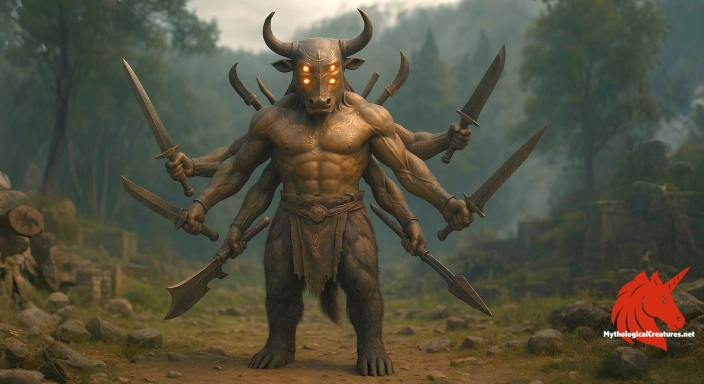
Chiyou
Chiyou - Chiyou embodies the duality of destruction and protection in warfare, symbolizing both the chaotic forces of battle and the strategic might of ancient tribal leadership.
Origins & First Encounters
Chiyou emerges as one of the most enigmatic figures in Chinese mythology, a being whose legend has been meticulously woven into the fabric of ancient lore. His origin is steeped in the accounts of the Three Sovereigns and Five Emperors era, evoking images of a time when myth and history intertwined. As the revered leader of the Nine Li tribe, his ancestry is traced to the illustrious Flame Emperor, which lends his narrative an aura of primordial authority. His legend encapsulates the tension between disciplined order and the raw forces of chaos, with his persona embodying both the ferocity of war and the capricious nature of the natural world. The epic confrontation with the future Yellow Emperor marks a seminal moment in his story, offering a compelling dialogue between opposing forces. Beneath the layers of martial prowess lies a figure capable of summoning natural phenomena, revealing a complex mix of intellectual mystique and brute strength. His story is not merely one of conquest but also of transformation, where the attributes of both a fearsome demon and a protective war deity converge. Legends of his leadership, his strategic brilliance in battle, and his mythical command over the elements have inspired countless interpretations and discussions throughout the ages. His enduring legacy continues to fascinate both historians and enthusiasts, underscoring the perpetual appeal of myth in addressing the duality of human nature.
Source Texts & Tale Variants
Ancient chronicles have preserved the story of Chiyou through diverse narratives and textual traditions, with the Song dynasty work Lushi offering one of the earliest formal attestations. Written sources intertwine with the wealth of oral traditions that have carried his lore across generations, ensuring that his myth remains both vibrant and multifaceted. Various ancient records hint at his lineage as a descendant of the Flame Emperor, thereby cementing his place in the pantheon of early Chinese heroes and demon figures. Several Daoist and regional narratives depict him alternately as a harbinger of chaos and as a powerful deity safeguarding warriors in times of conflict. In some accounts, the mystique of his twenty-first-century portrayal is enriched with details that symbolically reference the number 81, either as his brothers or as the clans within his dominion. Each iteration adds layers of meaning to his persona, blending historical motifs with imaginative myth-making. The multiplicity of textual and folkloric sources has resulted in a rich mosaic of interpretations that continues to fuel debates among scholars. Consequently, the evolution of his story through various literary and cultural channels highlights the dynamic interplay between tradition and reinterpretation over time.
Form & Powers
Chiyou’s physical description is as formidable as his legacy, presenting an amalgam of human and animal attributes that elevate his mythic stature. His head, often rendered in a gleaming bronze, is marked by a striking metal forehead that exudes an otherworldly luminescence. He is depicted with four penetrating eyes, which symbolically suggest a heightened perception that transcends ordinary human capabilities. The most arresting feature of his anatomy is his possession of six powerful arms, each wielding an array of sharp, menacing weapons that underscore his role as a master of warfare. In various portrayals, his head takes on the imposing shape of a bull complete with majestic horns, creating a fusion of animalistic ferocity and human intellect. This hybrid visage is further accentuated by descriptions of his lower body, which mirrors that of a bear and reinforces his image as a creature of overwhelming strength. His silhouette is not only a testament to his might but also an emblem of the unpredictable and chaotic forces he personifies. Such detailed iconography serves to remind the audience that he is a being whose very form challenges the boundaries of the natural world, symbolically embodying both regal authority and untamed power.
Regional Faces
Regional variations in the portrayal of Chiyou reflect the rich diversity of cultural interpretations across China and its neighbouring communities. In northern parts of China, his image is predominantly cast as a fearsome, chaotic war deity, a figure whose turbulent energy is both revered and feared. By contrast, certain Hmong traditions elevate him to the status of a sagacious mythical ruler, celebrating his leadership and strategic intellect. Folk narratives in various regions have adapted his story to resonate with local struggles, often blending his warlike persona with indigenous beliefs about nature and fate. These adaptations may feature distinctive artistic interpretations, where his animalistic attributes and supernatural abilities are emphasised to illustrate communal values of strength and resilience. Some local legends even transform the symbolism associated with his 81 clans or brothers, turning what might have been a mark of division into an emblem of unity and collective prowess. The regional embellishments of his myth highlight the adaptability of his story, as communities across vast geographies adopt and modify his narrative to reflect their own historical and environmental contexts. This geographical diversity not only enriches his mythos but also underscores the universal themes of conflict, leadership, and transformation embedded within his legend.
Cultural Parallels
The multifaceted figure of Chiyou finds intriguing parallels in numerous mythological traditions across the world, where the fusion of human and animal traits is often employed to signify divine martial prowess. His warrior spirit and elemental command evoke comparisons with Western deities of war such as Mars and Ares, who similarly embody the turbulent forces of battle and conquest. Much like these classical figures, Chiyou's portrayal challenges simplistic dichotomies between hero and villain, blending aspects of chaos, wisdom, and warfare into a single complex persona. In the East, his myth resonates with other legendary figures who are celebrated for their strategic mastery and control over natural elements, reminding one of various Daoist deities who bridge the gap between the mortal and the supernatural. His ability to summon fog and manipulate weather conditions also draws parallels with storm gods found in other indigenous religions, thereby highlighting recurring themes in the global mythological imagination. Comparative mythology often reveals how different cultures utilise similar archetypes to make sense of natural phenomena, war, and the mysteries of existence. While Chiyou's narrative is uniquely embedded in Chinese tradition, the universal motifs in his story resonate with believers and scholars around the world. This shared symbolism enriches our understanding of myth and underscores the common human fascination with the integration of human ingenuity and the raw power of nature.
Legacy & Modern Evolution
Over time, the figure of Chiyou has experienced a remarkable evolution in both interpretation and cultural relevance, reflecting shifts in societal values and historical perspectives. Initially depicted in ancient texts as a brutal warrior and a disruptive influence on the rise of order, his role transformed into that of a symbol of complex resistance and unbridled power. The gradual reimagining of his persona has led modern thinkers to view him as a multifaceted antihero, whose story speaks to the eternal conflict between chaos and stability. In contemporary art, literature, and even film, Chiyou has become a potent emblem of both the burden and the beauty of defiance against oppressive forces. His image, once confined to ancient battlefields and mythic epics, now transcends into popular culture, where it is used to explore themes of transformation and renewal. Modern reinterpretations often celebrate his strategic brilliance and the duality of his nature—simultaneously a fearsome combatant and a protector of his people. This evolution of perception has sparked vibrant academic debate and inspired a wide range of creative expressions that reframe his actions in a more nuanced light. As the myth continues to be reworked for new audiences, Chiyou remains a powerful reminder of the enduring allure of ancient legends and their capacity to inform and inspire modern narratives.
Interesting Fact
An intriguing facet of Chiyou's legend is the debate over the significance of the number 81—some interpret it as referring to his 81 brothers while others see it as a representation of the 81 clans within his kingdom.
For serious myth projects
Feature your work alongside the legends
From academic works to story-rich games, we highlight projects that respect world mythologies. Talk to us about a measured, long-term placement.
Start a conversationQuick Creature Info
Features:
Associations:
Our Mythic Legendary Rating:

Also Sometimes Known As:
Habitat:
Supernatural Powers:
Physical Attributes:
Abilities:
Behavior:
Lore:
References
Discover Another Mythical Legend You May Not Have Heard Of?
Uncover the mysteries of ancient folklore and expand your knowledge of legendary beings from cultures around the world.
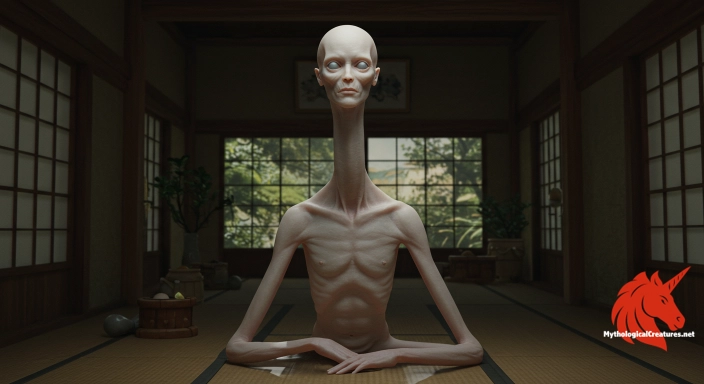
Dare to Meet the Mikoshi-nyūdō....
Curated by the Mythological Creatures Team
Series editor: Mythological Creatures Directory
Primary desk: Asian & Pacific Myth Cycles Desk
(rev. November 2025)