
Mikoshi-nyūdō: Mikoshi-nyūdō is a bald-headed yokai from Japanese folklore known for its unnaturally ever-extending neck.
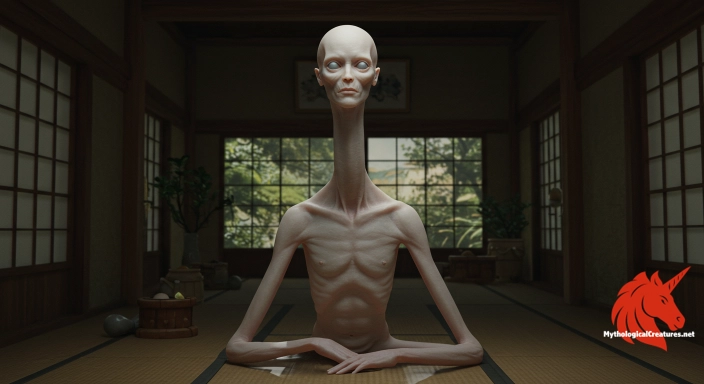
Mikoshi-nyūdō
Mikoshi-nyūdō - Represents the mysterious and eerie aspects of the everyday, reminding observers of the unpredictable nature of the supernatural.
Origins & First Encounters
Mikoshi-nyūdō emerges from the deep and enigmatic well of Japanese folklore, embodying an aura of otherworldly charm and quiet menace. This spectral figure was first immortalised during the Edo period, where ghost story texts captured its uncanny presence and mutable form. Central to its allure is the peculiar ability to extend its neck indefinitely, a feature that forces observers to confront the surreal. Its bald head and almost skeletal demeanour further enhance an atmosphere of eerie uncertainty. The very name, combining the connotations of 'seeing over' and 'entering the Way', hints at the creature’s liminal existence between the tangible and the spiritual. Encounters with this yokai are said to occur in moments of unguarded attention, where the mundane act of peering over a folding screen transforms into an encounter with the supernatural. Its legend, imbued with layers of symbolic meaning, reflects the complex interplay of fear and fascination that permeates Japanese myth. The Mikoshi-nyūdō stands as a reminder of how even the most ordinary moments can be haunted by the extraordinary. Its narrative continues to provoke intrigue, inviting each generation to explore the balance between reality and the hidden realms. Ultimately, this creature encapsulates the enduring mystery and imaginative spirit of traditional Japanese storytelling.
Source Texts & Tale Variants
The earliest records of the Mikoshi-nyūdō are found in Edo period kaidan texts, where ghost stories were a popular means of exploring the unknown. These texts provide a foundational glimpse into how the creature was perceived by a society both steeped in tradition and fascinated by the supernatural. Numerous written and oral accounts have since emerged, each adding subtle nuances to the legend. Some narratives stress the creature’s role as a harbinger of subtle dread, while alternative versions portray it with a mischievous edge. In several manuscripts, the emphasis is placed on the creature’s responsive nature; its neck is said to extend as a direct and eerie reaction to a watchful gaze. Over time, variations have proliferated, with different communities embracing unique interpretations of its character. Folklore compilations and regional anecdotes further illustrate the multiplicity of views surrounding this elusive spirit. The diverse range of sources and story variants reflects a dynamic tradition where cultural fears and moral lessons intertwine with the art of storytelling. Each retelling enriches the myth by imprinting local colour and contemporary sensibilities on the ancient narrative. Thus, the Mikoshi-nyūdō stands not merely as a static figure, but as a living myth shaped by both written records and the spoken word.
Form & Powers
The Mikoshi-nyūdō is notable for its striking appearance, where the juxtaposition of a normal human form and an impossibly lengthening neck creates a scene of surreal disquiet. At first glance, the creature seems almost unremarkable, yet a closer look reveals the unsettling feature of its extendable neck. Its head is entirely bald, reinforcing an image of stark otherworldliness and hinting at a spectral essence. Descriptions in various accounts speak of a skin as pale and smooth as moonlight on calm water, which adds to its ghostly aura. The dynamic extension of its neck not only defies the limits of human anatomy but also serves as a symbolic bridge between reality and the supernatural. Some depictions capture the neck as flowing and elastic, as if it responds instinctively to curiosity or caution. In this way, the creature’s anatomy evolves from a benign form to a source of quiet terror. Artists and storytellers alike have highlighted the contrast between the creature’s initial unassuming posture and the sudden, disquieting reveal of its elongated neck. The overall physical portrayal of the Mikoshi-nyūdō is a carefully crafted blend of human traits and strange anomalies. This distinctive visual iconography continues to spark the imagination and unsettle those who dare to look too closely.
Regional Faces
Though the Mikoshi-nyūdō is rooted in a broadly shared Japanese tradition, its portrayal exhibits intriguing regional differences that reflect local cultural sensibilities. In some rural locales, for instance, the creature is integrated into community lore as both an omen and a playful trickster, rather than a figure of outright terror. Urban Edo period texts often amplify its eerie attributes, using its elongating neck as a metaphor for sudden, unexpected change. In regions where oral tradition remains strong, subtle variations in the description — such as slight differences in size or the intensity of its gaze — serve to personalise the legend. Local dialects may even influence the creature’s name, imbuing it with distinctive linguistic flavour that mirrors the community’s unique worldview. In certain areas, storytellers have woven the Mikoshi-nyūdō into the fabric of seasonal festivals and local cautionary tales, thereby reinforcing its role as both a mythic presence and a moral signifier. The creature’s capability to transform its appearance is sometimes seen as reflective of the unpredictable character of nature in these regional narratives. Emphasis is also placed on the setting in which it appears, with some accounts linking its manifestation to narrow alleyways, secluded gardens, or the interiors of traditional homes. This diversity of local interpretations enriches the broader myth by demonstrating how various communities adopt and adapt the legend to address their particular fears and curiosities. As a result, the Mikoshi-nyūdō continues to serve as a versatile symbol within a mosaic of regional folklore.
Cultural Parallels
The enigmatic qualities of the Mikoshi-nyūdō invite comparison with a range of supernatural beings from both Eastern and Western traditions. In Japan, it shares thematic similarities with the roukurokubi — another yokai noted for its unusual, extendable neck — thereby placing it within a distinctive cadre of shape-altering spirits. Its ability to transform its physical form resonates with broader mythical motifs that appear in a variety of cultural contexts. At times, the creature’s mysterious extension of the neck appears to echo legends of shapeshifters who defy the limits of natural anatomy. This dynamic feature brings to mind the perplexing figures of folklore that span continents, where the body distorts to reveal hidden truths or sinister intentions. While some Western ghost stories feature spectral figures with mutable forms, the Mikoshi-nyūdō maintains a unique blend of humour and horror that is rooted in Japanese aesthetics. These cultural parallels highlight a universal human fascination with the blurring of boundaries between the known and the unseen. The multifaceted comparisons extend beyond physical form, encompassing themes of vigilance, the disruption of the everyday, and the confrontation with inexplicable forces. Such analysis underscores how different mythologies use visual and narrative metaphor to capture the ineffable. In this way, the Mikoshi-nyūdō serves as a bridge not only between myth and reality but also between diverse cultural expressions of supernatural wonder.
Legacy & Modern Evolution
Throughout history, the Mikoshi-nyūdō has evolved from a shadowy figure in Edo period ghost story texts into a compelling icon within modern Japanese culture. Early depictions, often rendered in simple ink illustrations, laid the groundwork for a myth that would later be reimagined in multiple artistic forms. Now, its legacy resonates in contemporary media such as manga, anime, and film, where the creature is sometimes portrayed with nuanced ambiguity. Modern reinterpretations tend to explore the inherent tension between menace and melancholy, reflecting on the complexities of human curiosity and the fear of the unknown. The iconic image of an ever-extending neck has become a symbol for the unpredictable nature of life and the hidden depths that lie beneath the surface of normalcy. Digital art and popular culture have both embraced and reinvented the Mikoshi-nyūdō, ensuring that its image remains fresh and thought-provoking. New generations are introduced to the tale not only as a frightful ghost story but also as a metaphor for the intrusion of otherworldly forces into everyday life. This enduring evolution mirrors broader trends in the reinterpretation of folklore, where ancient legends are continually reshaped to address modern anxieties. Scholarly interest persists as academics examine the transformation of this myth from its historical origins to its present-day cultural significance. Thus, the Mikoshi-nyūdō maintains a vibrant presence, symbolising the timeless and adaptable spirit of folklore in a rapidly changing world.
Interesting Fact
An intriguing observation about Mikoshi-nyūdō is that despite its fearsome appearance and supernatural ability to extend its neck, it is rarely associated with direct harm, instead embodying the unsettling and enigmatic spirit of Japanese ghost lore.
Curated sponsor space
One subtle banner. Thousands of myth lovers.
We offer a small number of curated sponsor spots for relevant books, courses, games, and art. No clutter, just well-matched partners.
Partner with usQuick Creature Info
Features:
Our Mythic Legendary Rating:

Also Sometimes Known As:
Habitat:
Supernatural Powers:
Physical Attributes:
Abilities:
Behavior:
Lore:
Related Creatures, Tales or Lore
- NNoppera-bō
- NNurikabe
- TTsurube-otoshi
References
Discover Another Mythical Legend You May Not Have Heard Of?
Uncover the mysteries of ancient folklore and expand your knowledge of legendary beings from cultures around the world.
Dare to Meet the Gerana....
Curated by the Mythological Creatures Team
Series editor: Mythological Creatures Directory
Primary desk: Asian & Pacific Myth Cycles Desk
(rev. November 2025)