
Noppera-bō: The noppera-bō is a faceless ghost from Japanese folklore that appears indistinguishable from ordinary humans at first glance.
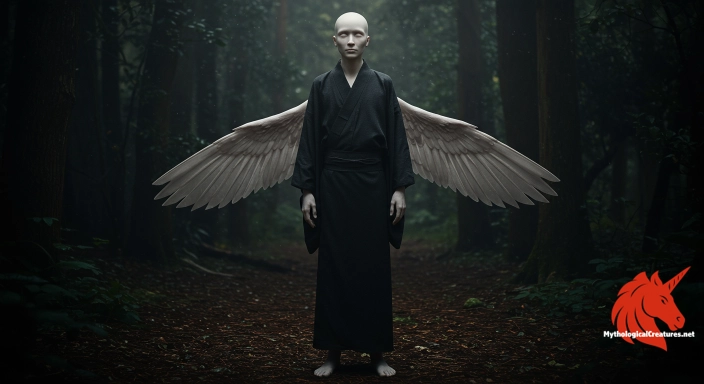
Noppera-bō
Noppera-bō - Represents the uncanny and the unpredictable nature of the supernatural, serving as a cautionary figure in folklore.
Origins & First Encounters
The noppera-bō are enigmatic figures in Japanese folklore, revered and feared for their surreal ability to appear as ordinary humans before revealing an unsettling absence where a face should be. Their origins stretch back to the Edo period, emerging from a rich tradition of ghost stories and supernatural cautionary tales. Early attestations portray them as spirits that wander both rural and urban landscapes, blending an eerie normalcy with inexplicable horror. In the cultural context, these faceless apparitions symbolise the transient nature of personal identity and the fragility of human existence. They have been recounted in oral traditions and later in written compilations that captured the essence of Japan’s supernatural heritage. The noppera-bō are often depicted in settings that range from quiet village lanes to the bustling streets of ancient cities. Their presence in myth underscores a subtle commentary on the human condition, wherein the familiar can become deeply estranged. Stories of these creatures have evolved over time, maintaining a hypnotic allure that continues to captivate the imaginations of generations.
Source Texts & Tale Variants
Folklore surrounding the noppera-bō has been preserved through a mix of ancient texts, oral recitations, and later literary works that echo the haunting nature of these spirits. Various compilations from the Edo period capture fleeting encounters, often in the form of ghostly tales shared by travelling storytellers. Traditional narrative collections and ghost story anthologies provided early descriptions, blending cautionary motifs with accounts of strange meetings on moonlit nights. Lafcadio Hearn’s literary works popularised their image in the West, although his use of the term occasionally merged the lore of the noppera-bō with that of other shape-shifting entities. Diverse story variants exist, with some versions presenting the creature as a trickster and others as a passive harbinger of unease. Folktales recounted around communal fires often stress the sudden transformation of a friendly face into a blank visage, sparking a mix of terror and disbelief. Manuscripts and ukiyo-e prints further enriched the narrative, offering a visual testament to their chilling presence. The multiplicity of sources, ranging from formal texts to local legends, has helped cement the noppera-bō as an enduring figure in Japanese supernatural literature.
Form & Powers
Noppera-bō are striking in their deceptive human appearance, initially indistinguishable from an ordinary person until a horrifying transformation occurs. Their most defining characteristic is the loss of all facial features, leaving behind a smooth, blank expanse of skin where eyes, a nose, and a mouth would typically be found. This eerie absence creates an unsettling impression that distorts the familiar human countenance into something almost otherworldly. Descriptions frequently note a pallid complexion that enhances the spectral quality of the being, with traditional depictions often showing it clad in period-appropriate kimono that further mask its true nature. While their body structure generally mirrors that of an average adult, subtle variations in build and posture have been noted, adding layers of individuality to each encounter. Some accounts suggest that the noppera-bō might display fleeting hints of expression before the inevitable wipe of their facial features, lending a transient moment of humanity that soon dissipates. The interplay between the ordinary human form and the extraordinary void of a face amplifies the overall sense of disquiet. Every detail of their physical representation collectively serves as a visual metaphor for the loss of identity and the unpredictable nature of the spirit world.
Regional Faces
Across Japan, regional renditions of the noppera-bō legend reveal nuanced differences that reflect local histories and cultural sentiments. In rural prefectures, the creature is often interwoven with local yōkai lore, appearing in narratives that emphasise its ambiguous role as both benign and ominous. Urban variations tend to focus on the unexpected and jarring nature of a faceless apparition appearing in everyday settings such as railway stations or quiet backstreets. In some areas, the noppera-bō is portrayed with a melancholic air, its lack of features symbolising forgotten identities or lost souls. Local storytellers sometimes imbue these spirits with a tragic backstory, suggesting that a personal misfortune or historical event might have stripped them of a face. Regional adaptations can also vary in tone, with some versions using the creature to impart moral lessons, while others simply evoke an instinctive, primal fear. Traditional art and performance in different provinces subtly adjust the creature's attire and setting to better resonate with local audiences. This diversity in depiction highlights the fluid nature of folklore, where the essence of a mythic being is reshaped to mirror the collective experiences and anxieties of each community.
Cultural Parallels
The legend of the noppera-bō finds intriguing parallels with faceless entities found in diverse mythological traditions across the globe. Similar to the eerie apparitions in European ghost stories, these Japanese spirits subvert the normalcy of a human face to evoke a deep-seated sense of dislocation and dread. Comparable figures appear in a number of East Asian legends, where ghosts sometimes manifest with blank or obscured features to symbolise the erasure of personal identity. In Western horror traditions, the motif of a faceless figure has been utilised to convey themes of anonymity and existential horror, often serving as a metaphor for deep-seated fears. These cross-cultural narratives reflect a universal fascination with the body as a marker of identity, and the unsettling concept of its removal. The shared archetype, whether in the form of a spirit who bears no sign of humanity or a spectral entity that defies conventional recognition, speaks to a collective anxiety about the unknown. Comparative analysis reveals that while the cultural nuances vary, the underlying symbolism of a faceless existence remains constant. This alignment underscores a broader human preoccupation with the disruption of the natural order, making the noppera-bō a compelling study in the global language of myth and metaphor.
Legacy & Modern Evolution
The historical evolution of the noppera-bō mirrors the evolution of Japanese cultural expression, seamlessly transitioning from folklore into modern creative media. Originally rooted in traditional ghost stories shared by villagers and performers alike, the entity has gradually taken on new dimensions in the context of modern cinema, literature, and animation. Contemporary portrayals often highlight the underlying themes of lost identity and eerie normalcy, striking a chord with modern audiences who navigate a rapidly changing cultural landscape. These modern interpretations maintain the core qualities of the spirit while adapting its image to suit visual and narrative trends in horror and fantasy genres. Filmmakers and manga artists have embraced the motif of the faceless ghost to explore contemporary anxieties about dehumanisation and the digital erasure of individuality. Over time, the noppera-bō has come to represent not only a remnant of a bygone folkloric era but also a symbol of broader societal transformations. Its enduring appeal is evident in how frequently it appears in ghost festivals, urban legends, and even in digital media, reimagined for a global audience. The creature’s legacy is a testament to the timeless nature of myth, perpetually evolving while continuing to evoke both fascination and fear.
Interesting Fact
An intriguing aspect of the noppera-bō is its ability to seamlessly blend into human society before abruptly revealing its faceless form, highlighting the theme of the unexpected lurking within the ordinary.
Support the directory
Promote your myth project and fund more research
Sponsor placements help keep this directory growing and free to use while giving your work a focused, relevant audience.
Learn how sponsorship worksQuick Creature Info
Features:
Associations:
Our Mythic Legendary Rating:

Also Sometimes Known As:
Habitat:
Supernatural Powers:
Physical Attributes:
Abilities:
Behavior:
Lore:
References
Discover Another Mythical Legend You May Not Have Heard Of?
Uncover the mysteries of ancient folklore and expand your knowledge of legendary beings from cultures around the world.
Dare to Meet the Peuceus....

Curated by the Mythological Creatures Team
Series editor: Mythological Creatures Directory
Primary desk: Asian & Pacific Myth Cycles Desk
(rev. November 2025)