
Peuceus: Peuceus is a centaur from Greek mythology, recognised as the father of Perimedes and Dryalus.

Peuceus
Peuceus - Peuceus is a minor yet notable figure among centaur narratives, representing the fierce and untamed nature of these beings in Greek mythology.
the legend in five swipes.
the legend in five swipes.
Peuceus: Where the Legend Started
Peuceus emerges from the depths of Greek mythology as a fascinating yet enigmatic figure, celebrated for his part in the storied world of centaurs. His legacy, though lightly attested in ancient texts, is interwoven with the heroic narratives of a bygone era. Born into the duality of human and beast, his existence reflects the perennial struggle between untamed nature and refined civilisation. His role as the father of Perimedes and Dryalus, two centaurs who attended the famed wedding of Pirithous and Hippodameia, underscores the familial and martial bonds that defined many mythic accounts. The centaur’s ancestry is steeped in the lore of wild passions and rigorous combat, setting his realm apart from mortal heroes. His few references provide a glimpse into the broader tradition where hybrid beings challenged the conventions of society. Scholars of mythology have noted that Peuceus’s portrayal hints at an underlying respect for both wild vitality and disciplined combat. The fabric of Greek myth is enriched by such complex characters who straddle the lines between chaos and order. His appearance in these legends invites us to contemplate the tensions within heritage and the natural order. Ultimately, Peuceus stands as a symbolic guardian of ancient ethos, echoing the timeless stories of strength and inner conflict.
How was the story of Peuceus recorded?
Ancient literary fragments and mythographical compendiums provide the primary glimpses into the tale of Peuceus, although his figure is not as elaborately chronicled as some of his centaur peers. The earliest mentions come from poetic texts that briefly note his lineage during the tumultuous celebrations of Pirithous’ wedding. Various scholia on classical authors have preserved fleeting references that hint at his involvement in the vibrant narratives of centaur warfare, especially during the Centauromachy. Different accounts present him as not just a bystander but as a symbolic progenitor whose descendants embodied the duality of wild instinct and cultured order. In some later Roman adaptations of Greek myth, brief references to his name linked him with themes of struggle and transformation. The limited surviving texts have led to multiple variants of his story, which some interpret as reflective of regional storytelling traditions. Even the ambiguous tone of these sources has spurred modern scholars to re-examine his role in centaur legend. The interplay of scarce literary evidence with the inherent drama of centaur lore has resulted in a patchwork of narratives. Each textual variant contributes a unique perspective on his persona and his contribution to the grand mythological theatre. This multiplicity of accounts highlights both the vagaries and the enduring impact of ancient mythic tradition.
Peuceus: What the Legends Describe
Depictions of Peuceus evoke the striking image common to centaurs, where the robust upper body of a man seamlessly merges with the powerful physique of a horse. His form is often described as exuding both the intellectual poise of humanity and the raw, untamed energy of the wilderness. The sculpted muscles of his human torso suggest a warrior’s strength, while the equine portion hints at unparalleled speed and stamina. Artists have portrayed him with a noble bearing, accentuating features such as a chiseled face, deep-set eyes, and hair that may cascade into a wild mane. His equine body is typically rendered with graceful contours and a richly detailed coat, underlining his connection to nature. The balance of human reasoning and animal instinct in his anatomy is a recurring theme in visual conventions. In some renditions, subtle scars and weathered features hint at the battles and struggles that shaped his character. The harmonious yet striking duality of his form encapsulates the essence of centaur mythology. Variations in size and build are sometimes noted, with local artists imbuing him with qualities that reflect regional heroic ideals. Overall, Peuceus’s physical portrayal is an artistic celebration of the dual complexities of human nature merged with the primal spirit of the natural world.
How does Peuceus differ by region?
The character of Peuceus has been interpreted and adapted in various regional mythic traditions throughout the ancient Greek world. In some Aegean narratives, he is presented as a noble patriarch whose lineage symbolically bridges the realm of mortal men and the wild centaur kin. Local adaptations in the mainland often highlight his fierce warrior traits, casting him as a prototype of the centaur who exemplifies both noble spirit and untamed energy. In regions where oral storytelling prevailed, his legacy was reshaped to mirror local values, sometimes painting him as a tragic figure burdened by the duality of his nature. In the storied regions of southern Italy where Greek influence lingered, his character was sometimes associated with mystical rites and seasonal celebrations. Folk traditions in certain locales have imbued him with qualities of a protective guardian, albeit one born of paradoxes. These regional interpretations served not only as variations of his myth but also as reflections of the societal ideals and moral conflicts of their communities. The fluidity of his portrayal underscores the richness of Greek myth, where a single figure could acquire multiple faces. Throughout these diverse adaptations, Peuceus consistently symbolised the tension between the cultivated world and the realm of natural forces. The regional diversity in his depiction thus illustrates how localized cultural dynamics reshaped myth to communicate universal truths.
Peuceus: Cross-Cultural Comparisons
Peuceus offers a compelling comparative study when set against other hybrid creatures that populate mythologies from across the ancient world. Much like the centaur figures celebrated in both Greek and Roman lore, his dual nature mirrors the complex interplay of civilisation and wilderness seen in myriad traditions. His character evokes echoes of the sphinx in Egypt, where the combination of human wisdom with animal power similarly serves as a metaphor for hidden truths. Comparable themes appear in Indian mythology, where entities straddling the divide between human and beast symbolise the tension between order and chaos. The legacy of centaur myths across cultures often speaks to the human condition, and Peuceus’s narrative fits neatly within this broader motif. His role as progenitor and warrior resonates with the lineage-based mythic constructs found in various Indo-European traditions. Like the mythical heroes of Celtic lore who inhabit the borderlands of the known and the unknown, Peuceus represents a liminal figure whose existence challenges clear categorisation. The convergence of these comparative motifs enriches our understanding of his place within the tapestry of global mythology. By exploring these parallels, one observes how different cultures have consistently used hybrid forms to articulate complex moral and existential debates. Such comparative analysis not only highlights the distinctive features of Peuceus but also situates him within a shared tradition of mythmaking that spans continents and epochs.
Peuceus: How the Legend Lives On
Over the centuries, the myth of Peuceus has evolved from a brief mention in ancient texts to a symbol of the enduring fascination with hybrid beings in mythology. His representation has shifted from the raw, unbridled force of centaur origins to a figure embodying themes of inner duality and philosophical complexity. During the Renaissance, as enthusiasm for classical mythology reawakened, artists and scholars revisited his story, infusing it with new nuances and allegorical interpretations. Modern literary works and visual arts have often reimagined his character to explore contemporary themes of identity, transformation, and the balance between rationality and instinct. With the advent of popular fantasy genres, Peuceus has occasionally surfaced as a supporting archetype amid narratives dealing with both ancient heroism and modern existential dilemmas. His legacy, though subtle, has been critical in shaping perceptions of centaurs as beings straddling the boundary between civilisation and the wild. Academic debates continue to underscore his role as a critical link in understanding the evolution of mythic hybrids in ancient societies. Exhibitions and scholarly conferences dedicated to classical art have featured reinterpretations of his myth, celebrating the layered symbolism he embodies. As modern culture grapples with notions of dual identity and the tension between order and chaos, Peuceus’s myth remains a vibrant point of reference. His journey from classical obscurity to modern relevance is a testament to the dynamic interplay between ancient myth and contemporary cultural expression.
Interesting Fact
An intriguing aspect of Peuceus is that, despite the scarcity of personal exploits in surviving texts, his status as the progenitor of centaur warriors firmly anchors him within one of Greek mythology's most celebrated conflicts.
Mythological Treasures
Greek Myths: A field guide to the monsters of ancient Greece
Every monster here earned its place in legend, and each gets a full page of artwork and the story behind it.
Norse Sagas: A field guide to the beasts of the Viking world
Drawn from the saga accounts themselves, with the powers, weaknesses and doom of each being set out.
Egyptian Legends: A field guide to the gods and monsters of ancient Egypt
Guardians of the living and devourers of the dead, with the role each played in judgement.
the legend in five swipes.
Partner with us
Sponsor this space
Reach thousands of mythology enthusiasts with a curated placement on our creature pages.
Learn about sponsorshipQuick Creature Info
Origin:
Features:
Our Mythic Legendary Rating:

Also Sometimes Known As:
Habitat:
Supernatural Powers:
Physical Attributes:
Abilities:
Behavior:
Lore:
References
Discover Another Mythical Legend You May Not Have Heard Of?
Uncover the mysteries of ancient folklore and expand your knowledge of legendary beings from cultures around the world.
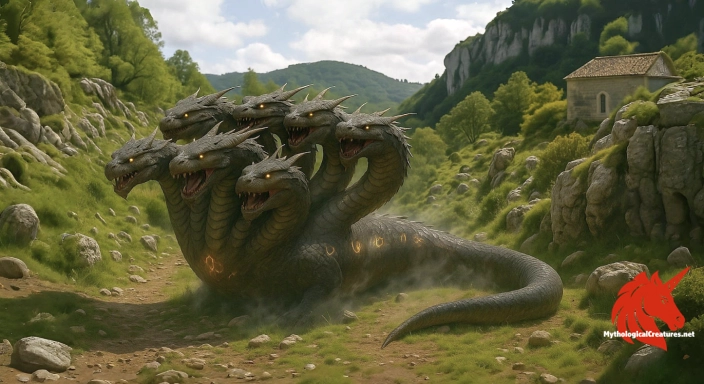
Dare to Meet the Herensuge....
The Mythological Creatures Book Series
Yokai, Greek, Norse, Egyptian & Chinese. Five illustrated field guides to the creatures the old stories either warned or told you about.

Curated by the Mythological Creatures Team
Series editor: Mythological Creatures Directory
Primary desk: Hellenic & Ancient Mediterranean Desk
(rev. November 2025)