
Mujina: Mujina is a mysterious creature from Japanese folklore, ambiguously identified as a badger, raccoon dog, or masked palm civet.
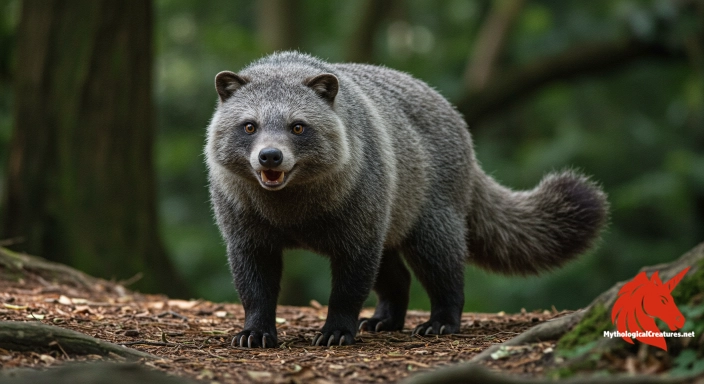
Mujina
Mujina - Represents the fluid boundary between the natural and supernatural, embodying mystery and deception.
Origins & First Encounters
Mujina is a term enshrouded in the diverse tapestry of Japanese folklore, denoting creatures that elude simple classification. Emerging from ancient rural traditions, the word originally referred to nocturnal mammals that bridged the gap between the mundane world and the realm of the mystical. Early literary records reveal that the term was applied to both the Japanese badger and the raccoon dog, a duality that underscores its enigmatic nature. This ambiguity reflects a cultural context where nature and myth intermingled freely, allowing the creature to occupy multiple symbolic roles. Local communities often viewed the mujina as an omen, its unpredictable presence serving as both a harbinger of change and a playful trickster. Over time, the fluid identification of the creature sparked creative narratives that celebrated its mysterious qualities. The interplay between natural phenomena and supernatural interpretation lent the mujina a timeless allure that resonates in both rural and urban settings. The enduring fascination with this animal is a testament to its layered mythological significance, inviting continual re-examination. Today, the mujina stands as a compelling symbol of the elusive boundaries between the known and the uncharted in Japanese culture.
Source Texts & Tale Variants
Ancient scrolls and oral traditions provide a rich, albeit fragmented, insight into the lore of the mujina. Early texts from the pre-modern era document sightings and curious events that have since evolved into elaborate ghost stories and cautionary tales. Edo period literature, in particular, offers accounts of supernatural encounters where the mujina appears in unexpected guises. Diverse narrative strands recount the creature displaying a faceless aspect, an attribute that both fascinates and unsettles its observers. Stories later popularised by writers such as Lafcadio Hearn further disseminated the myth beyond local circles, embedding it deeply in the collective imagination. In some regional variants, the mujina is portrayed as a benevolent spirit capable of playful mischief, while in others it is a dire omen. Temple records and rustic epitaphs occasionally allude to its uncanny presence, adding layers of historical detail to its mythic role. The array of primary sources, from local manuscripts to theatrical performances, illustrates a dynamic narrative that has continually adapted over time. Each version contributes to a mosaic of interpretations that enrich the overall understanding of this legendary being.
Form & Powers
Descriptions of the mujina are as multifaceted as the legend itself, reflecting its association with several real-world animal species. When identified with the Japanese badger, the creature is often depicted as possessing a stout, compact build highlighted by distinctive dark stripes and rugged, earthy fur. Alternatively, representations that connect the mujina to the raccoon dog or tanuki emphasise a more rotund form paired with a prominently bushy tail. In certain ghostly accounts, the mujina is even described as bearing a featureless face—a detail that transforms it into an eerie, spectral presence. Its eyes, when mentioned, are portrayed as luminous or particularly expressive, hinting at an inscrutable inner life. The creature’s fur is noted for being dense and variably hued, with patterns that seem to blur the lines between reality and illusion. Many artistic renditions capture the mujina in mid-transformation, a motif that underscores its celebrated shape-shifting ability. These physical attributes are not fixed but rather metamorphic, varying according to the storyteller’s intent and the local environment. The resulting imagery is a blend of botanical exactitude and imaginative embellishment, ensuring that the mujina remains as enigmatic visually as it is narratively.
Regional Faces
The interpretation of the mujina varies considerably across different regions of Japan, each adding its own distinctive flavour to the myth. In northern provinces, local lore tends to identify the mujina with the badger, emphasising a connection to the dense forestry and a role as a guardian of woodland secrets. In contrast, communities in central and western areas more commonly relate the term to the raccoon dog, celebrating its mischievous and shapeshifting qualities. Certain isolated villages have even adopted alternative local names, such as mami, highlighting a syncretic approach to wildlife and myth. Rural festivals and seasonal rituals in these areas sometimes invoke the spirit of the mujina as a symbol of nature’s capricious side. Variations in its moral portrayal are also evident, with some regions attributing benevolent, even protective, characteristics and others warning of its deceptive tricks. The diversity of regional narratives underscores how geographical and cultural factors can mould the perceived nature of a mythic creature. Local customs, environmental conditions, and historical interactions with nature all contribute to a multifaceted portrayal of the mujina. This regional adaptability ensures that while the core elements of the myth remain recognisable, each community imbues the creature with its own unique cultural resonance.
Cultural Parallels
The mujina occupies a fascinating niche within the broader universe of mythological shape-shifters, bearing similarities to creatures in both Eastern and Western traditions. Its fluid identity is reminiscent of the tanuki and the fox spirit, or kitsune, in Japan, each characterised by a playful yet enigmatic ability to transform and deceive. Comparable to the huli jing of Chinese folklore, the mujina also threads the line between benevolence and mischief, reflecting a duality that resonates across cultural narratives. European folklore offers its own versions of shape-shifting tricksters, such as the pooka or the fae, whose unpredictable nature mirrors the mujina’s ambiguous morality. These parallels extend to Native American legends where animal spirits embody boundaries between the natural world and the supernatural realm. In all these traditions, the underlying message often touches on the wisdom and unpredictability of nature. The cross-cultural connections between these creatures highlight a common human inclination to explain the unpredictable through myth. Such comparative analysis not only situates the mujina within a global context of shape-shifting lore but also emphasises the universal appeal of beings that provoke both wonder and caution. Through these cultural parallels, the mujina emerges as an enduring emblem of transformation and mystery in mythologies around the world.
Legacy & Modern Evolution
Over the centuries, the portrayal of the mujina has undergone significant evolution, mirroring shifts in societal attitudes towards myth and nature. Originally cast as a spectral trickster in rustic folktales, the mujina was at once a mystery to be feared and a puzzle to be admired. As modernity advanced in Japan, the creature's image softened in some contexts, transitioning into a symbol of playful transformation rather than outright menace. Its depiction in ukiyo-e prints and traditional theatre imbued the mujina with a distinctive charm that has endured into contemporary narratives. Films, anime, and modern literature frequently reinterpret the mujina, blending ancient superstition with modern sensibilities to address themes of change and the unknown. This reimagining often emphasises its dual nature—both mischievous and enigmatic—allowing it to serve as a bridge between historical narrative and present cultural identity. Urban legends and digital media have continued to explore the creature’s ambiguous face and elusive nature, ensuring its presence in modern popular culture. In redefining the mujina, contemporary artists and storytellers honour its legacy while also adapting it to reflect current environmental and social dynamics. The mujina, with its rich historical tapestry and evolving symbolism, remains a dynamic emblem of Japan’s mythological heritage, continuously inspiring reinterpretation and reflection.
Interesting Fact
Mujina uniquely blurs the lines between zoology and mythology, with its name referring to multiple real species while also embodying supernatural traits in folklore.
Mythology-aligned partners
Showcase your myth-friendly brand here
Run a store, studio, or platform that lives in the world of myth and folklore? A curated sponsor panel on these pages may fit.
Explore partnership optionsQuick Creature Info
Features:
Associations:
Our Mythic Legendary Rating:

Also Sometimes Known As:
Habitat:
Supernatural Powers:
Physical Attributes:
Abilities:
Behavior:
Lore:
References
Discover Another Mythical Legend You May Not Have Heard Of?
Uncover the mysteries of ancient folklore and expand your knowledge of legendary beings from cultures around the world.
Dare to Meet the Amihan....
-245cc5ff-4885-46b5-9edd-2345094fb6da_small.webp "Depiction of Amihan")
Curated by the Mythological Creatures Team
Series editor: Mythological Creatures Directory
Primary desk: Asian & Pacific Myth Cycles Desk
(rev. November 2025)