
Chromandi: Chromandi are a legendary race featured in medieval bestiaries.
Chromandi
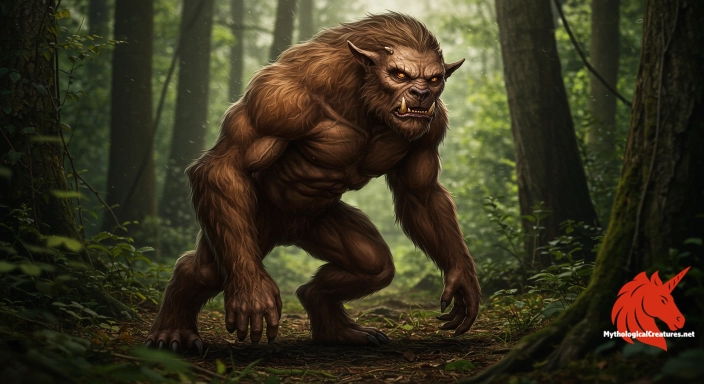
Chromandi - Symbolises the boundary between civilisation and wilderness in medieval allegory.
Origins & First Encounters
The Chromandi emerge from the mists of medieval lore as enigmatic beings whose very existence unsettled the boundaries between civilisation and the untamed wild. They are depicted as a race of wild savages, enrobed in thick, unkempt hair and endowed with striking canine features that set them apart from humdrum mortals. Myths surrounding the Chromandi are steeped in ambiguity, hinting at origins as diverse as distant lands and untamed forests. Medieval bestiaries, the rich reservoirs of allegory and wonder, first introduced these creatures to a curious audience eager to interpret nature’s mysteries. Their portrayal captures a timeless tension between the disciplined order of society and the chaotic impulses of nature. With each retelling, the Chromandi were imbued with additional layers of symbolism—embodying both the dread of the unknown and the tantalising allure of unbridled freedom. Their narrative served as a mirror for medieval audiences, reflecting societal fears surrounding the encroachment of the wild. The lore that envelops these creatures is as much a cultural commentary as it is an imaginative exercise, inviting contemplation on the contrast between tameness and savagery. In their mysterious silence, the Chromandi carry an enduring reminder of humanity’s ever-changing relationship with the natural world. Their legacy persists in the continuing fascination with figures that blur the lines between animal and man.
Source Texts & Tale Variants
The primary documentation of the Chromandi is found within medieval bestiaries, where sparse yet impactful descriptions hint at their dual nature as both man and beast. Numerous manuscripts of the era, though not always extensive, include accounts that detail the Chromandi’s shaggy appearance and fearsome canine dentition. Some texts offer fragmentary narratives that position these creatures on the margins of an ordered world, serving as cautionary symbols during a time of rigid social hierarchies. Variants of their depiction appear across different compilations, with minor alterations in detail that arise from regional translations and scribe interpretations. Textual references in these sources sometimes merge fact with allegory, making the Chromandi as much a lesson in morality as a record of fantastical natural history. In a few accounts, they are portrayed as part of a larger family of feral humanoids, each echoing shared themes of wildness and otherness. The enduring presence of these figures in bestiaries is indicative of a broader medieval preoccupation with the limits of human identity. Occasional references in travel literature and marginal notes further complicate their mythos, suggesting that storytellers saw in them a reflection of humanity’s own hidden instincts. Over time, as these manuscripts circulated, slight modifications in their description allowed for a multiplicity of interpretations. Each variant adds a new dimension to the Chromandi, ensuring that their mystique remains as vibrant today as it was in the dim corridors of medieval thought.
Form & Powers
The Chromandi are vividly characterised by their profuse, coarse hair, which almost completely obscures the contours of their human form, lending them an appearance that is as wild as it is imposing. Their most distinctive trait is a set of pronounced dog-like teeth, sharp and jutting, which enhance their fearsome countenance. The texture of their hair is often depicted as matted and unyielding, a visual metaphor for the untamed forces of nature that they embody. Facial depictions reveal a blend of human structure with animalistic features, creating an uncanny resemblance to feral instincts personified. Variability in artistic renderings suggests that some portrayals accentuate a burly, muscular build, while others emphasise a more wiry and agile frame. Their limbs, elongated and powerful, are depicted as capable of swift, unpredictable movements inherent to creatures of the wild. In several accounts, the Chromandi’s eyes are large and reflective, exuding a deep, almost primordial intensity. Some illustrations even hint at a rough texture to their skin, as if nature itself had granted them a protective, bark-like covering. Overall, every detail—from the wildness of their hair to the lethal sharpness of their teeth—conspires to define a creature that straddles the delicate border between the human and the beast. The careful attention to their anatomical peculiarities invites an exploration of the symbolic interplay between civilisation and wilderness.
Regional Faces
Across different regions of medieval Europe, the Chromandi acquired distinct local flavours that enriched their mythological tapestry. Northern narratives often accentuated their brutish and formidable demeanour, aligning them with the harsh, untamed environments of cold, dense forests. In contrast, Mediterranean interpretations sometimes imbued the Chromandi with a more enigmatic nobility, suggesting that even within savagery there could be an echo of ancient wisdom. Translations of these texts into Arabic and other languages brought subtle shifts in emphasis, where the creatures became intertwined with desert and exotic motifs. Eastern European traditions occasionally merged their image with indigenous legends of wild men, further intensifying their role as liminal figures. In regions influenced by Celtic and Germanic mythos, the wild man archetype merged with the Chromandi’s features, producing hybrid narratives filled with both menace and mystique. Local iconography, often reflective of the prevailing cultural attitudes, varied in the depiction of their physicality, such as the prominence of certain bestial features or the suggested size of these creatures. In some interpretations, the Chromandi’s dog-like teeth were magnified to symbolise savage loyalty or a departure from human morality. Such regional variations underscore the adaptability of the myth, as storytellers tailored its details to align with local fears and fascinations. Ultimately, each cultural adaptation not only diversified the Chromandi’s image but also enriched the broader medieval dialogue on the nature of otherness and wilderness.
Cultural Parallels
The figure of the Chromandi sits comfortably within a wider global tradition of wild or feral men, providing ample ground for cross-cultural comparison. Unlike the more nuanced depictions of the noble savage in later literature, the Chromandi are often cast in a stark light, emphasizing untamed physicality and otherworldly ferocity. Similar to the wild men found in ancient European legends and even in Native American folklore, their appearance disrupts the conventional norms of human aesthetics. Mirroring attributes found in Greek satyrs or Roman fauns, the Chromandi blend human and bestial traits, though their portrayal tends to lean more towards a menacing savagery rather than rustic playfulness. Comparisons with the archetypal werewolf also emerge, as both embody the transformative potential lurking beneath a seemingly human exterior. In the shadow of such renowned mythical creatures, the Chromandi provide an alternative perspective on the hybridisation of man and nature. Cultural parallels can be drawn with the forest spirits of Siberian and Central Asian traditions, where hairiness and animalistic features are recurrent themes. Their distinct canine teeth, however, set them apart, symbolising a particular predatory prowess. Such comparative analysis reveals that across various mythologies, the merging of human attributes with animal characteristics is a powerful metaphor for exploring the boundaries and overlaps of identity. Ultimately, the Chromandi contribute a unique thread to a global fabric of mythology, inviting both scholars and enthusiasts to reconsider traditional distinctions between the human and the untamed.
Legacy & Modern Evolution
The historical evolution of the Chromandi reflects a fascinating journey from the allegorical scribbles of medieval bestiaries to a renewed presence in modern fantastical narratives. In earlier centuries, they served as stark embodiments of the line between civilisation and savagery, an artistic and moral counterpoint to the organised society. As the Renaissance ushered in more scientific and humanistic perspectives, the fantastical attributes of the Chromandi were gradually reinterpreted and sometimes softened in literary reimaginings. In contemporary times, they have re-emerged in literature, film, and gaming as evocative symbols of untamed nature and the multifaceted concept of otherness. Modern adaptations often serve to challenge the binary distinctions between the cultured and the wild, imbuing the Chromandi with new layers of psychological and symbolic significance. Their image is now frequently used to question what it means to be human in a world increasingly defined by hybridity and blurred boundaries. Artistic reinterpretations have even seen them portrayed as guardians of ancient forest wisdom, highlighting a shift from sheer savagery to a more enigmatic form of natural guardianship. This transformation mirrors broader cultural movements that seek to reclaim and re-evaluate the narratives concerning wilderness and identity. The legacy of the Chromandi, therefore, is not a static relic but a living myth that continues to evolve as new generations explore its rich symbolic resonance. Ultimately, their enduring mystique challenges modern audiences to reconcile the deep-seated fear of the unknown with a more nuanced celebration of nature's primal power.
Interesting Fact
The Chromandi are among the lesser-known creatures of medieval bestiaries, offering a glimpse into how medieval societies conceptualised the wild and untamed aspects of humanity.
Reach myth fans
Connect your myth-driven brand with this audience
Our readers are writers, educators, gamers, and collectors who care about mythology. Enquire about a limited sponsor placement on creature pages.
Enquire about sponsorshipQuick Creature Info
Origin:
Features:
Associations:
Our Mythic Legendary Rating:

Habitat:
Physical Attributes:
Abilities:
Behavior:
Lore:
Related Creatures, Tales or Lore
- WWild Man
- WWodewose
References
Discover Another Mythical Legend You May Not Have Heard Of?
Uncover the mysteries of ancient folklore and expand your knowledge of legendary beings from cultures around the world.
Dare to Meet the Squasc....
Curated by the Mythological Creatures Team
Series editor: Mythological Creatures Directory
Primary desk: Northern & European Folklore Desk
(rev. November 2025)