
Chryseis: Chryseis is a multifaceted figure from Greek mythology whose name, meaning 'gold', appears across several traditions including an immortal Oceanid, a royal Thespian princess, a Trojan woman, and even a maenad.
-68dba1db-d6ef-4b14-9676-05336b3d9c82_small.webp "Chryseis - Chryseis embodies the layered nature of myth, reflecting how a single name can span divine immortality, mortal heroism, tragic captivity, and ecstatic revelry.")
Chryseis
Chryseis - Chryseis embodies the layered nature of myth, reflecting how a single name can span divine immortality, mortal heroism, tragic captivity, and ecstatic revelry.
the legend in five swipes.
the legend in five swipes.
The Beginnings of Chryseis
Chryseis is a mythological figure whose name, meaning 'gold', has been attributed to several captivating characters in Greek lore. Her origins stretch back to the archaic period, where one tradition presents her as one of the 3,000 Oceanids, born of the primordial deities Oceanus and Tethys. In another narrative, she appears as a Thespian princess among the 50 daughters of King Thespius, whose story becomes intertwined with the heroic exploits of Heracles. A further variant casts her as a Trojan woman, sometimes known by the name Astynome, whose fate is linked to the turbulent events of the Trojan War. Additionally, she is represented in artistic depictions as one of the maenads, evoking the ecstatic rituals associated with Dionysus. These diverse portrayals underscore the fluidity of myth, where a single epithet can embrace multiple, seemingly contradictory roles. Her narrative is deeply embedded in the cultural fabric of ancient Greece, reflecting both the divine and human aspects of mythic tradition. Early literary and pictorial sources provided the groundwork for the evolving perception of her character. Each version contributes to an intricate tapestry that blends themes of beauty, heroism, tragedy, and divine radiance. This multi-layered heritage exemplifies the enduring allure and adaptability of Greek mythological figures.
Which versions of the Chryseis story survive?
Ancient texts and artistic evidence lay the foundation for the multifaceted representations of Chryseis. Fragments within Hesiodic works and other early literary sources mention her among the Oceanids, thereby associating her with the ethereal realms of water and light. In the heroic narratives of Heracles, traditions recount her role as a Thespian princess and one of King Thespius’s daughters, highlighting a personal connection with one of Greece's greatest heroes. The Trojan narrative, infusing her identity with a sense of tragic destiny, is echoed in epic cycles that recount the strife of war and the consequences of divine intervention. Vase paintings and sculptural fragments provide additional layers of insight, with some depictions linking her to the ecstatic rites of the maenads. Various ancient commentators and scholia have noted discrepancies in her genealogy, which mirror the complexities of oral tradition. Over time, these primary sources have been interwoven by later mythographers who sought to reconcile the differences in her portrayal. The textual evidence is complemented by regional folk traditions, each contributing their own nuances to her story. As new sources emerged, so too did variations in her myth, reflecting shifts in cultural and religious practice. Collectively, these diverse accounts contribute to a rich, albeit complex, legacy that continues to fascinate modern scholars.
What powers did Chryseis have?
Artistic depictions of Chryseis vividly illustrate her association with radiance and the precious quality of gold. In numerous vase paintings, she is portrayed with flowing, lustrous hair that mirrors the shimmering quality of molten gold. Her features are delicately sculpted, with soft contours and an expression that mingles both serenity and a trace of melancholy. The Oceanid incarnation is often rendered with an ethereal lightness, as if her presence is an embodiment of both water and luminosity. In portrayals as a Thespian princess, she carries an air of dignified beauty, her form marked by graceful lines and an innate nobility. Some art forms accentuate her golden name through subtle adornments such as laurel wreaths and intricate jewellery that refine her divine character. Variations in her representation, whether slight and delicate or bold and commanding, reflect the evolving aesthetic values of different periods. Sculptures sometimes reveal elongated, almost otherworldly proportions that emphasise her status as part mortal, part divine. Her attire is typically depicted as flowing and diaphanous, enhancing the impression of lightness and ethereal grace. In all her forms, Chryseis is a visual metaphor for the interplay between natural beauty and divine mystique.
Chryseis: Local Variations in the Story
The figure of Chryseis is subject to a fascinating array of regional reinterpretations that mirror local cultural priorities and artistic conventions. In mainland Greece, particularly in communities steeped in the worship of aquatic deities, her identity as an Oceanid is celebrated with imagery evoking the sea's fluid, life-giving properties. In Boeotia and surrounding regions where the heroic age is a central cultural narrative, the Thespian princess variant is enhanced with themes of familial honour and martial vigour. On the islands of the Aegean and in Attica, the Trojan version of her story is intermingled with epic tales of war and sorrow, emphasising a tragic beauty that resonates with the experiences of conflict. In regions where Dionysian cults held sway, her representation as a maenad comes alive in depictions of ecstatic celebrations and vibrant rituals. Each locale adapts her myth to fit its own religious ceremonies, artistic idioms, and societal values. Local festivals and regional iconography often highlight her association with agricultural fertility as much as with heroic tradition. The nuances found in these variations demonstrate how local interpretations have enriched a pan-Hellenic myth. As communities interacted, cross-pollination of these themes further diversified her portrayal across the ancient Greek world. Such regional adaptations reaffirm the dynamic nature of myth-making, where a single name can possess multiple layers of meaning tailored to distinct cultural contexts.
The Global Cousins of Chryseis
Chryseis offers many points of comparison with other mythological figures whose stories are equally imbued with themes of golden beauty and divine mystery. Her luminous qualities are reminiscent of other characters in Greek myths whose names similarly evoke the glimmer of precious metals, underscoring a shared cultural admiration for radiant beauty. Figures such as Chrysothemis and various nymphs parallel her through their embodiment of nature's abundance and the ephemeral quality of beauty. There are intriguing similarities between the tragic dimensions of the Trojan Chryseis and other heroines whose lives become entwined with the fates of heroes and the caprices of the gods. In wider Mediterranean traditions, one finds analogous characters celebrated for their golden associations, suggesting a broader cultural motif that transcends regional boundaries. The comparison extends to literary figures in later eras who evoke a sense of both luminous allure and inevitable downfall. Such parallels enrich our understanding of how myth in various cultures often employs the symbolism of gold to represent both beauty and impermanence. These cross-cultural connections provide a framework for analysing how recurrent archetypes are adapted to express both local and universal truths. In drawing these comparisons, it becomes evident that Chryseis occupies a critical nexus in the study of myth, bridging diverse narrative streams. Consequently, her story exemplifies the universal themes of beauty, power, and tragedy that continue to resonate across cultures and epochs.
What happened to the legend of Chryseis?
The legacy of Chryseis reflects a fluid evolution that mirrors the shifting tides of art, literature, and cultural interpretation over millennia. While early accounts positioned her as a secondary figure within broader mythic cycles, later reinterpretations began to illuminate her intrinsic allure and complex dualities. During the Renaissance, for instance, her image was revived with an emphasis on her ethereal beauty and the poignant interplay of light and shadow that symbolised both divine favour and mortal fragility. In modern retellings, her character has been re-evaluated as a symbol embodying the transient nature of beauty, the burdens of fate, and the tensions between duty and desire. Contemporary literature and art frequently invoke her as an allegorical figure, one who bridges classical myth with modern existential sensibilities. Digital art and modern reinterpretations in film and theatre have reinvigorated her narrative, rendering her a timeless icon that continues to inspire creativity. Academic discourse now finds in her a fertile ground for exploring themes of gender, power and the human condition within ancient myth. Exhibitions and scholarly forums celebrate the enduring mystery surrounding her, highlighting how her narrative adapts across cultural epochs. The evolution of her depictions showcases the adaptability of myth when applied to new media and cultural dialogues. Ultimately, Chryseis has transcended her original mythic boundaries to become a symbol of the enduring allure of timeless narratives in both classical and modern contexts.
Interesting Fact
An intriguing aspect of Chryseis is that despite sharing a common name meaning 'gold', her portrayals range from the immortal, water-bound Oceanid to the deeply human figures of a princess, a war captive, and even a frenzied maenad, highlighting the fluidity and complexity of myth.
Mythological Treasures
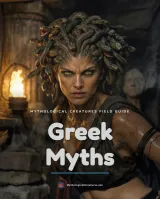
Greek Myths: A field guide to the monsters of ancient Greece
Every monster here earned its place in legend, and each gets a full page of artwork and the story behind it.
Chinese Beasts: A field guide to the dragons and demon kings of Chinese myth
From river dragons to demon kings, with the legends that shaped five thousand years of storytelling.
Japanese Yokai: A field guide to the spirits and demons of Japanese folklore
Fifteen spirits, with the signs to watch for and what the old tales say to do if you meet one.
the legend in five swipes.
For publishers and studios
Your next readers are already here
Many of our visitors are looking for books, campaigns, and resources that deepen their journey into myth. Position your title or setting here.
Discuss a placementQuick Creature Info
Origin:
Features:
Associations:
Our Mythic Legendary Rating:

Also Sometimes Known As:
Habitat:
Supernatural Powers:
Physical Attributes:
Abilities:
Behavior:
Lore:
References
Discover Another Mythical Legend You May Not Have Heard Of?
Uncover the mysteries of ancient folklore and expand your knowledge of legendary beings from cultures around the world.
Dare to Meet the Calliste....
-68e753a2-d833-4a03-a37c-28657e41a440_small.webp "Depiction of Calliste")
The Mythological Creatures Book Series
Yokai, Greek, Norse, Egyptian & Chinese. Five illustrated field guides to the creatures the old stories either warned or told you about.



Curated by the Mythological Creatures Team
Series editor: Mythological Creatures Directory
Primary desk: Hellenic & Ancient Mediterranean Desk
(rev. November 2025)