
Colt pixie: The colt pixie is a mischievous fairy creature from English folklore that takes the form of a scruffy, pale horse or pony.
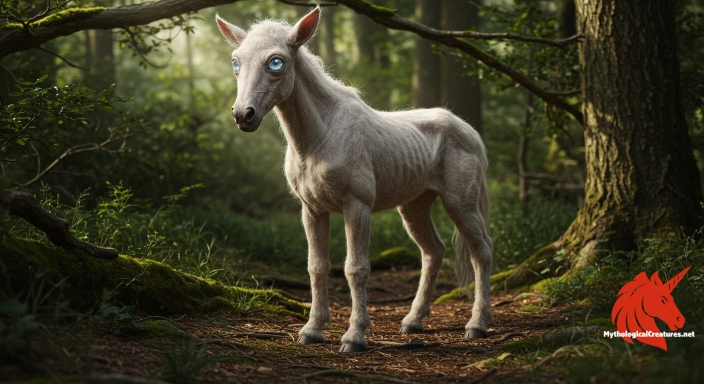
Colt pixie
Colt pixie - A notable figure in local folklore, the colt pixie has influenced regional expressions and serves as a personification of rustic mischief.
the legend in five swipes.
the legend in five swipes.
Colt pixie Origins: The Earliest Accounts
The colt pixie emerges from the enchanting tapestry of English folklore as a mysterious and elusive spirit, deeply rooted in the traditions of Southern and South West England. Its origins are entwined with the rustic landscapes of the New Forest and Dorset, where local legends and rural pasts have shaped its identity over the centuries. Early literary records, dating back to the early 16th century, hint at its longstanding presence in the folklore of the region. The creature is depicted as a spectral equine, a scruffy and pale pony that appears unexpectedly to bewilder travelers and stray livestock. Its dual nature as both a mischievous guide and a trickster links it to a broader tradition of faerie beings in English myth. With a name that has evolved into multiple variants such as colepixie and colt-pixy, the creature is celebrated not only in tales but also in the colloquial expressions of local dialects. The colt pixie stands as a reflection of communal beliefs about the porous boundaries between the human world and the supernatural. Over time, its legend has been enriched by oral traditions and regional anecdotes, making it a symbol of enchanting mischief and ancient mystery.
Who wrote down the legend of the Colt pixie?
The written record for the colt pixie begins in the early 16th century, when a reference mentions it alongside other mystical beings such as hobgoblins. Early texts capture the creature as a spectral horse that plays tricks and confounds those who cross its path. Numerous folklore compilations from Southern England have preserved stories where the colt pixie leads unsuspecting travelers astray in a manner reminiscent of will-o'-the-wisp lore. Variations of its tale also appear in local manuscripts and anecdotal collections, where its appearance is linked to unpredictable natural phenomena. Amid the diverse cultural expressions in the New Forest, the creature appears in multiple guises, each stressing its role as an intermediary between the mundane and the enchanted. Some accounts emphasise its connection with the trickster figure of Puck, further entwining its identity with the broader mythological fabric of mischief. The narrative threads woven by regional storytellers have allowed for shifts in its portrayal, which adapt to the evolving character of local lore. This multiplicity of sources, both literary and oral, underlines the rich and layered tradition that the colt pixie inhabits in English folklore.
What did the Colt pixie look like?
The physical portrayal of the colt pixie is steeped in vivid and often contradictory imagery, with early descriptions painting it as a scruffy, pale horse or pony. Its form is said to be spare and ragged, contributing to the familiar idiom that likens something to being 'as ragged as a colt pixie.' The creature’s body is often depicted as gaunt and spectral, with an almost ethereal quality that blurs the line between the corporeal and the metaphysical. Observers recount that its mane appears unkempt and its coat has a faded, ghostly sheen under the moonlight, echoing the otherworldly nature of its existence. Although size details vary across accounts, it is generally portrayed as a small to medium-sized equine spirit that exudes an air of unsettling unpredictability. The colt pixie’s eyes, when mentioned, are described as gleaming with mischievous intelligence, hinting at a hidden vivacity despite its wan appearance. Some narratives also mention a fleeting, almost imperceptible glow that surrounds its form, reinforcing the sense of a creature caught between worlds. Overall, these physical descriptions serve to enhance its reputation as a liminal entity, one that is both familiar and yet entirely inexplicable.
Colt pixie Across Different Regions
Regional interpretations in Southern England lend unique flavours to the legend of the colt pixie, adapting its mythical image to local customs and dialects. In the New Forest, the creature’s presence is woven into the fabric of everyday language, with expressions such as 'as ragged as a colt pixie' reflecting its iconic status. Dorset, in particular, has shaped the colt pixie into more than just a myth, even transforming its name into a verb that signifies the act of beating down the last of the harvested apples. Such linguistic shifts reveal how deeply integrated the creature is with local agricultural practices and rural life. Folkloric accounts in these areas often position the colt pixie as both a benign trickster and a portent of the unpredictable forces of nature within the woodlands. Regional storytellers have highlighted its role in leading both livestock and travelers astray, serving as a cautionary emblem of the wild and untamed parts of the countryside. Variations in its depiction—ranging from a spectral pony to a mischievous spirit—demonstrate how different communities have selectively adapted its attributes. Consequently, the regional folklore surrounding the colt pixie not only preserves its traditional myth but also reflects the evolving dynamics of local culture and language.
Colt pixie: Cross-Cultural Comparisons
The colt pixie occupies a fascinating niche within the broader spectrum of European mythological creatures, sharing characteristics with several well-known faerie beings. Its role as a spectral equine that leads individuals astray draws parallels with the will-o'-the-wisp phenomenon found in various cultural traditions. In the context of British folklore, it is often compared with the Kelpie of Scotland, another enigmatic spirit that takes the form of a horse to lure unsuspecting victims. Similarities can also be observed with the mischievous Puck, as both embody the capricious and elusive aspects of the fae. This overlap of traits among disparate legends indicates a cross-cultural exchange of mythic motifs centred on nature's trickery and the human experience of the supernatural. The colt pixie’s multifaceted character, straddling the line between corporeal and spectral, is an echo of a recurring archetype found in many folk traditions. Its role as both a guide and a trickster adds to the complexity often found in tales of changelings and other illusive beings. Thus, when examined alongside similar creatures, the colt pixie reveals a rich vein of mythological cross-pollination that spans across regional and cultural borders.
How did the Colt pixie survive into the modern world?
Over the centuries, the legend of the colt pixie has undergone a remarkable evolution, maintaining its allure even as modernity reshapes the landscape of folklore. Though rooted in ancient traditions, its image has been continually reinterpreted by both scholars and the local communities that cherish its legacy. The enduring use of phrases like 'as ragged as a colt pixie' into the early 20th century highlights how the myth has seamlessly transitioned into everyday language. In Dorset, the transformation of the name into a colloquial verb further exemplifies its integration into the cultural and agricultural practices of the region. Contemporary portrayals, often found in modern fantasy literature and local art, reflect an ongoing fascination with the ambiguous and unpredictable qualities of the creature. Modern reinterpretations have sometimes endowed the colt pixie with a more sympathetic or even protective role, echoing a revived interest in celebrating local folklore. Its depiction in festivals, exhibitions, and cultural narratives underscores a broader cultural effort to preserve the enchanting heritage of English myth. Ultimately, while the creature may have evolved in form and function, its essence continues to serve as a link between the storied past and the imaginative present of regional folklore.
Interesting Fact
The term 'colt-pixy' even influenced local dialect, with the phrase 'as ragged as a colt pixie' being used to describe a particularly shabby appearance.
Mythological Treasures
Japanese Yokai: A field guide to the spirits and demons of Japanese folklore
Fifteen spirits, with the signs to watch for and what the old tales say to do if you meet one.
Greek Myths: A field guide to the monsters of ancient Greece
Every monster here earned its place in legend, and each gets a full page of artwork and the story behind it.
Norse Sagas: A field guide to the beasts of the Viking world
Drawn from the saga accounts themselves, with the powers, weaknesses and doom of each being set out.
the legend in five swipes.
Partner with Mythological Creatures
Bring your myth-based world into ours
From game settings to narrative worlds, we work with partners who treat myths with care. Share your project for a potential sponsor slot.
Partner with usQuick Creature Info
Features:
Our Mythic Legendary Rating:

Also Sometimes Known As:
Habitat:
Supernatural Powers:
Physical Attributes:
Abilities:
Behavior:
Lore:
Related Creatures, Tales or Lore
- PPixie
- PPooka
- WWill-o'-the-wisp
References
Discover Another Mythical Legend You May Not Have Heard Of?
Uncover the mysteries of ancient folklore and expand your knowledge of legendary beings from cultures around the world.
Dare to Meet the Clytie....
-ea2b0ef3-a6b0-40fd-b685-b2d3d04a7902_small.webp "Depiction of Clytie")
The Mythological Creatures Book Series
Yokai, Greek, Norse, Egyptian & Chinese. Five illustrated field guides to the creatures the old stories either warned or told you about.
Curated by the Mythological Creatures Team
Series editor: Mythological Creatures Directory
Primary desk: Northern & European Folklore Desk
(rev. November 2025)