
Crocotta: The Crocotta is a mythical dog-wolf known from ancient Indian and Aethiopian folklore.
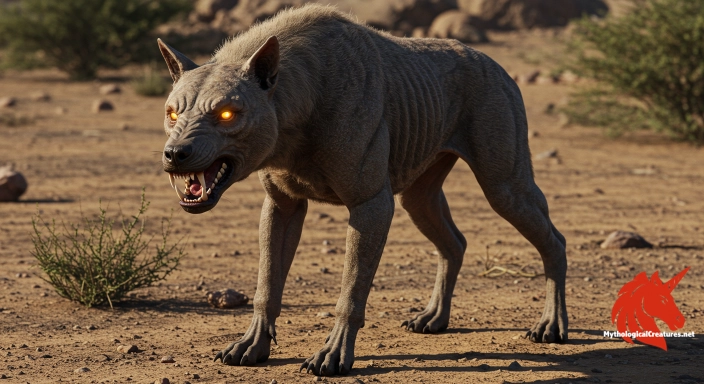
Crocotta
Crocotta - Symbolises the dangerous and deceptive aspects of the wild, serving as a warning against venturing into untamed lands.
the legend in five swipes.
the legend in five swipes.
Crocotta: Origins and First Sightings
The crocotta is an enigmatic creature that has captured the imagination of diverse cultures for centuries. Its earliest mentions emerge from the distant lands of India and Aethiopia, where it was regarded as a sinister amalgam of dog and wolf, with a mysterious connection to the hyena. Ancient travellers and chroniclers depicted it as an almost otherworldly predator, capable of challenging both humans and their loyal canines. Its myth was initially passed on through oral traditions, later embellished by medieval compilers into elaborate bestiaries. Each retelling served to heighten the creature’s ominous reputation, portraying it as a harbinger of misfortune in the untamed wilderness. The legend of the crocotta underscores the medieval fascination with creatures that straddle the boundaries between the natural and the supernatural. As cultural narratives evolved, the crocotta became a symbol of the unpredictable dangers lurking beyond civilisation. Its story reflects early human efforts to categorise and understand the wild unknown. Ultimately, the crocotta’s myth endures as a potent reminder of the rich tapestry of ancient lore and the enduring allure of the monstrous.
Which texts first mention the Crocotta?
Ancient texts and travel accounts provide the earliest literary glimpses of the crocotta, with several classical authors hinting at its fearsome nature. Early natural historians, whose works detailed exotic fauna from far-flung lands, recounted encounters that blurred the lines between fact and legend. Medieval bestiaries later embraced the crocotta, referring to it under various names such as leucrocotta and leucrotta, thereby weaving its story into a broader tapestry of mythical beasts. Varied narrative strands reveal that some accounts emphasised its uncanny ability to mimic human voices, a trait that amplified its terror among those unprepared for the wild. In other oral traditions, the creature assumes a role that symbolises the savagery and unpredictability of nature. Manuscripts from different eras and regions have preserved variations that range from subtle shifts in its physical description to stark contrasts in its behavioural lore. These sources not only add layers of intrigue but also highlight the way travellers’ impressions and local folklore merged to create a multifaceted legend. Despite the fragmentary nature of these accounts, each version contributes to the overall mystique surrounding the crocotta. The enduring legacy of these sources demonstrates how myth can transcend the constraints of time and geography.
How would you recognise the Crocotta?
Descriptions of the crocotta’s physical form conjure an image of a formidable beast that blends characteristics of both canine and lupine stock. Its body is often portrayed as muscular and streamlined, echoing the strength and agility of a seasoned predator. Many accounts detail a coat that varies in hue, sometimes described as dark and mottled while in other tales it takes on an eerie, paler tone reminiscent of spectral light. The creature is attributed a pronounced muzzle, complemented by pointed ears that contribute to its alert and predatory expression. Remarkable features include eyes that seem to gleam with a ferocious intelligence, capable of unsettling any who meet its gaze. Some narratives even suggest that its facial structure bears an uncanny resemblance to human features, an attribute that deepens the sense of the uncanny. Powerful jaws armed with sharp teeth and formidable claws round out the description, marking it as a creature built for both stealth and sudden attack. The juxtaposition of graceful movements with brutish strength accentuates its role as a symbol of nature’s duality. Collectively, these detailed physical traits serve to reinforce the creature’s fearsome reputation and enrich its mythological allure.
The Geography of the Crocotta Legend
Regional interpretations of the crocotta reveal a fascinating divergence in detail across different parts of the world. In the Indian subcontinent, legends often portray the beast as a spectral hunter whose eerie presence is interwoven with the mystique of dense jungles and barren landscapes alike. Ethiopian accounts, by contrast, tend to highlight a darker, more ominous form, sometimes imbued with supernatural qualities that set it apart from earthly predators. Local oral traditions have adapted the core myth to reflect particular environmental concerns, often transforming the crocotta into an emblem of nature’s hidden dangers. In some regions, the creature is seen not merely as a physical menace but as a portent of misfortune, whose appearance corresponds with ominous natural events. Varying descriptions—from changes in coat colour to subtle differences in size—mirror the influence of each region’s distinct fauna and folklore. Moreover, the behavioural nuances attributed to the crocotta differ widely, adding layers of cultural significance to the myth. These diverse regional adaptations underscore how local ecological and social contexts can reshape a singular legend into a spectrum of related myths. Ultimately, the crocotta’s regional variations attest to the universal human impulse to personify and mythologise nature’s unfathomable forces.
Do other traditions know the Crocotta by another name?
Cultural comparisons place the crocotta alongside an array of mythological creatures whose traits oscillate between humanity and bestiality. Much like the werewolves of European folklore, the crocotta epitomises the blurred line between man and beast, embodying both familiar domestic forms and the wild unknown. Its association with the hyena, a creature often enveloped in its own aura of mystery and cunning, further cements its place within a broader spectrum of monstrous canines. Similar comparisons are drawn with figures like the hellhound, symbols of otherworldly menace that traverse the realms between life and death. Elements of mimicry and deceptive appearance—traits sometimes credited to the crocotta—recur in other traditions where the supernatural takes on a guise that challenges normal perception. This cross-cultural dialogue reveals that many societies have long sought to explain erratic natural phenomena through beings that defy clear classification. In comparing the crocotta to its mythological counterparts across continents, one discerns a common narrative thread: a warning against the unpredictable forces lurking at society’s margins. These cultural parallels not only highlight shared human fears but also underscore the universality of myth-making when confronting the wild and unknown. The comparative analysis thus enriches our understanding of the crocotta as a symbol that resonates beyond its local origins.
The Lasting Influence of the Crocotta
Over the centuries, the myth of the crocotta has undergone a remarkable transformation, reflecting the changing attitudes and literary styles of successive eras. Initially recounted in ancient travellers’ logs and natural histories, its legend found renewed vigour during the medieval period as part of elaborate bestiary traditions. Its portrayals evolved from mere accounts of a dangerous animal to intricate symbols laden with moral and natural allegories. In modern times, the crocotta has been reimagined as an element of fantasy literature and popular culture, its diabolical features often amplified for dramatic effect. Contemporary adaptations tend to blend its myth with modern tropes, giving rise to interpretations where the creature serves as a metaphor for the darker aspects of human nature and the wilderness. Artists and writers have reinterpreted the legend to question the boundaries between reality and myth, often using the crocotta to evoke both beauty and terror. Its evolution is reflective of a broader cultural shift, where ancient myths are repurposed to explore current existential fears and ecological concerns. Despite advances in natural sciences clarifying the boundaries of myth, the crocotta persists as a potent reminder of humanity’s enduring fascination with creatures that elude easy explanation. The modern legacy of the crocotta illustrates how myth adapts through time, remaining as compelling in contemporary narrative as it once was in ancient lore.
Interesting Fact
An intriguing aspect of the Crocotta is its reputed ability to mimic human voices, a feature that enhances its mythological role as a deceiver and predator.
Mythological Treasures
Norse Sagas: A field guide to the beasts of the Viking world
Drawn from the saga accounts themselves, with the powers, weaknesses and doom of each being set out.
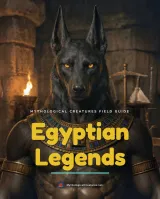
Egyptian Legends: A field guide to the gods and monsters of ancient Egypt
Guardians of the living and devourers of the dead, with the role each played in judgement.
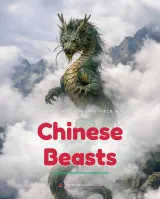
Chinese Beasts: A field guide to the dragons and demon kings of Chinese myth
From river dragons to demon kings, with the legends that shaped five thousand years of storytelling.
the legend in five swipes.
For serious myth projects
Feature your work alongside the legends
From academic works to story-rich games, we highlight projects that respect world mythologies. Talk to us about a measured, long-term placement.
Start a conversationQuick Creature Info
Features:
Our Mythic Legendary Rating:

Also Sometimes Known As:
Habitat:
Supernatural Powers:
Physical Attributes:
Abilities:
Behavior:
Lore:
Related Creatures, Tales or Lore
References
Discover Another Mythical Legend You May Not Have Heard Of?
Uncover the mysteries of ancient folklore and expand your knowledge of legendary beings from cultures around the world.
Dare to Meet the Bhaisajyaguru....

The Mythological Creatures Book Series
Yokai, Greek, Norse, Egyptian & Chinese. Five illustrated field guides to the creatures the old stories either warned or told you about.
Curated by the Mythological Creatures Team
Series editor: Mythological Creatures Directory
Primary desk: African & Diaspora Traditions Desk
(rev. November 2025)