
Cuélebre: The Cuélebre is a legendary winged serpent-dragon from Asturian and Cantabrian folklore.
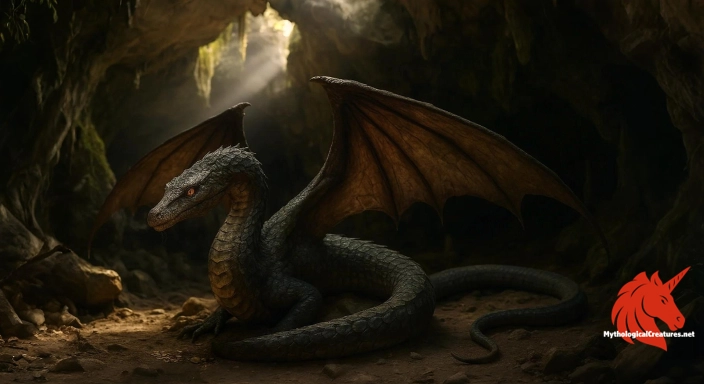
Cuélebre
Cuélebre - Embodying the mysterious and perilous aspects of nature, the Cuélebre represents both the allure of hidden treasure and the terror of an uncontrollable supernatural force in northern Spanish folklore.
Origins & First Encounters
The Cuélebre emerges from the rich tapestry of northern Spanish myth with an aura of both menace and mystical allure. It appears as a giant, winged serpent-dragon whose story has been passed down through generations in the Asturian and Cantabrian regions. Its roots trace back to ancient traditions where hidden caverns and secret treasures play a central role in defining the narrative. This legendary creature occupies a blend of roles as both guardian of vast riches and captor of ethereal beings, adding layers of complexity to its character. Early attestations in the region’s oral and written traditions echo a time when the boundary between the mortal and the supernatural was remarkably thin. Its presence in secluded rock formations and dark caves has symbolised nature’s untameable power and the mysteries lurking beneath the surface. The creature’s eventual departure to a fabled paradise beyond the sea provides a narrative of transition and inevitable destiny. The enduring legend of the Cuélebre continues to inspire a sense of wonder and caution, reflecting centuries of cultural evolution and regional identity.
Source Texts & Tale Variants
Ancient manuscripts and local chronicles have preserved the narrative of the Cuélebre in diverse and compelling forms. Stories of this legendary being appear in tattered folktales recited by elders in remote mountain hamlets as well as in early medieval records. Multiple narratives depict the beast in varying lights, from a fearsome terror of the night to a complex guardian of treasured secrets. Some accounts focus on the creature’s vulnerability during mystical nights, when its magical defences are thought to wane and permit human challenge. Oral traditions, passed from parent to child, have adapted the tale to suit evolving cultural and natural environments over the centuries. Variations of the story often include inventive methods to defeat the creature, such as the use of red-hot stones or enchanted bread filled with pins. Regional storytellers have enriched the narrative with details that highlight both heroic triumph and the creature’s awe-inspiring might. The amalgamation of these narratives from diverse sources has secured the Cuélebre’s place as a multifaceted symbol in the mythic landscape of northern Spain.
Form & Powers
The Cuélebre is vividly portrayed as a colossal, sinuous serpent whose body is cloaked in a series of ever-hardened scales that seem to grow impenetrable with age. Its massive form boasts a pair of expansive, bat-like wings that extend from its back, enabling a majestic yet fearsome flight when it takes to the skies. Every scale is depicted with detailed intricacy, reflecting an ancient craftsmanship that renders the creature both beautiful and formidable. Its eyes are often described as deep, glimmering orbs that convey an ageless wisdom and a hint of malevolence. The creature’s elongated, undulating body moves with a grace that belies its tremendous power, coiling and uncoiling in the shadows of its cavernous abode. Despite the intimidating image it presents, subtle features—such as the soft glow attributed to its breath—invite speculation about hidden restorative powers. Some descriptions note slight variations in size, with younger forms being somewhat less imposing than their venerable, aged counterparts. Rich in mythic detail, the physical depiction of the Cuélebre serves as a visual metaphor for the ancient and enduring forces of nature it epitomises.
Regional Faces
Local adaptations of the Cuélebre narrative underscore the distinct cultural flavours found throughout northern Spain. In Asturian lore, the beast is often portrayed with an emphasis on its role as the keeper of secret treasure troves hidden within labyrinthine cave systems. Cantabrian renditions, meanwhile, highlight a more ferocious nature, with dramatic tales of its unleashed wrath on particular nights of the year. Villagers in different areas recount its story with unique embellishments, allowing the creature to serve as a mirror for regional values and fears. Some communities focus on its mystical vulnerability during the midsummer celebrations, while others recount its augmented strength on the night of Saint Bartholomew. Artistic portrayals and folk songs also vary, with each locale adding subtle details that reflect the surrounding landscape and cultural history. These regional differences not only enrich the overall legend but also ensure that the Cuélebre remains a dynamic symbol tailored to its environment. The diversity of these local narratives contributes to a multifaceted legend that continues to captivate both the imagination and the cultural memory of its people.
Cultural Parallels
The aura of the Cuélebre resonates with echoing motifs found across a broad spectrum of mythological dragons and serpents throughout the world. Figures from Celtic and Welsh traditions, who also embody the dual roles of menace and mystical guardian, share notable similarities with this northern Spanish creature. In various cultural contexts, winged serpents are emblematic of nature’s unpredictable might and the delicate balance between danger and beauty. The interplay between its destructive potential and its secret healing properties invites comparisons with legendary beasts that have served as both obstacles and conduits for transformation. Like the majestic dragons depicted in Eastern traditions, the Cuélebre inhabits a liminal space between human civilisation and the wild, imbued with an allure that transcends mere ferocity. Its narrative, which blends elements of heroism, vulnerability, and supernatural retribution, finds parallels in the symbolism of creatures that guard treasures and challenge mortal bravado. This comparative exploration emphasises a shared human fascination with beings that encapsulate the enigmas of nature. In a broader mythological context, the Cuélebre stands as testament to the enduring power of archetypal symbols that cross geographical and cultural boundaries.
Legacy & Modern Evolution
Over centuries, the image of the Cuélebre has morphed from a fearsome embodiment of natural peril into a celebrated emblem of cultural heritage and artistic expression. Its initial portrayal as a terrifying, unchallengeable guardian has softened in modern retellings, where creative reinterpretations explore the duality of its character. Contemporary festivals in northern Spain sometimes incorporate its legend as a means of celebrating the region’s mythic history, transforming old fears into festive, communal narratives. The evolution of its story mirrors broader societal shifts in how myth and legend are perceived, moving from stark cautionary tales to vibrant sources of communal pride. Modern authors and artists often reimagine the Cuélebre as a complex figure whose myth encapsulates both the cruelty and the beauty inherent in nature. This evolving depiction is frequently used to symbolise the passage from ancient ritualistic beliefs to modern narratives steeped in fantasy and local tradition. The creature now occupies a cherished position in the cultural memory of Asturias and Cantabria, inspiring everything from literature to local tourism initiatives. Its enduring legacy, continuously adapted by each generation, underscores how myths can transform to reflect changing worldviews while still honouring their original mystique and allure.
Interesting Fact
A particularly fascinating aspect of the Cuélebre myth is its healing spit, which, upon contact with the air, transforms into a magical stone capable of curing various diseases—a trait that is nearly unique among dragon legends.
Support the directory
Promote your myth project and fund more research
Sponsor placements help keep this directory growing and free to use while giving your work a focused, relevant audience.
Learn how sponsorship worksQuick Creature Info
Associations:
Our Mythic Legendary Rating:

Also Sometimes Known As:
Habitat:
Supernatural Powers:
Physical Attributes:
Abilities:
Behavior:
Weaknesses:
Lore:
Related Creatures, Tales or Lore
- LLadon
- FFafnir
- HHydra
References
Discover Another Mythical Legend You May Not Have Heard Of?
Uncover the mysteries of ancient folklore and expand your knowledge of legendary beings from cultures around the world.
Dare to Meet the Pegaeae....

Curated by the Mythological Creatures Team
Series editor: Mythological Creatures Directory
Primary desk: Hellenic & Ancient Mediterranean Desk
(rev. November 2025)