
Dahu: The Dahu is a legendary, goat-like creature from the Alpine regions of France, Switzerland, and Italy.
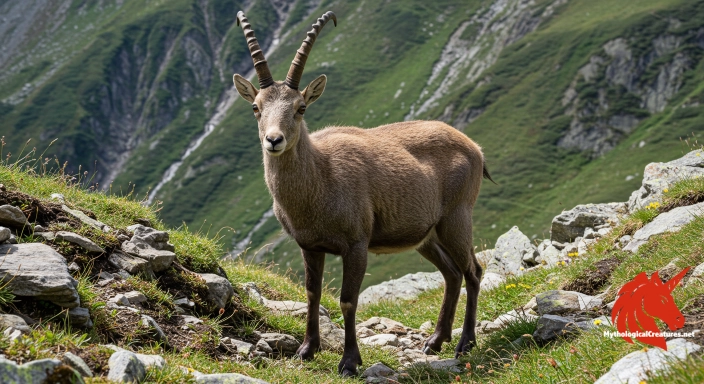
Dahu
Dahu - Represents the playful and elusive spirit of mountain life while serving as a cultural in-joke among hunters in francophone regions.
Origins & First Encounters
The Dahu is a legendary creature deeply embedded in the folklore of the alpine regions, renowned for its peculiar adaptation that seemingly defies natural laws. It is often depicted as a mountain goat with one side of its legs noticeably shorter than the other, a feature that enables it to traverse steep slopes with remarkable ease. The origins of the myth appear to be entwined with rural humor and local ingenuity, where mountain dwellers invented the tale as both a jest and a subtle commentary on the quirks of nature. The creature’s earliest mentions emerge from oral traditions in the French countryside, where storytellers would regale listeners with accounts of its elusive habits. Over time, the Dahu evolved into an emblem of the mountainous regions of France and Francophone Switzerland and Italy, often used to illustrate the mysterious spirit of high-altitude life. Its tale is interlaced with both wit and whimsy, reflecting a playful interpretation of nature’s realities. Rural guides and elders would occasionally challenge urban visitors to embark on a hunt for the elusive beast, turning the pursuit into a rite of passage. The enduring narrative of the Dahu serves as a reminder of how folklore can transform ordinary elements of the natural world into extraordinary myth. The creature has since become a cultural symbol, reflecting both regional pride and a deep-rooted connection to the rugged landscape. In essence, the legend of the Dahu encapsulates a blend of natural observation and creative imagination, celebrating the spirit of the mountains.
Source Texts & Tale Variants
The primary form of evidence for the Dahu’s legend rests within the rich tapestry of oral tradition, passed down through generations in mountain communities. Although formal written records are sparse, local tales and humorous anecdotes have served as the primary sources for its myth. Numerous regional narratives have been documented in small folklore collections and travel journals, each adding unique details to the creature’s elusive character. In many local communities, experienced guides have been known to incorporate the story of the Dahu into their repertoire of tall tales aimed at entertaining and sometimes gently deceiving visitors. These humorous accounts have evolved through storytelling sessions held around mountain fires and in community gatherings, preserving the myth in a dynamic social context. Variations in the creature’s name, such as dahut, dairi, darou, or tamarro, highlight the diversity of its representation across different regions. Some sources even detail specific hunting rituals associated with the Dahu, intended more as an elaborate prank than a serious pursuit. The narrative of the Dahu often appears in rural literature and local magazines that celebrate the idiosyncrasies of mountain living. As a result, while academic documentation might be limited, the widespread oral and folkloric evidence provides a vivid, multifaceted portrayal of the creature. Each variant, whether shared in a whispered conversation or a jovial group hunt, contributes to the collective memory of this captivating myth.
Form & Powers
The physical depiction of the Dahu is as intriguing as the legend itself, characterised by features that blend both realism and whimsy. It is commonly portrayed as a quadrupedal creature with the graceful build of a mountain goat, yet its most distinctive trait is the apparent asymmetry in its limb length. This odd anatomical adaptation, where one side of its legs is noticeably shorter than the other, is said to allow it to effortlessly navigate the uneven terrain of high mountains. Its coat is usually imagined as a mottled blend of earthy browns and greys, mirroring the rocky surfaces and shadowed crevices of its natural habitat. The creature is often rendered with curved horns that add an element of wild elegance to its silhouette, emphasising its connection to the rugged highlands. Artists and storytellers sometimes suggest a slightly comical aspect to its facial features, with keen, bright eyes and a subtle, knowing expression. In some depictions, the fur is adorned with streaks or patterns that mimic the textures of the surrounding limestone cliffs and alpine flora. Although variations in size are noted, the Dahu is generally described as compact yet muscular, built to endure the demanding conditions of mountainous landscapes. These physical details, while imaginative, evoke a creature that is both a product of nature and a clever twist of folklore. The interplay between realistic animal traits and playful exaggeration underscores the enduring charm of this mythical being.
Regional Faces
The regional variations of the Dahu myth are a testament to its versatile place in the cultural imagination of alpine communities. Across France and neighbouring regions, the creature is known by a variety of names including dahut, dairi, darou, daru, darhut, and even as tamarou or tamarro in certain locales. In the Jura, for example, the Dahu is often depicted as an elusive and playful figure, while in the Vosges it acquires the name darou and is sometimes associated with mysterious twilight appearances. In Picardy and Burgundy, local storytellers embellish its features even further, adding idiosyncratic traits such as exceptionally agile hind legs or an exaggerated curvature to its horns. Moving into regions like Val Camonica, ancient motifs and local legends intertwine to cast the creature in a mystical light that transcends mere humour. In the highlands of Aubrac and Aveyron, the Dahu is celebrated as a whimsical trickster, a living embodiment of the unpredictable mountain environment. In Catalonia and Andorra, the variant known as tamarro carries additional folklore elements that blend with regional animal lore. Each community’s rendition of the myth not only alters physical details but also the behavioural characteristics attributed to the creature. These adaptations reflect local environmental influences and cultural identities, ensuring that the myth remains relevant to each community’s way of life. Overall, the regional diversity of the Dahu legend enriches its narrative, transforming a singular myth into a multi-faceted cultural phenomenon.
Cultural Parallels
A comparative glance at the Dahu reveals intriguing parallels with other mythical creatures that occupy similar roles in their respective cultural narratives. Like the American snipe, whose elusive nature is celebrated through elaborate practical jokes, the Dahu is primarily a creature of mirth and cunning, used to both entertain and challenge the uninitiated. In North America, the tale of the snipe hunt has a similar function, where a wild and imaginary creature is set as the object of a fool’s errand, mirroring how the Dahu is utilised in mountain lore. Additionally, the myth often draws comparisons to the jackalope, another legendary hybrid that blends real animal traits with fantastical embellishments. Both creatures serve as cultural metaphors for the imaginative reinterpretation of nature, using physical anomalies as the basis for humour and local identity. These comparisons extend to a broader tradition in folklore where the blending of natural observation with creative storytelling results in creatures that straddle the line between reality and myth. In various cultures, the invention of such creatures illustrates a shared human tendency to mythologise the environment as a means of coping with its mysteries. The Dahu’s playful anatomical oddity and its role in communal pranks underscore its unique place amongst a pantheon of humorous cryptids. This shared function across cultures not only highlights universal themes of wit and deception but also enhances our understanding of how oral traditions adapt to local contexts. Ultimately, the Dahu stands as a fascinating example of how myth and mirth converge to create enduring cultural symbols.
Legacy & Modern Evolution
Over the centuries, the depiction of the Dahu has evolved from a simple, tongue-in-cheek tale told by mountain dwellers into a celebrated emblem of regional folklore. Originally crafted as a playful ruse to tease unwary visitors, the myth has matured into a symbol of cultural identity and alpine heritage. Early accounts, steeped in informal oral traditions, gradually made their way into written compilations and local narratives, each adding layers of nuance and humour. In modern times, the creature has been embraced by local communities as a mascot for the high mountain environment, with its image appearing on souvenirs, in local festivals, and even on educational materials that underscore the region’s rich cultural tapestry. Contemporary reinterpretations often present the Dahu as a playful reminder of the importance of wit and creativity in understanding nature. Artistic and literary portrayals have reimagined the creature in various forms, from charming cartoon renditions to sophisticated installations in cultural exhibits. The evolution of the Dahu myth reflects broader societal changes, as communities balance tradition with modernity while retaining their unique historical quirks. This enduring legacy has also inspired academic studies into the role of humorous folklore in shaping regional identities and environmental perceptions. Today, the Dahu is much more than a mythical creature; it embodies a collective memory of communal jest, ingenuity, and a deep-seated connection to the rugged, unpredictable landscape of the mountains.
Interesting Fact
A particularly intriguing aspect of the Dahu is the legendary claim of its uneven leg lengths, a trait that has spawned countless humorous stories and mock hunts in mountain communities.
Limited sponsor opportunity
One slot, carefully chosen partners
We only feature a small number of relevant sponsors at any time. If you create serious myth content, we would like to hear from you.
Partner with usQuick Creature Info
Features:
Associations:
Our Mythic Legendary Rating:

Also Sometimes Known As:
Habitat:
Physical Attributes:
Abilities:
Behavior:
Lore:
Related Creatures, Tales or Lore
References
Discover Another Mythical Legend You May Not Have Heard Of?
Uncover the mysteries of ancient folklore and expand your knowledge of legendary beings from cultures around the world.
Dare to Meet the Surya....

Curated by the Mythological Creatures Team
Series editor: Mythological Creatures Directory
Primary desk: Hellenic & Ancient Mediterranean Desk
(rev. November 2025)