
Darrhon: Darrhon is a minor Paeonian god of healing whose cult was adopted by the ancient Macedonians.
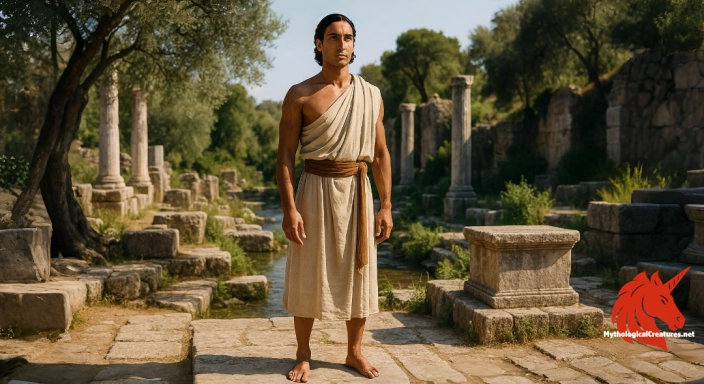
Darrhon
Darrhon - Initially a minor Paeonian deity, later identified with Asclepius, Darrhon played a key role in healing cults and the religious practices of ancient Macedonia.
Origins & First Encounters
Darrhon emerges as a distinctive healing deity whose origins reside in the Paeonian culture, later embraced by the ancient Macedonians. His worship is rooted in traditions that celebrated the restorative powers of nature and the divine, making him an essential figure in early healing cults. He was first attested in inscriptions such as those found in Pella, dating from the period around 200–150 BC, which attest to a reverence that spanned regional boundaries. The integration of his cult into Macedonian society underscores a dynamic cultural exchange between Paeonian beliefs and the broader Hellenic world. His identity is noted to have evolved from that of a minor local deity to one whose attributes resonated with the wider healing traditions of the era. The limited yet evocative references suggest a god endowed with benevolence and the capacity to restore health. This transformation reflects a broader pattern in ancient religious practices, where local spirits were reinterpreted to fit the evolving spiritual landscape. His eventual identification with the more widely recognised Asclepius illustrates both the malleability and enduring appeal of healing deities in antiquity.
Source Texts & Tale Variants
The primary sources for Darrhon are sparse yet significant, with surviving inscriptions providing the most direct evidence of his cult. A crucial inscription from Pella, discovered within the context of a dedicated sanctuary, highlights the organised nature of his worship. Additional attestations include fragmented records from Amphipolis, where inscriptions mention supplications to a benevolent Darrhon. Literary references, though limited, have been preserved in lexicons and brief notes by ancient scholars, contributing to our understanding of his divine role. These documents collectively suggest that Darrhon was venerated as a healing force in ritual settings. Variations in the inscriptions hint at regional adaptations in how his power was invoked and celebrated. Despite the fragmentary nature of the evidence, each source offers valuable insights into the prayers, rituals, and iconography associated with his cult. The evolving narrative seen in these sources also indicates a process of reinterpretation that eventually connected him with the more dominant healing figure, Asclepius.
Form & Powers
Although no canonical images of Darrhon have survived, reconstructions based on related healing deities provide a vivid picture of his possible appearance. He is often envisioned as a youthful yet dignified figure, exuding an aura of calm and benevolence that reflects his role as a restorative power. Some artistic interpretations suggest that he may have been depicted wearing flowing robes that symbolise both grace and the fluidity of healing waters. Iconographic elements, such as a staff entwined with a serpent, are commonly associated with healing gods and might have been incorporated into his depictions. His facial features are imagined to express a blend of wisdom and compassion, capturing the dual nature of divine intervention and natural remedy. Variations in his portrayal also indicate that local artisans could have adapted his image to reflect distinct cultural motifs, merging Paeonian elements with broader Hellenistic aesthetics. In some representations, subtle details like the inclusion of a laurel wreath hint at his connection to ancient rites of revitalisation and sanctuary. Although no standardised portrait exists, the collective imagery associated with Darrhon is an evocative testament to ancient attempts at visualising healing and recovery.
Regional Faces
Darrhon’s mythological presence was initially confined to the Paeonian region, where local traditions and rituals uniquely celebrated his restorative abilities. As his cult spread into Macedonia, his identity was enriched by the intersection of diverse cultural influences and religious practices. In Amphipolis and Pella, local adaptations emphasised his beneficent power, tailoring the deity’s character to suit communal needs and spiritual aspirations. Regional practices sometimes highlighted differences in his portrayal, with Paeonian rituals preserving archaic elements while Macedonian worship began to mirror the iconographical traditions of widely esteemed healing gods. Variations in ritual inscriptions indicate that while his core attributes remained constant, details of his worship—such as the specific invocations and ceremonial paraphernalia—differed markedly across communities. Local folklore and ceremonial practices in these areas also imbued him with qualities that resonated with indigenous healing practices. The fluidity of his myth allowed communities to reinterpret Darrhon in ways that affirmed both local identity and broader cultural aspirations. Through these regional adaptations, he became a bridge linking local Paeonian spirituality with the expansive religious vistas of Hellenistic society.
Cultural Parallels
The evolving character of Darrhon invites comparison with other healing deities across the ancient Mediterranean world. Much like Asclepius, who is routinely depicted with serpentine symbols and a staff, Darrhon embodies themes of regeneration and health restoration. His transformation from a local spirit to one assimilated with a greater healing god parallels the syncretic processes observed in various cults, where minor deities absorb facets of more prominent figures. Similar to how Celtic deities were later merged with Greco-Roman divinities, Darrhon’s narrative demonstrates an intermingling of regional religious traditions. His journey from obscurity to a role akin to that of Asclepius highlights the fluid boundaries in ancient myth-making and the shared symbolism among healing gods. In other cultures, figures like the Egyptian Imhotep also represent the ideal of divine healing, hinting at a universal archetype of restoration and medicinal power. While the specifics of iconography and ritual practice may differ, the underlying concept of a healing deity resonates across varied mythological systems. This cross-cultural connection not only underscores the common human pursuit of health and well-being but also illustrates the transformative adaptability inherent in mythological narratives.
Legacy & Modern Evolution
The historical evolution of Darrhon reflects a journey from a modest, local deity to a figure of broader mythological significance. Early evidence of his worship is encapsulated in the modest inscriptions and sanctuaries of Paeonia and Macedonia, where he was initially revered for his healing prowess. Over time, shifts in religious thought led to his gradual fusion with the more famous Asclepius, thereby expanding his influence and symbolic resonance. This convergence of identities points to a broader trend in ancient spirituality, where lesser-known gods were often subsumed under established deities. In modern times, archaeological discoveries continue to shed light on his cult, providing insight into ancient healing practices and communal rites. Contemporary scholars and enthusiasts of mythology often reimagine Darrhon as a symbol of the enduring human quest for health and renewal. His legacy today is invoked in discussions about the origins of medicinal cults and the ways in which local deities adapt to broader cultural narratives. Modern artistic reinterpretations and cultural references have kept the spirit of Darrhon alive, ensuring that his legacy as a healer and a connector of diverse traditions endures through the ages.
Interesting Fact
An intriguing aspect of Darrhon's legacy is his transformation from a minor local deity to one syncretized with Asclepius, illustrating the dynamic nature of ancient religious identities.
Limited sponsor opportunity
One slot, carefully chosen partners
We only feature a small number of relevant sponsors at any time. If you create serious myth content, we would like to hear from you.
Partner with usQuick Creature Info
Origin:
Associations:
Our Mythic Legendary Rating:

Also Sometimes Known As:
Habitat:
Supernatural Powers:
Behavior:
Lore:
Related Creatures, Tales or Lore
- AAsclepius
- HHygeia
- AApollo
References
Discover Another Mythical Legend You May Not Have Heard Of?
Uncover the mysteries of ancient folklore and expand your knowledge of legendary beings from cultures around the world.
Dare to Meet the Yakshini....

Curated by the Mythological Creatures Team
Series editor: Mythological Creatures Directory
Primary desk: Hellenic & Ancient Mediterranean Desk
(rev. November 2025)