
Echeneis: Echeneis is a legendary small fish from ancient Greek mythology known for its ability to latch onto ships and delay their movement.
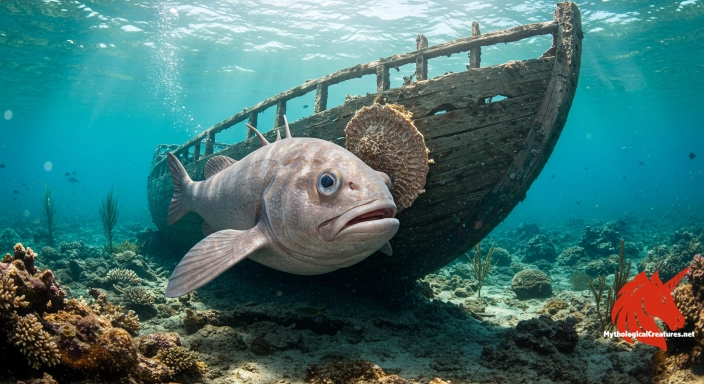
Echeneis
Echeneis - Represents the blending of natural observation with myth, and showcases how ancient cultures attributed magical properties to ordinary creatures.
Origins & First Encounters
Echeneis stands as one of antiquity’s most enigmatic creatures, a small fish that captured the imagination of ancient seafarers and scholars alike. Its origins lie in early Greek lore, where natural wonder and myth intertwined to create a narrative full of both mystery and utility. The creature first appears in classical literature, and its unusual habit of latching on to ships quickly distinguished it in maritime lore. Ancient writers portrayed it as more than just a biological oddity, imbuing it with qualities that straddled the boundary between medicine and superstition. Early attestations of Echeneis reveal a deep cultural context where the natural world was seen as a reservoir of both beneficence and danger. The creature’s unique attributes, such as its supposed ability to impede the progress of vessels, symbolised the unpredictable forces of the sea. It emerges in a context where natural phenomena were interpreted through myth and allegory, blending rational observation with magical thinking. The reverence and caution with which the creature was regarded underscore the interplay of myth and nature in ancient societies. This legendary fish continues to intrigue modern audiences, serving as a testament to the enduring power of myth in explaining the mysteries of the natural world.
Source Texts & Tale Variants
Ancient texts serve as the primary reservoir of information about Echeneis, with the accounts of writers like Pliny the Elder and Plutarch offering detailed descriptions that have echoed through the ages. Pliny the Elder notably remarked on its dubious reputation, tying the creature to medicinal remedies and even legal interference through its bizarre alleged properties. Plutarch, in his work Quaestiones Convivales, provided one of the most comprehensive narratives, delineating both its physical characteristics and its supernatural abilities. Later medieval bestiaries by Isidore of Seville and Bartholomaeus Anglicus continued to propagate the tale, each adding layers of cultural significance to the story. Alongside these, various folklore traditions from regions bordering the Indian Ocean contributed alternative perspectives on the creature’s behaviour and symbolism. While the texts offer surprisingly consistent observations about its ship-latching ability, subtle variations in detail hint at the complexity of translating natural phenomena into myth. Ancient anecdotes often spoke of its utility in ceasing bodily 'fluxes', thus merging practical medicine with the miraculous. The diversity of textual references provides a rich tapestry of lore, which was later adapted and reinterpreted by medieval scholars. Each version of the tale, though rooted in the same fundamental phenomenon, reflects the evolving relationship between humans and the natural world.
Form & Powers
The physical description of Echeneis is as intriguing as its behavioural traits, with ancient accounts providing a vivid yet ambiguous portrait. Described as a small fish, it is usually portrayed with a slender, elongated body, perfectly adapted for its peculiar lifestyle. Classical sources emphasise its ability to attach itself to larger objects, a trait that would later be recognised as the remora’s suction capability. The fish is often depicted with a rough, textured skin that hints at a resilience beyond its modest size. Some descriptions suggest it possesses a somewhat flattened head with a disc-like mouth, a feature modern biology confirms in its real-world counterpart. Variations in its size and appearance appear in different texts, with some accounts attributing an almost mythical glow to its body, symbolising its magical prowess. The creature is sometimes noted as having fins that seem disproportionate to its small frame, enhancing its enigmatic silhouette in the eyes of ancient naturalists. Its appearance is not merely functional; the physical traits were imbued with symbolic meaning, representing both persistence and mystery. Overall, the detailed observations create a composite image of a creature that was as curious in form as it was in function.
Regional Faces
The lore surrounding Echeneis reveals notable regional variations, reflecting the diverse cultural landscapes that encountered and reinterpreted the creature. While early accounts from the Mediterranean world centre on its unusual habit of latching onto ships, traditions around the Indian Ocean introduced nuances to its myth. In some Eastern narratives, this fish was seen not only as a hindrance to travel but also as a sign of supernatural intervention in the natural order. Coastal communities around the Indian Ocean often incorporated local environmental observations, leading to stories that blended empirical evidence of the remora with elaborate mythic attributes. In medieval European bestiaries, the creature’s image evolved further; its role shifted from a mere marine oddity to a symbol of restraint and caution. African coastal legends, too, introduced their own interpretations, sometimes depicting the fish as a talisman of good fortune or a mediator between the depths and the surface world. The physical and behavioural traits of Echeneis were, therefore, reshaped by the local environment and the cultural priorities of different communities. These regional adaptations of the myth serve as a mirror to how the natural world was experienced through diverse lenses across the globe. Such variations underline the universality of certain natural wonders, even as each culture infuses them with unique lore.
Cultural Parallels
When compared across different mythological traditions, the tale of Echeneis resonates with other narratives of animals that bridge the gap between natural phenomena and legendary power. Similar to creatures like the barnacle geese in medieval lore or the many fantastical marine beings of Eastern seafaring legends, Echeneis embodies the idea of nature’s mysterious interferences with human endeavours. The notion of a small creature exerting a significant impact on vast ships invites comparisons to other marine myths that suggest a deeper, almost sentient relationship between the sea and its inhabitants. Cross-culturally, this is mirrored in the way various societies have harnessed tales of nature’s small agents to explain grand events or to instil moral lessons. In some traditions, creatures with adhesive qualities are emblematic of the unseen forces that can alter fate and fortune. The comparison extends to certain amphibious legends where the quirks of an animal’s biology are exaggerated into supernatural competence. The enduring appeal of such myths speaks to a universal human fascination with the unpredictable and often inexplicable interactions between nature and civilisation. By examining Echeneis alongside its mythological cousins, one can appreciate a shared narrative thread that weaves natural observation with imaginative storytelling. The resultant imagery is not merely a scientific observation but a reflection of humanity’s enduring attempt to personify the wild behaviour of nature.
Legacy & Modern Evolution
Over centuries, the narrative of Echeneis has undergone a fascinating transformation, evolving from a mysterious myth to an object of scientific enquiry and cultural symbolism. Early accounts that painted it as a disruptive force on ships gradually gave way to a more rational understanding, especially as naturalists identified its real-world counterpart, the remora fish. The creature’s historical evolution mirrors the gradual shift from mythological explanation to biological science, reflecting a broader trend in the human interpretation of natural phenomena. In modern culture, Echeneis is often referenced as a metaphor for unexpected attachments and the hidden forces that influence our journeys. Contemporary interpretations celebrate its paradoxical nature—both an impediment and a protector—symbolising commitment in the midst of life’s turbulent voyages. The story has inspired a variety of artistic and literary works, many of which use the fish as a motif to explore themes of perseverance and restraint. Modern media occasionally revisits the legendary fish, blending scientific curiosity with mythic allure to appeal to a diverse audience. Its depiction in popular culture serves as a reminder of how ancient narratives continue to inform our understanding of the natural world, even as technology and science provide new lenses. Ultimately, the legacy of Echeneis is a rich tapestry that spans the realms of art, literature, and natural history, underscoring the enduring interplay between myth and reality.
Interesting Fact
It is intriguing that a small, seemingly insignificant fish was attributed with both magical and medicinal powers, reflecting the tendency of ancient cultures to blend natural observations with mythological embellishments.
For indie creators
Give your myth project a permanent home
Indie authors, artists, small studios, and makers can secure an annual, non-intrusive sponsor slot that meets readers where they explore.
Obtain more informationQuick Creature Info
Origin:
Features:
Associations:
Our Mythic Legendary Rating:

Also Sometimes Known As:
Habitat:
Supernatural Powers:
Physical Attributes:
Abilities:
Behavior:
Lore:
Related Creatures, Tales or Lore
- RRemora (Echeneis naucrates)
- SSuckerfish
References
Discover Another Mythical Legend You May Not Have Heard Of?
Uncover the mysteries of ancient folklore and expand your knowledge of legendary beings from cultures around the world.
Dare to Meet the Ocypete....
Curated by the Mythological Creatures Team
Series editor: Mythological Creatures Directory
Primary desk: Hellenic & Ancient Mediterranean Desk
(rev. November 2025)