
Ocypete: Ocypete is one of the three Harpies in Greek mythology, renowned for her swift flight and fearsome presence.
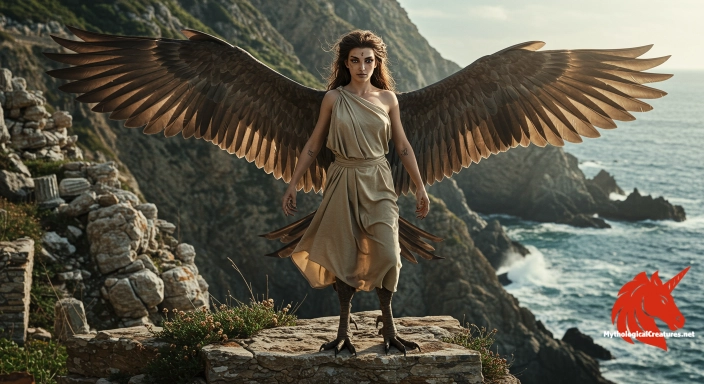
Ocypete
Ocypete - Embodies the swift retribution of the gods and the melding of beauty and horror.
Origins & First Encounters
Ocypete emerges from the classical tapestry of Greek myth as a vividly dynamic figure, embodying the swift and capricious nature of the wind. Her very name, meaning 'swift wing', captures the kinetic, almost ephemeral quality that defines her existence. The legend positions her firmly among the infamous Harpies, creatures both feared and revered for their unbridled power and enigmatic temperament. Born of the union between the sea god Thaumas and the Oceanid Electra, she occupies a unique niche within the pantheon of mythic beings. Over time, varying accounts enriched her identity with alternative names such as Ocypode and Ocythoe, each emphasising different aspects of her agility and speed. Her early attestations, scattered throughout ancient literary fragments, speak to a creature as mysterious as she is relentless. The cultural milieu in which she thrived celebrated her as an agent of both divine retribution and natural phenomenon, where the very forces of wind and weather intertwined with moral justice. Her storied presence deepens our understanding of how the Greeks perceived the interaction between human destiny and the caprices of nature.
Source Texts & Tale Variants
Ancient texts and fragmented sources hint at the many layers of Ocypete’s myth, with later interpretations adding fresh dimensions to her character. Traditional narratives often embed her within the wider Harpy legend, a multifaceted motif that evolved with the passage of time. Early epic poets are believed to have mentioned the Harpies in allegorical contexts, though specific references to Ocypete might be interwoven with broader accounts of divine agents. Numerous scholia and mythographical texts offer variants on her genealogy, occasionally aligning her as the progeny of Typhon, Pontus, or even Poseidon. These multifarious origins underscore the fluidity of myth, as oral traditions and local storytellers reshaped her identity. Various mythic compendia treat her as emblematic of the swift justice bestowed by the gods. Myriad story cycles, some with moral overtones and others with foreboding warnings, feature her alongside her fearsome sisters Aello and Celaeno. Despite the passage of centuries, subsequent retellings in Byzantine chronicles and medieval bestiaries continued to revere her elusive persona. The overlapping narratives make her a striking example of how mythic figures can transcend singular sources, evolving through a wide corpus of literary and artistic traditions.
Form & Powers
Visually, Ocypete is imagined as an arresting blend of human and avian characteristics, a fusion that renders her both alluring and formidable. Artistic depictions often present her with a lithe, graceful body accentuated by a cascade of feathers that mirror the sleek contours of a bird in flight. Her large, expressive eyes capture a sense of wild intelligence and the hint of a lurking menace beneath her ethereal beauty. Many traditions show her with robust, expansive wings that suggest a supernatural speed, inspiring awe among onlookers when depicted in ancient vase paintings and mosaics. The alternation between her names—each evoking either swift wing or swift foot—subtly hints at the diverse ways in which her form has been interpreted. Detailed representations reveal intricate feather patterns and delicate talons, elements that underscore both her animalistic prowess and her mythic elegance. Variations in size are noted across different portrayals, with some sources describing her as imposing and others as deceptively slight, emphasising the capricious nature of her existence. Her hybrid anatomy symbolises the ever-shifting boundary between beauty and terror, capturing the transformative power of myth to defy natural laws.
Regional Faces
The legend of Ocypete, though rooted in ancient Greek soil, underwent numerous regional adaptations as her story migrated across cultural landscapes. In many Mediterranean traditions, the Harpies evolved into symbols of storms and tempests, their swift movements interpreted as the very embodiment of capricious weather. Local variations often infused her narrative with regional iconography, such as motifs of maritime danger along coastal communities where her lineage from the sea god Thaumas resonated deeply. Some interpretations from Asia Minor cast her as a spectral presence, a cautionary figure whose swift descent signalled impending transformations in nature and human affairs. Byzantine mosaics and later European bestiaries occasionally reimagined her with softer, more allegorical features, reflecting a shift from literal terror to symbolic representation. These adaptations illustrate how cultural emphasis on natural phenomena, divine retribution, and moral parables reshaped her depiction. In certain folk traditions, Ocypete’s attributes merged with local spirits, thereby broadening her influence beyond the rigid confines of classical myth. The rich tapestry of regional adaptations serves to underscore the universality of her themes, which continue to inspire diverse interpretations well into modern times.
Cultural Parallels
In the grand spectrum of mythological beings, Ocypete finds intriguing parallels with other liminal creatures that straddle the human and animal worlds. Comparable to the Norse Valkyries in their dual roles as harbingers of fate and warriors of divine decree, her swift and often ambivalent persona invites comparisons with similarly endowed figures. There is also a subtle kinship with the Greek Sirens, though while the latter lure with beguiling song, Ocypete entrances with her sheer elemental force. Like many mythic hybrids, she mirrors the archetypal motif of possessing both beauty and terror, the allure of the sublime juxtaposed with the dread of the unknown. Her myth has also been resonant in the context of renaissance and baroque literature, where artists and writers drew parallels between her fleeting form and transient human emotions. The dynamic interplay between her graceful appearance and ominous function echoes in numerous cultural narratives, where nature is both admired and feared. Moreover, her depiction as a swift agent of divine will connects her thematically with transformative entities in global mythologies that challenge the boundary between order and chaos. Such comparative analysis emphasises how cross-cultural motifs converge to celebrate the inexorable power of nature and the divine in human lore.
Legacy & Modern Evolution
The legacy of Ocypete has transcended her ancient origins, evolving into a symbol that continues to captivate modern imaginations. While early depictions emphasised her role as a harbinger of divine punishment and natural calamity, later reinterpretations began to explore her multifaceted persona with greater nuance. The transition into medieval and Renaissance art shifted her narrative from one of raw terror to that of a complex allegory for uncontrollable forces. Contemporary literature, film, and visual arts have embraced her as an icon of enigmatic beauty and unbridled natural power, often imbuing her with feminist reinterpretations that highlight both vulnerability and strength. Modern portrayals reflect a synthesis of classic myth with current sensibilities, merging the allure of mythic mystery with symbolic commentary on agency and fate. Academic and artistic circles alike have re-evaluated her role, considering the deeper metaphors embedded within her swift, unpredictable nature. Her enduring influence in popular culture is evident in the recurring motifs found within fantasy genres, where her archetype is continuously reinvented and celebrated. As a timeless figure, Ocypete remains a powerful reminder of the enduring human fascination with the liminal realms where nature, divinity, and the supernatural converge.
Interesting Fact
Her various names all emphasise the theme of swiftness, underscoring the importance of speed in her mythological role as a harbinger of divine retribution.
For serious myth projects
Feature your work alongside the legends
From academic works to story-rich games, we highlight projects that respect world mythologies. Talk to us about a measured, long-term placement.
Start a conversationQuick Creature Info
Origin:
Features:
Associations:
Our Mythic Legendary Rating:

Also Sometimes Known As:
Habitat:
Supernatural Powers:
Physical Attributes:
Abilities:
Behavior:
Lore:
References
Discover Another Mythical Legend You May Not Have Heard Of?
Uncover the mysteries of ancient folklore and expand your knowledge of legendary beings from cultures around the world.
Dare to Meet the Išḫara....
Curated by the Mythological Creatures Team
Series editor: Mythological Creatures Directory
Primary desk: Hellenic & Ancient Mediterranean Desk
(rev. November 2025)