
Eitri: Eitri, also known as Sindri, is a legendary dwarf from Norse mythology renowned for his masterful craftsmanship in forging magical artifacts.
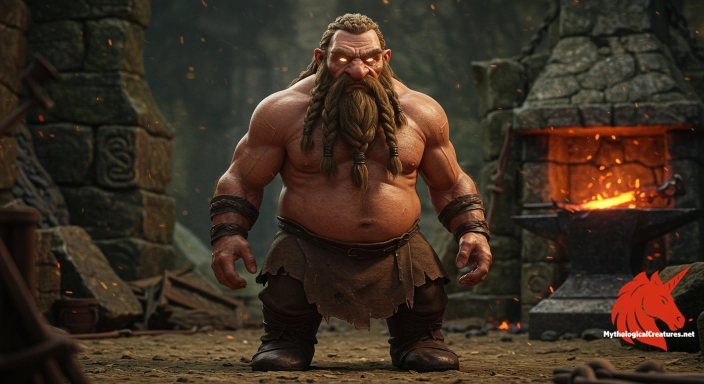
Eitri
Eitri - Eitri is celebrated for his legendary craftsmanship, having forged several of the most iconic artifacts in Norse mythology.
Origins & First Encounters
Eitri, also known as Sindri in certain traditions, occupies a unique position within Old Norse mythology as a paragon of dwarven craftsmanship. Born from the mysterious depths of subterranean forges, his origins are entwined with the elemental forces of fire and metal. The earliest attestations of his character appear in Old Norse texts, where his exceptional skill is celebrated alongside that of his brother, Brokkr. His narrative is intricately linked with a contest against Loki, a tale that encapsulates the tension between divine trickery and masterful art. Throughout his myth, Eitri is portrayed as not merely a creator of objects, but as an embodiment of enduring creative spirit. His contributions include the forging of legendary artefacts such as Mjöllnir, Gullinbursti, and Draupnir, which continue to resonate with mythic significance. The cultural context of his story reflects the high esteem placed on artistic ingenuity and the transformative power of skilled craftsmanship in the Norse world. Over time, Eitri has become a symbol of both defiant resilience and the sacred nature of creation, marking him as a key figure in the pantheon of mythical artisans.
Source Texts & Tale Variants
The primary narrative surrounding Eitri is rooted in texts like Skáldskaparmál, which vividly recount the dramatic wager involving Loki. This source carefully outlines the ingenious challenge in which Eitri and his brother Brokkr were pitted against divine expectations. Various story variants extend this account, each embellishing details that highlight the peculiar interference of a stinging fly—often interpreted as Loki himself in disguise. Such textual sources underline the intricate interplay between mischief and mastery that defines the myth. Different recensions and oral traditions further refine the narrative, emphasising the precise moment when Eitri’s skill triumphed over chaos. While the core elements remain consistent, some variations delve into the nuances of the crafted items’ features, including slight imperfections that add to their mystique. These diverse accounts from skaldic verses and folk traditions enhance our understanding of how early Norse societies revered the creative arts. In this way, the surviving sources provide both a historical and a narrative tapestry through which Eitri’s legend has been transmitted across the ages.
Form & Powers
The physical image of Eitri, though not exhaustively detailed in primary texts, is richly suggested through the allusions to his life at the forge. Traditional depictions envision him as a short, stout figure, his body honed by the rigours of unyielding heat and relentless hammering. His rugged, weathered features likely mirror the intensity of the ever-burning furnace in which he laboured alongside supernatural sparks. One can imagine eyes that gleam like embers, reflecting both the glow of molten metal and the wisdom accrued through arduous work. His hands, marked by callouses and scars, are symbolic of a lifetime dedicated to transforming raw ore into objects of paradise and power. A well-tended, yet unkempt beard may frame his determined countenance, enhancing the mystique attributed to ancient dwarfs. While size is often secondary to skill in these narratives, Eitri’s compact stature accentuates his formidable presence and dexterity. The imagery of his physical form, interwoven with the elements of fire and earth, continues to evoke the spirit of a timeless artisan whose very appearance is as enduring as his crafted marvels.
Regional Faces
The depiction of Eitri exhibits intriguing regional variations that mirror the adaptability of Norse myth across different cultures. In Scandinavian lore, particularly within Icelandic traditions, he is celebrated not only for his technical prowess but also as a symbol of ingenuity in overcoming divine challenges. Some local adaptations portray him with a slightly more mischievous edge, highlighting a subtle duality between his artful creations and the unpredictable chaos introduced by Loki. In certain regional narratives, his forge is described as a sanctified space where natural and supernatural forces converge, a reflection of local reverence for elemental power. These local renditions often place a greater emphasis on his journey of perseverance and the personal sacrifice inherent to the act of creation. While the core story of the wager remains intact, minor details—such as the appearance of his crafted items—can differ from one tradition to another. The adaptability of his character across various Nordic regions illustrates a broader cultural appreciation for craftsmanship and the transformative process that such artistry entails. Ultimately, Eitri’s myth in regional contexts serves to reinforce the timeless connection between the natural world and the spiritual realm of creative forces.
Cultural Parallels
Eitri’s myth resonates with numerous other cultural legends that celebrate the archetype of the divine craftsman. In Greek mythology, figures like Hephaestus similarly embody the art of forging miraculous weapons and tools for the gods, underscoring a shared human fascination with the transformative power of fire and metal. This parallel finds further expression in the legends of Wayland the Smith, a character in Germanic folklore known for his unparalleled skill and unyielding craftsmanship. Such comparative narratives reveal an enduring motif where the act of creation stands as both a challenge and a celebration of ingenuity. Like Vulcan in Roman myth, Eitri’s story reflects the intricate balance between craft, nature, and the unpredictable whims of fate. The contest between dexterous creation and the chaos of trickster elements, epitomised by Loki’s interventions, is a theme echoed in various cultural traditions. These similarities not only highlight the universal appeal of the master smith archetype but also underscore how different societies have revered the act of making as both an art and a form of spiritual communion. In comparing Eitri to his counterparts across the mythological spectrum, we observe a profound cross-cultural connection that celebrates creation, resilience, and the transformative magic of craftsmanship.
Legacy & Modern Evolution
The enduring legacy of Eitri has evolved remarkably from his early mythological roots to his presence in contemporary popular culture. Initially revered in medieval Norse literature primarily for his unparalleled skill at the forge, his myth has since transcended its original context to become a universal emblem of creative mastery. Over the centuries, the depiction of Eitri has shifted from a simple artisan to an almost mythical figure whose very existence challenges the boundaries between mortal endeavour and divine intervention. Modern adaptations in literature, film, and video games often highlight his steadfast commitment to perfection and the ethereal quality of his crafted treasures. The legendary status of items such as Mjöllnir serves as a potent reminder of the enchanted heritage that Eitri represents. In today’s cultural landscape, references to Eitri often evoke themes of resilience, ingenuity, and the transformative power of hard work. His story is recurrently featured in discussions about the role of craftsmanship in bridging the human and the divine. As contemporary scholars and enthusiasts continue to reinterpret ancient narratives, Eitri remains a vibrant symbol of the enduring interplay between myth, art, and cultural evolution.
Interesting Fact
An interesting fact about Eitri is that despite the challenges and interference during his forges, his masterpieces have transcended time and continue to influence modern portrayals of magic and metalwork in popular culture.
Sponsor this space
Tasteful, fixed-fee placements for myth projects
No bidding wars or flashing banners. We offer simple placements for a small set of creators and brands aligned with our readers.
Request further detailsQuick Creature Info
Origin:
Features:
Associations:
Our Mythic Legendary Rating:

Also Sometimes Known As:
Habitat:
Supernatural Powers:
Physical Attributes:
Abilities:
Behavior:
Lore:
Related Creatures, Tales or Lore
- BBrokkr
- WWayland the Smith
- HHephaestus
References
Discover Another Mythical Legend You May Not Have Heard Of?
Uncover the mysteries of ancient folklore and expand your knowledge of legendary beings from cultures around the world.
Dare to Meet the Iði....
Curated by the Mythological Creatures Team
Series editor: Mythological Creatures Directory
Primary desk: Northern & European Folklore Desk
(rev. November 2025)