
Erinyes: The Erinyes, also known as the Furies or Eumenides, are chthonic goddesses of vengeance from ancient Greek mythology.

Erinyes
Erinyes - They personify the act of divine retribution, ensuring that crimes such as perjury are met with relentless vengeance.
Origins & First Encounters
The Erinyes, revered as formidable embodiments of retribution in ancient Greek mythology, command both terror and awe among those who contemplate the cosmic balance of justice. Born from the chaotic moment when divine blood spilled onto Gaia, they emerged as the personification of the inescapable consequences of sin. Their origins, wrapped in the mists of myth and ritual, highlight a lineage that is as varied as it is profound, with accounts attributing their birth to both primordial and divine forces. They occupy a unique space in ancient belief, simultaneously feared as relentless avengers and respected as custodians of moral order under the epithet Eumenides, or 'Gracious Ones'. Early attestations in Hesiod’s Theogony and Homeric odes set the stage for their enduring role as enforcers of oaths and agents of divine punishment. Over time, they came to represent the inevitability of retribution, a concept that resonated deeply within the societal and religious life of ancient Greece. Their presence in both literary and ritual contexts underscores a dual nature that blends ruthless vengeance with the potential for societal cleansing. Tied to the chthonic realms, they remind humanity that justice, whether benevolent or severe, is an ever-present force. The Erinyes continue to be a powerful symbol of the eternal struggle between order and chaos, offering insight into the human condition through the lens of divine retribution.
Source Texts & Tale Variants
Ancient literary texts offer a multifaceted glimpse into the origins and roles of the Erinyes, weaving together threads from epic poetry, mythological compilations, and later ritualistic traditions. Hesiod’s Theogony provides one of the earliest and most influential narratives, depicting their emergence from the blood of Uranus as it spattered upon the Earth. Several other classical sources, including works attributed to Pseudo-Apollodorus, introduce alternative genealogies that credit them to figures such as Nyx or Eurynome, further enriching their mythic tapestry. Virgil’s Aeneid later crystallises the familiar triptych of Alecto, Megaera, and Tisiphone, offering a distinctly Roman interpretation that echoes their Greek antecedents. This narrative variant is echoed in medieval literature, most notably in Dante’s Inferno, where a trio of imposing figures guards the gates of the underworld. Beyond these epic texts, local folk traditions and ritual practices further shaped their portrayal, imbuing the Erinyes with layers of meaning that vary from region to region. Subtle variations in their depiction across different texts and cultural practices reflect the adaptive nature of myth over time. The diverse sources collectively underscore the central theme of divine vengeance, while also revealing the dynamic interplay between myth, ritual, and societal norms. Each account, whether poetic or ritualistic, contributes to a mosaic that portrays the Erinyes as timeless arbiters of retributive justice.
Form & Powers
Artistic representations of the Erinyes are as complex and evocative as the myths themselves, blending elements of both beauty and terror in their form. Often depicted as strikingly beautiful yet menacing maidens, they command attention with features that are both otherworldly and fearsomely human. Their eyes are frequently rendered as burning with an inner fire—a reflection of the relentless fury they embody. Many ancient vase paintings and sculptures show them with serpentine adornments in their hair or around their wrists, symbolic of their chthonic origin. Their garments are typically depicted as flowing and unrestrained, suggestive of the wild forces they control, while some portrayals include wings or elongated limbs that add to their supernatural presence. Instruments of punishment, such as torches, whips, or even daggers, often accompany their iconography, reinforcing their role as enforcers of divine retribution. Variations in size and posture across different artworks suggest that while some traditions image them as towering figures, others prefer a more elusive, almost ephemeral presence. The blend of delicate facial features with harsh, aggressive accessories creates a stark visual paradox that captures the dual nature of justice and mercy. This vivid imagery cements their status as symbols of both the terror and the cleansing potential inherent in divine vengeance.
Regional Faces
Regional traditions across ancient Greece and its neighbouring cultures reflect a considerable variation in the way the Erinyes were perceived and worshipped. In certain locales, they were venerated in local cults that imbued their fearsome nature with a protective, almost purifying, aspect. In the southern regions of Greece and in areas of Magna Graecia, their mythos was often interwoven with that of earth and harvest deities, echoing the cyclical nature of both retribution and renewal. Roman adaptations, which identified them with the Dirae or simply the Furies, illustrate how their image was flexible enough to be reinterpreted across different cultural landscapes. Local festivals and rituals frequently featured symbolic offerings intended to mollify their wrath, revealing a deep-seated reverence for their power. In some communities, the dual designation of Eumenides and Furiae highlights the paradox of fear and favour that characterised their veneration. Artistic depictions, temple reliefs, and votive inscriptions from various regions each contribute subtle local variations to the broader narrative of their divine purpose. The regional diversity not only highlights the multifaceted nature of their persona but also underscores the importance of context in the interpretation of myth. Such local adaptations demonstrate the capacity of myth to reflect societal values and the collective need for both justice and reconciliation.
Cultural Parallels
The Erinyes find parallel counterparts in numerous mythological traditions, underscoring a universal theme of retributive justice across cultures. In Roman mythology, the Dirae serve a function remarkably similar to that of the Erinyes, illustrating a shared Indo-Mediterranean narrative of divine vengeance. Comparative mythologies reveal that figures such as the Norse Norns or even certain aspects of Hindu deities similarly channel the inexorable force of fate and moral reckoning. This tripartite motif, evident in the structured representations of these deities, suggests a common psychological and cultural need to personify the consequences of transgression. While the Norns weave the destiny of gods and men, the Erinyes actively pursue the punishment of ethical breaches, reflecting a dynamic approach to justice. Similar themes can be observed in lesser-known local deities who embody the spirit of retribution, further illustrating the cross-cultural resonance of these mythic forces. The amalgamation of fear, wrath, and the potential for purification is a recurring tableau from the Mediterranean to the Far East. In literary and artistic traditions, these comparisons highlight the shared human concern with the costs of injustice. Through this comparative lens, the Erinyes not only emerge as unique figures within Greek myth but also as part of a broader, interconnected tapestry of divine retribution that spans continents and epochs.
Legacy & Modern Evolution
The legacy of the Erinyes extends far beyond the confines of ancient myth, continuing to influence modern interpretations of justice and the human psyche. Once feared solely as agents of divine punishment, they have evolved into complex symbols representing both the inevitability of moral reckoning and the possibility of redemption. Renaissance and medieval reinterpretations, notably seen in Dante’s depiction, contributed to an image that balances terror with a nuanced portrayal of cleansing fury. Modern literature, cinema, and art often invoke their archetypal presence to explore themes of guilt, retribution, and the burden of conscience. Their visceral imagery has inspired contemporary portrayals that reinterpret ancient motifs into psychological allegories, mirroring the internal conflicts of modern existence. Scholars and artists alike continue to draw on their rich mythological symbolism, viewing the Erinyes as metaphors for the enduring human struggle with sin and societal norms. Academic discussions now consider them not merely as mythological figures, but as embodiments of an intrinsic moral order that transcends time. Iconography derived from the Erinyes appears in both high art and popular culture, ensuring that their legacy endures as a powerful narrative tool. Ultimately, the evolution of their myth reflects an ongoing dialogue between ancient tradition and modern sensibility, underscoring their timeless nature as symbols of retributive justice.
Interesting Fact
An intriguing aspect of the Erinyes is the variety of their mythical origins, which underscores the fluid and multifaceted nature of ancient myth-making and the enduring archetype of divine retribution.
For myth educators and toolmakers
Built a resource for mythology learners?
If you offer courses, teaching tools, or research platforms focused on myth and folklore, consider a discrete placement on our reference pages.
Introduce your resourceQuick Creature Info
Origin:
Features:
Associations:
Our Mythic Legendary Rating:

Also Sometimes Known As:
Habitat:
Supernatural Powers:
Physical Attributes:
Abilities:
Behavior:
Lore:
Related Creatures, Tales or Lore
- DDirae
- NNemesis
- PPoine
References
Discover Another Mythical Legend You May Not Have Heard Of?
Uncover the mysteries of ancient folklore and expand your knowledge of legendary beings from cultures around the world.
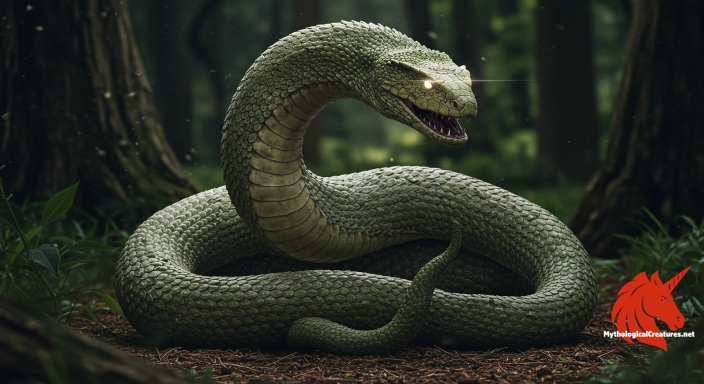
Dare to Meet the Hoop snake....
Curated by the Mythological Creatures Team
Series editor: Mythological Creatures Directory
Primary desk: Hellenic & Ancient Mediterranean Desk
(rev. November 2025)