
Erlking: The Erlking is a sinister, supernatural elf from German Romantic and Danish folklore, known for luring and killing children in the woods with a fatal touch.
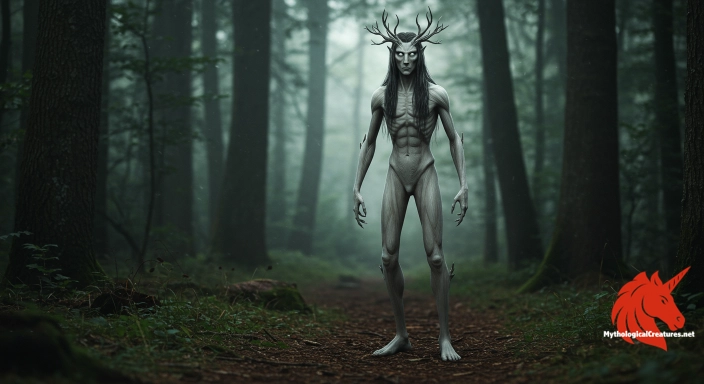
Erlking
Erlking - Represents the dangerous interface between the natural and supernatural, serving as a warning against the perils of straying too far into the wilderness.
Origins & First Encounters
The Erlking is a notorious figure woven into European folklore, emerging from a complex interplay of myth and human trepidation. Born from the fertile imagination of the German Romantic era, his origins intertwine with older Nordic traditions where the figure was once known as the elf king. His first literary appearance is credited to Johann Gottfried Herder in the late 18th century, paving the way for a legacy that would captivate future generations. The name itself, deriving from the Danish ellekonge, hints at a legacy steeped in both nature and mysticism. Emerging from the shadowy woodlands of Central Europe, the Erlking is portrayed as both a spectral guide and a sinister predator. His presence in folklore encapsulates the perennial tension between the enchanting allure of nature and its dangerous, untamed reality. The figure serves as both a warning to the young and an embodiment of the dark unknown lurking in the forest. His identity is further complicated by linguistic play, as Goethe’s reinterpretation connected his name to the alder tree, deepening his roots in the natural landscape. Even as his form has evolved over the centuries, the Erlking continues to evoke a sense of ominous inevitability. His enduring appeal lies in his dual capacity to fascinate and terrify those who dare to venture into his realm.
Source Texts & Tale Variants
The earliest literary records of the Erlking can be traced to Johann Gottfried Herder’s ballad, which adapted existing Danish folk legends into a distinctly German narrative. This initial source laid the groundwork for later variations in literature and oral storytelling traditions across Europe. The figure was further immortalised by Goethe in his poem "Erlkönig", whose haunting verses became a touchstone for Romantic literature. Multiple retellings of his tale exist in fragmented folklore, each adding a layer of complexity to his character. Some narratives emphasise his role as a luring seducer of children, while others present him as an abstract embodiment of nature’s wrath. Traditional ballads, folktales, and even musical adaptations have since contributed to a mosaic of interpretations around his character. Every region’s storyteller has reconfigured the Erlking’s persona to reflect local customs and environmental encounters. The recurrent theme of a dangerous spirit thriving in the liminal spaces of the forest has given rise to numerous story variants. His presence in the cultural record is both a product of high literary achievement and a spontaneous outgrowth of regional mythmaking. The rich tapestry of his sources continues to fuel both academic and artistic explorations into the nature of folklore.
Form & Powers
Descriptions of the Erlking have evolved into a striking blend of ethereal beauty and malevolent power. His form is typically shrouded in an aura of otherworldly gloom, where delicate, elfin features are juxtaposed with an unmistakable hint of danger. Visual portrayals often depict him as a tall, slender figure whose eyes glimmer with a spectral luminescence, drawing unsuspecting onlookers into his sinister embrace. Many artists envision him wearing a crown fashioned from alder branches, an emblem of his dominion over both the woodland and the supernatural. His complexion is portrayed as pallid or even ghostly, underscoring his connection to both life and death. The Erlking’s garments, seemingly woven from the fabric of night and shadow, lend him an air of timeless mystery. He is sometimes rendered as a shapeshifter, appearing either as an ageless guardian of the forest or as a youthful figure of beguiling charm. Variations in his stature and detail—from a nearly imperceptible presence to an overwhelming, larger-than-life spectre—highlight the flexible mythic qualities attributed to him. Subtle details such as the interplay of light and darkness on his form have become central to visual depictions. Each physical interpretation contributes to the composite image of a creature who is as alluring as he is deadly.
Regional Faces
Across Europe, the interpretation of the Erlking shifts dramatically, reflecting the diverse cultural landscapes from which the legend emerged. In Denmark, his counterpart known as the ellekonge retains strong ties to the ancient traditions of fairy lore, emphasising a connection with the natural world. German renditions, infused with the spirit of Romanticism, portray him as a foreboding presence that embodies the peril of untamed nature. Local adaptations in different regions have modified his character traits, sometimes imbuing him with a note of melancholy or even reluctant benevolence. In some communities, his role is reframed to highlight the dangerous allure of the wilderness rather than a straightforward menace. These regional narratives have variably emphasised his seductive voice, his enchanting yet lethal touch, and the spectral quality of his appearance. The symbolism of the alder tree, prominent in German accounts, further ties him to the specific geography and seasonality of Central European woodlands. Rural storytellers often integrate regional landscapes, using distinctive flora and weather patterns to enhance the eerie ambience of his legend. Meanwhile, the fluidity of his portrayal allows communities to project local fears and values onto his character. Such adaptations illuminate how a single mythic figure can reflect a wide spectrum of cultural experiences and environmental influences.
Cultural Parallels
The Erlking finds close parallels in numerous mythological traditions throughout Europe, serving as a universal symbol of nature’s enigmatic power and inherent danger. Similar to the Irish fairy king or the enigmatic figures of Celtic lore, he occupies a liminal space between the mortal realm and the world of the supernatural. His dual nature, part seducer and part harbinger of death, resonates with the archetypes found in stories of banshees and other spectral beings. There are striking resemblances to figures like Oberon, whose regal yet capricious rule over the fairy realm mirrors the Erlking’s own ambiguous authority. In Scandinavian traditions, woodland spirits and trolls often exhibit comparable traits of luring wanderers into the depths of the forest. Additionally, the Slavic leshy shares his penchant for leading travellers astray, reinforcing recurring themes of human vulnerability in wild landscapes. These comparative analyses highlight the transnational appeal of characters who straddle the boundaries between allure and terror. Each of these mythic beings, while unique in detail, echoes a common narrative of nature’s sublime yet perilous beauty. Such cross-cultural connections underline a shared human response to the mysterious forces that govern life and death. The study of these parallels enriches our understanding of how similar themes manifest in varied cultural contexts.
Legacy & Modern Evolution
The historical evolution of the Erlking reflects a fascinating journey from a cautionary figure in folklore to a multifaceted icon in modern culture. Early portrayals centred on his role as a spectral predator who enforces the boundaries between civilization and the wild. As literature and art evolved during the Romantic period, his image became infused with layers of poetic mystery and existential dread. Later reinterpretations expanded his symbolic repertoire, making him a vessel for contemporary themes such as the inevitability of death and the transient beauty of nature. Modern adaptations in film, opera, and visual art often recast him in a more complex light, sometimes offering him a tragic dimension rather than pure malice. This shift mirrors broader societal changes, where mythic figures are reclaimed to explore inner fears and environmental anxieties. Today, the Erlking is a subject of both scholarly discourse and popular fascination, his narrative serving as a bridge between past legends and current artistic expressions. His enduring impact is evident in the way new generations continue to explore the intersection of myth, nature, and mortality. The transformation of his character over time underscores the fluid nature of folklore as it adapts to changing cultural landscapes. In every era, the Erlking remains a potent symbol of the dark, irresistible allure of the unknown.
Interesting Fact
An interesting facet of the Erlking myth is the etymological link to alder trees, which underscores the intimate connection between natural elements and mythological symbolism in German Romantic literature.
Limited sponsor opportunity
One slot, carefully chosen partners
We only feature a small number of relevant sponsors at any time. If you create serious myth content, we would like to hear from you.
Partner with usQuick Creature Info
Origin:
Associations:
Our Mythic Legendary Rating:

Also Sometimes Known As:
Habitat:
Supernatural Powers:
Physical Attributes:
Abilities:
Behavior:
Lore:
Related Creatures, Tales or Lore
- OOberon
- HHerne the Hunter
- TThe Fairy King (British Folklore)
References
Discover Another Mythical Legend You May Not Have Heard Of?
Uncover the mysteries of ancient folklore and expand your knowledge of legendary beings from cultures around the world.
Dare to Meet the Pallas....
-2d1a7c5b-6418-4709-9da5-fdea296b34d1_small.webp "Depiction of Pallas")
Curated by the Mythological Creatures Team
Series editor: Mythological Creatures Directory
Primary desk: Northern & European Folklore Desk
(rev. November 2025)