
Ewiger Jäger: The Ewiger Jäger, or Eternal Hunter, is a ghostly wild huntsman rooted in German folklore.
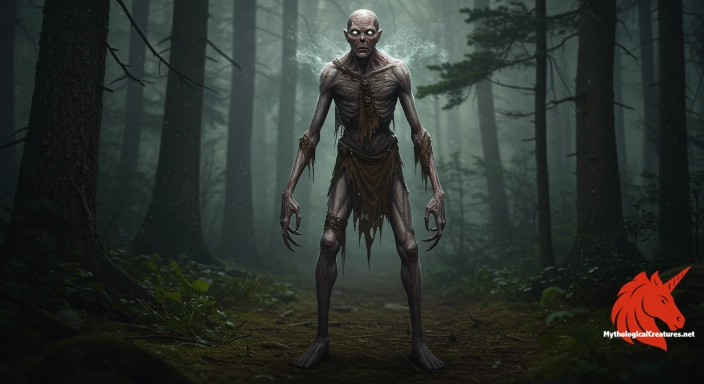
Ewiger Jäger
Ewiger Jäger - Embodies the inexorable nature of death and the eternal pursuit, serving as a portent of coming doom.
Origins & First Encounters
The ewiger Jäger stands as one of the most enigmatic figures within the tapestry of European folklore, a spectral hunter whose myth has endured for centuries. Its origins appear to intertwine with medieval traditions and the lingering echoes of pre-Christian rites, where nature and the supernatural merged in haunting narratives. Early attestations of similar ghostly huntsmen can be traced back to local oral traditions that reverberated through the dark forests of Germany, where the eternal hunter was both a warning and a symbol of life’s unpredictable cycles. Over time, his legend absorbed layers of local beliefs and superstitions, emerging as a powerful emblem of the perpetual chase between mortal life and the realm beyond. Communities spoke of him with a mix of awe and trepidation, regarding his presence as a reminder of fate’s inexorable approach. The cultural context of his legend is deeply rooted in societies that revered the natural world while fearing its untamable forces. The ewiger Jäger is often depicted as an unyielding guardian of mysteries, forever roaming the boundaries between the living and the dead. His timeless pursuit invites reflection on the inevitability of destiny and the enduring nature of myth, transcending the limits of a single culture. In this way, his eternal hunt reflects humanity’s age-old struggle with the concept of mortality.
Source Texts & Tale Variants
Historical records and regional folklores provide fragmented yet compelling accounts of the ewiger Jäger, with various texts hinting at his spectral exploits. Multiple local manuscripts and folklore collections mention ghostly huntsmen, with the ewiger Jäger emerging as a distinctive variant in some of these narratives. In Germany and Belgium, early ballads and oral traditions recount eerie encounters on moonlit nights, where villagers claimed to hear the call of a relentless pursuit. Some accounts depict him as a solitary figure roaming desolate landscapes, while others weave a more communal myth involving a host of ghostly riders. Late medieval chapbooks and travel diaries also feature ambiguous references to an eternal hunter, contributing to his layered legend. As these stories migrated across the Atlantic with European settlers, American folk narratives began to incorporate his image, adapting the myth to the local frontier. Each variation places a slight twist on his purpose—some suggesting his hunt is for lost souls, others proposing it is a penance for ancient wrongs. Although no single source can claim an absolute version, the convergence of these texts emphasises his pervasive influence and the adaptability of his tale. The myriad story variants highlight the common human fascination with figures who transcend the natural world, inviting modern interpretation as much as ancient speculation.
Form & Powers
The spectral form of the ewiger Jäger is rendered in vivid detail, often portrayed as an imposing figure with an aura of timelessness. Contemporary descriptions give him an almost otherworldly presence, with features that are simultaneously human and ethereal. He is frequently depicted donning attire that harks back to a bygone era—tattered hunting garments and a weathered hat, all shrouded in an eerie luminescence. His eyes, described as hollow yet intense, seem to flicker with the light of distant, forgotten flames, adding to his ghostly mien. Many accounts detail his elongated silhouette, which blurs at the edges as if not fully anchored in our world, suggesting both size and spectral fluidity. Weaponry from another time, such as a longbow or an antique rifle, often accompanies his portrayal. The interplay of shadow and light in these depictions creates a dual impression of both menace and melancholic nobility. Variations in the legend sometimes alter his form—from a gaunt figure emerging from swirling mists to a more robust shape clad in archaic, noble regalia. This duality reinforces the creature’s ambiguous role as both a harbinger of doom and a tragic remnant of an age long past.
Regional Faces
The portrayal of the ewiger Jäger shifts markedly across the regions where his legend has taken root. In German folklore, his image is intertwined with the dark mysticism of the Black Forest and the Rhine, where the dense woodlands enhance his spectral allure and serve as a natural backdrop for his eternal pursuit. Belgian interpretations, on the other hand, often infuse his character with elements of local superstition, imbuing him with a more pronounced role as a moral arbiter of fate and fortune. In these accounts, the hunter becomes a guardian of the thresholds between harvest and hardship, with local customs sometimes seeking to appease his restless spirit. Across the Atlantic, American folklore has reimagined him through the lens of frontier myth, where the supernatural blends with the rugged individualism of immigrant narratives. This adaptation tends to soften his brutality slightly, casting him as an ambiguous figure whose eternal chase symbolises both loss and hope. Regional adaptations also incorporate varied environmental settings—from the dense, mystical forests of Europe to the expansive, lonely landscapes of North America. These cultural reinterpretations not only reinforce his universal themes but also highlight the adaptability of his myth to different societal values and local landscapes. In every region, the ewiger Jäger continues to evolve, reflecting the unique histories and imaginations of the communities that celebrate and fear him.
Cultural Parallels
The ewiger Jäger shares intriguing similarities with several other spectral figures found throughout Europe and beyond, embodying the universal motif of the ghostly hunt. His legend resonates with that of Herne the Hunter, whose myth also inhabits the damp, shadowy woods of England, weaving together themes of fate, mourning, and supernatural retribution. Comparable to the widespread Wild Hunt, his spectral chase reflects an eternal cycle of pursuit that transcends both time and culture. In Scandinavian traditions, the ghostly cavalcade of the Wild Hunt similarly melds the boundaries between life and death, underscoring a pan-European preoccupation with the inescapable forces of nature. Both figures evoke a sense of relentless pursuit and an almost cathartic terror, designed to remind communities of the ephemeral nature of existence. While the headless horseman of American lore shares certain atmospheric qualities with the ewiger Jäger, it is the Germans’ and Belgians’ intimate connection to local landscape and seasonal myth that sets him apart. The symbolic weight carried by these ghostly hunters blatantly highlights the intrinsic human fascination with the inevitable intersection of mortality and the supernatural. Each cultural variant adapts these themes slightly, yet all foreground the idea of inexorable pursuit by an otherworldly force. These parallels underscore how geographically disparate tales can converge on shared existential concerns, emphasising the universal language of myth in articulating society’s deepest fears and hopes.
Legacy & Modern Evolution
Over the centuries, the depiction of the ewiger Jäger has evolved to reflect changing cultural attitudes towards death, nature, and the supernatural. Initially feared as a portent of doom during the harsh medieval winters, his image transformed gradually into that of an enigmatic wanderer caught between the realms of the living and the dead. With the rise of Romanticism, his legend was reinterpreted by artists and writers as a tragic figure, haunted by eternal memories and destined for unending exile. Modern literature and film have embraced this complexity, portraying him as both an avenging spirit and a melancholic guardian of forgotten traditions. Contemporary reinterpretations often lean into a more ambiguous characterisation, offering a depth of narrative that fuses fear with a grim, wistful beauty. Graphic novels, television series, and even popular music have drawn upon his timeless motif to explore themes of perseverance and existential longing. His enduring symbolism, from spectral terror to almost heroic melancholy, reflects the evolving relationship between modern society and its mythic past. The ewiger Jäger now inhabits a rich intertextual space where ancient folklore meets present-day artistic exploration, symbolising both the persistence of age-old fears and the aspiration to find meaning beyond mortality. This legacy ensures that, even as cultural contexts shift, the eternal hunter remains a potent figure—one that continues to captivate and inspire the imagination across generations.
Interesting Fact
The legend of the Ewiger Jäger highlights a fascinating cross-cultural evolution of the Wild Hunt, where a single archetype adapts and manifests differently across European and American folklore.
Reach myth fans
Connect your myth-driven brand with this audience
Our readers are writers, educators, gamers, and collectors who care about mythology. Enquire about a limited sponsor placement on creature pages.
Enquire about sponsorshipQuick Creature Info
Origin:
Associations:
Our Mythic Legendary Rating:

Also Sometimes Known As:
Habitat:
Supernatural Powers:
Physical Attributes:
Abilities:
Behavior:
Lore:
Related Creatures, Tales or Lore
- HHerne the Hunter
- WWild Hunt
- HHeadless Horseman
References
Discover Another Mythical Legend You May Not Have Heard Of?
Uncover the mysteries of ancient folklore and expand your knowledge of legendary beings from cultures around the world.
Dare to Meet the Ukulan-tojon....

Curated by the Mythological Creatures Team
Series editor: Mythological Creatures Directory
Primary desk: Northern & European Folklore Desk
(rev. November 2025)