
Fiery flying serpent: The Fiery Flying Serpent is a mythological creature mentioned in the Book of Isaiah in the Tanakh.
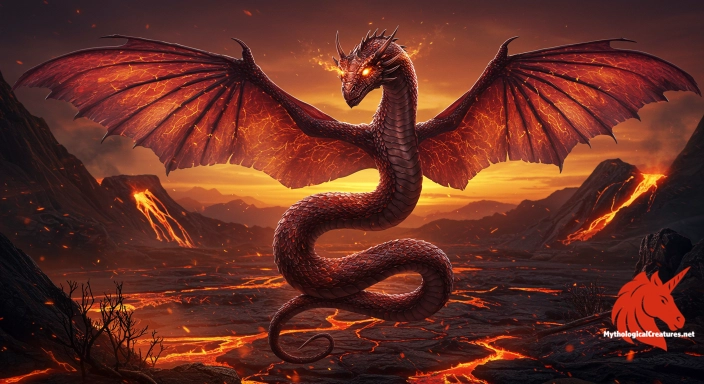
Fiery flying serpent
Fiery flying serpent - Represents the divine and purifying fire, symbolising the holy presence and majesty of God as seen in prophetic visions.
Origins & First Encounters
The fiery flying serpent stands as one of mythology’s most evocative creatures, blending the fierce qualities of fire with the mystique of flight. Its origins are rooted in ancient biblical texts, where a brief yet charged mention in the Book of Isaiah set the stage for centuries of imaginative interpretation. Emerging from a world where divine symbolism and natural phenomena intertwined, this creature captured the imagination of ancient audiences. Early attestations portray it as both a harbinger of divine retribution and an emblem of celestial brilliance. Its very name, derived from the Hebrew term ‘saraph’, intriguingly overlaps with the angelic class known as seraphim, lending the creature an ambiguous identity. The interplay between its serpentine form and wings of flame signalled a boundary state between earthly dangers and heavenly wonders. In its cultural context, the fiery flying serpent represented a paradox, embodying both the threat of destruction and the promise of renewal through purification by fire. The enduring allure of this being continues to inspire artists, scholars, and storytellers alike, securing its place within the rich tapestry of myth and legend.
Source Texts & Tale Variants
Ancient texts remain the cornerstone in understanding the fiery flying serpent, with the primary account found in the Book of Isaiah within the Tanakh. The biblical narrative, though succinct, imbues the creature with an air of mystique that has spurred later interpretative traditions. Over the centuries, various translations and commentaries have expanded upon the brief descriptions, weaving a more intricate lore around the creature. In parallel, extrabiblical writings and regional folklore have occasionally reimagined its role, attributing to it qualities of both an angelic messenger and a fierce embodiment of chaos. Alternate story variants emerge in ancient Near Eastern mythologies, where similar serpentine images appear in art and ritual texts as symbols of both divine protection and ominous warning. Some narrative traditions depict the creature with elements of fire that serve as a metaphor for spiritual transformation, while others focus on its capacity for flight as a sign of its celestial origin. These variants illustrate a fluid tradition, one that allowed the fiery flying serpent to be reinterpreted with diverse symbolic nuances. The layered nature of these accounts reflects a dynamic interplay between sacred scripture and evolving oral traditions, ensuring the creature’s legacy in myth remains both diverse and profound.
Form & Powers
The physical depiction of the fiery flying serpent is marked by a sinuous body that exudes an almost tangible heat, as if its scales are forged from liquid flame. Its elongated form is often illustrated as being wrapped in a glow that seems to emanate from within, casting an otherworldly radiance in its wake. The creature is endowed with large, powerful wings that blend the anatomy of a bird with a mystical quality, their edges shimmering with hints of ember-like light. Some depictions suggest that these wings are not merely for flight but also serve as conduits for the creature’s fiery essence, accentuating its dual nature. Its eyes are frequently described as luminescent or burning, adding to the overall impression of an inner fire that mirrors its divine connection. The creature’s head may be adorned with crown-like horns or wisps of flame, further emphasising its exalted status among mythological beings. Variations in size are noted across different accounts, with some traditions portraying it as vast and imposing, while others depict it as nimble and ethereal. Every aspect of its anatomy seems designed to evoke both beauty and terror, blending the natural with the supernatural in striking harmony.
Regional Faces
Regional interpretations of the fiery flying serpent reveal a fascinating diversity that reflects local cultural values and symbolic language. In the ancient Near East, particularly within Israelite tradition, the creature was closely linked with divine reckoning and served as a potent symbol of God’s transformative power. Just beyond these borders, neighbouring cultures such as the Babylonians and Assyrians incorporated similar serpentine images into their mythic iconographies, often intertwining characteristics of chaos and celestial order. In parts of the Mediterranean, early artistic renditions merged this creature’s imagery with that of winged deities, symbolising a complex balance between mortality and divinity. Shifts in perspective can also be seen in medieval European lore, where interpretations began to cast the fiery serpent as a guardian of mystical thresholds or as an embodiment of both cataclysm and renewal. Elsewhere, in regions influenced by Eastern traditions, serpentine beings associated with elemental forces were sometimes adapted into narratives that echoed the core attributes of the fiery flying serpent. These regional adaptations not only highlight the universal appeal of the creature but also underscore its ability to absorb and reflect local mythologies. Each variant contributes to an evolving narrative, enriching the enduring tapestry of a creature that defies singular definition.
Cultural Parallels
Comparative mythology affords an expansive lens through which one may view the fiery flying serpent alongside other legendary creatures. Its vivid interplay of fire and flight invites parallels with the majestic dragons of East Asian lore, where the synthesis of celestial and terrestrial elements forms a common thematic thread. Much like the fearsome beings of Northern legends, its form suggests an embodiment of primordial forces that challenge cosmic order. The creature also bears resemblance to the Biblical Leviathan, with both entities occupying realms at the periphery of divine authority and natural chaos. Its association with burning light and fervour finds an echo in the mythic phoenix, symbolising both the destructive power of fire and the promise of rebirth. In the realm of angelology, the seraphim share with the fiery flying serpent not only etymological roots but also an archetypal connection to purity and divine energy. The overlapping motifs of transformation, celestial authority, and the interplay of beauty and terror present a compelling case for a shared mythological heritage. These cross-cultural comparisons not only enrich the understanding of the fiery flying serpent’s symbolism but also reveal a wider pattern of serpentine mythologies that traverse geographical and temporal boundaries.
Legacy & Modern Evolution
Over the centuries, the legacy of the fiery flying serpent has evolved dramatically beyond its sparse biblical origins. In early religious art and medieval manuscripts, it was recast as both an instrument of divine judgement and a symbol of sacred mystery, reflecting the era’s preoccupation with the interplay of destruction and renewal. Renaissance artists and later literary figures revived interest in the creature, inspiring elaborate interpretations that blended allegory with emerging visual arts. Its iconography has since permeated modern fantasy literature, film, and even digital media, where it often appears as a majestic yet formidable guardian of ancient secrets. Contemporary portrayals tend to emphasise its dualistic nature, portraying it as both a fertile emblem of renewal and a dire warning against transgression. Modern spiritual movements occasionally invoke its image as a metaphor for inner transformation and the fiery challenges encountered on the path to self-discovery. The creature’s enduring appeal lies in its rich symbolism, which continues to bridge the gap between ancient myth and modern imagination. As mythmakers and artists adapt its image to new cultural contexts, the fiery flying serpent remains an ever-potent symbol of passion, mystery, and the eternal cycle of transformation.
Interesting Fact
Interestingly, the term 'saraph' not only denotes this fiery serpent but is also used to describe a class of exalted celestial beings, reflecting the layered symbolism in ancient Hebrew texts.
Advertising opportunity
Showcase your mythology project
We offer limited sponsor placements for books, courses, games, and creators aligned with our audience.
View partnership optionsQuick Creature Info
Associations:
Our Mythic Legendary Rating:

Also Sometimes Known As:
Habitat:
Supernatural Powers:
Physical Attributes:
Abilities:
Behavior:
Lore:
Related Creatures, Tales or Lore
- SSeraphim (Biblical)
- FFafnir (Norse Mythology)
- QQuetzalcoatl (Mesoamerican)
References
Discover Another Mythical Legend You May Not Have Heard Of?
Uncover the mysteries of ancient folklore and expand your knowledge of legendary beings from cultures around the world.
Dare to Meet the Qiulong....
Curated by the Mythological Creatures Team
Series editor: Mythological Creatures Directory
Primary desk: Hellenic & Ancient Mediterranean Desk
(rev. November 2025)