
Fish-man: The Fish-man of Liérganes is a legendary amphibious humanoid from Cantabrian mythology in northern Spain.
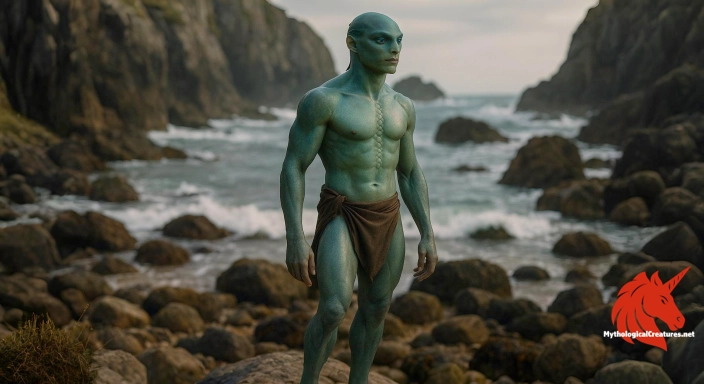
Fish-man
Fish-man - Represents the mysteries of the sea and the transformative impact of maritime tragedies on human existence.
Origins & First Encounters
The fish-man of Liérganes emerges from Cantabrian myth as a captivating amalgamation of human vulnerability and aquatic mystery. His tale, rooted in the coastal ambience of northern Spain, intertwines the tragic fate of a lost mariner with supernatural transformation. This enigmatic figure is portrayed as a being caught between the familiar contours of humanity and the fluid, unpredictable essence of the sea. The narrative is infused with the raw power of maritime nature, reflecting both the beauty and the peril of the ocean. Early records suggest that the legend was given intellectual weight during the Enlightenment, when figures such as Benito Jerónimo Feijoo examined the story with discerning interest. The myth has been sustained through oral traditions and community lore, enriching its layers over generations. Local storytellers have imbued the fish-man with qualities that resonate with the region’s seafaring culture, emphasising themes of loss and metamorphosis. The legend has become a mirror for exploring the frailties of human existence in the face of nature’s immensity. This enduring narrative continues to intrigue locals and visitors alike, inviting contemplation on the boundaries between myth and reality. Its fusion of maritime tragedy and magical transformation makes it an iconic element of Cantabrian cultural heritage.
Source Texts & Tale Variants
The earliest detailed account of this creature is found in the writings of Benito Jerónimo Feijoo, whose work provided a measured exploration of the legend during the Enlightenment. His reflections were not merely fanciful but echoed the empirical spirit of his time, inviting debate and further exploration. Over the years, a rich tapestry of oral narratives has woven additional details into the myth’s fabric. Families and coastal communities have passed down unique versions of the tale, each adding subtle nuances and local flavour. Some variants describe the fish-man as a cursed individual whose transformation symbolises a tragic union with the sea. Additional, though more sporadic, references appear in travellers’ logs and regional compendia of folklore. Regional storytellers have often elaborated on his amphibious traits, reflecting the deep maritime connections common to Cantabrian life. The evolution of these accounts illustrates how a single narrative can adapt over generations while retaining core elements. Multiple recitations have resulted in differing emphases on his origins and purpose, making the myth both diverse and dynamic. The convergence of documented accounts and oral tradition has solidified the fish-man’s place within the broader spectrum of Spanish mythological figures.
Form & Powers
The creature is typically depicted with a striking duality of features that blend human semblance with distinctly aquatic traits. He possesses a face that retains the softness of human expression while hints of scales shimmer subtly beneath his skin. The fish-man’s physique is lean and agile, suggesting an adaptation to both terrestrial and underwater realms. Webbed digits and slightly elongated limbs hint at a life spent navigating the currents of the sea. His eyes are often described as deep and reflective, evoking the profound mystery of ocean depths. In many portrayals, his hair tumbles in unruly strands reminiscent of seaweed, lending an ethereal quality to his overall appearance. Some artistic representations even underscore the integration of fin-like structures along his arms and legs, signifying his amphibious nature. The alternation between a human silhouette and aquatic embellishments creates a visual tension that is both unsettling and fascinating. Varying depictions—ranging from robust, muscular forms to more gaunt and spectral outlines—illustrate the myth’s capacity to be both literal and metaphorical. Collectively, these features embody a creature whose very form challenges the boundaries of organic transformation.
Regional Faces
While the fish-man is most strongly associated with the coastal area of Cantabria, parallel narratives surface across neighbouring regions. In some Cantabrian villages, he is revered as a mysterious guardian of fishermen, while other areas offer a darker interpretation where his appearance portends misfortune. The local adaptations often emphasise the dramatic interplay between human life and the elemental forces of the sea. Certain variants cast him as the tragic embodiment of a mariner cursed to roam both land and water, a motif that resonates with the local experience of harsh coastal living. In contrast, other regional accounts imbue his presence with an almost sacred aura, suggesting that his transformation was a profound act of nature itself. Diverse communities have adapted the myth to reflect their own maritime challenges and spiritual struggles, resulting in stories that are as varied as the coastline. Festive gatherings and local rituals sometimes feature the fish-man as a symbolic character, further blurring the line between myth and cultural rite. The fluidity of his portrayal across regions underscores the adaptability of folklore in responding to local environmental and social conditions. Each version of the myth carries subtle differences that reflect the unique histories and beliefs of the communities that nurture it. These regional variations collectively enhance the myth’s richness and its enduring allure.
Cultural Parallels
The narrative of the fish-man shares intriguing parallels with aquatic entities found in other cultural traditions. Similar to the selkies of Celtic lore, he embodies the transformation of human beings into creatures deeply connected with the sea. In various Scandinavian and Scottish legends, change and duality in form represent an ongoing dialogue between humanity and nature. Like the mermen of Greek and Nordic myths, the fish-man serves as a liminal figure, bridging two realms with inherent tensions and mysteries. Comparative analysis reveals that many cultures have long been fascinated by the possibility of transcending human limitations through aquatic metamorphosis. The delicate balance between human qualities and marine characteristics appears repeatedly across diverse mythological landscapes. Such parallels underscore universal questions about identity, transformation, and the power of nature. The fish-man stands as a testament to shared human experiences of loss, adaptation, and the allure of the unknown. His story invites reflection on how seemingly disparate cultures utilise similar symbols to comprehend the forces of the sea. In drawing these comparisons, it becomes apparent that the myth resonates beyond regional boundaries, affirming its place in a broader global tradition of water-bound legends.
Legacy & Modern Evolution
The fish-man legend has journeyed through centuries, transforming from a local curiosity into a potent modern symbol. Initially captured in the writings of Enlightenment thinkers, his story mirrored contemporary preoccupations with nature’s mysteries and the boundaries of human experience. Over time, the narrative expanded, intertwining the sorrow of maritime loss with themes of metamorphosis and rebirth. Modern reinterpretations have seen the fish-man appear in literature, visual art, and film, where he embodies both nostalgia for bygone seafaring traditions and the anxieties of modernity. Contemporary creators often draw upon his ambiguous form to explore ideas of environmental change and the fragility of human identity. The myth’s capacity to evolve reflects the ongoing dialogue between tradition and innovation in cultural expression. In some modern renditions, the fish-man is cast as a tragic antihero whose transformation captures the cost of humanity’s relentless quest to master nature. Exhibitions and festivals occasionally feature his image, reinforcing his symbolism as a bridge between the ancient and the contemporary. His enduring legacy lies in his capacity to provoke reflection on the interplay between myth and reality, identity and transformation. As communities continue to adapt his story to suit changing worldviews, the fish-man remains a compelling emblem of both our past and our future.
Interesting Fact
An interesting aspect of the fish-man legend is that it blurs the line between myth and possible historical events, suggesting that extreme natural circumstances might lead to perceived supernatural transformations.
For myth educators and toolmakers
Built a resource for mythology learners?
If you offer courses, teaching tools, or research platforms focused on myth and folklore, consider a discrete placement on our reference pages.
Introduce your resourceQuick Creature Info
Features:
Associations:
Our Mythic Legendary Rating:

Also Sometimes Known As:
Habitat:
Supernatural Powers:
Physical Attributes:
Abilities:
Behavior:
Weaknesses:
Lore:
References
Discover Another Mythical Legend You May Not Have Heard Of?
Uncover the mysteries of ancient folklore and expand your knowledge of legendary beings from cultures around the world.
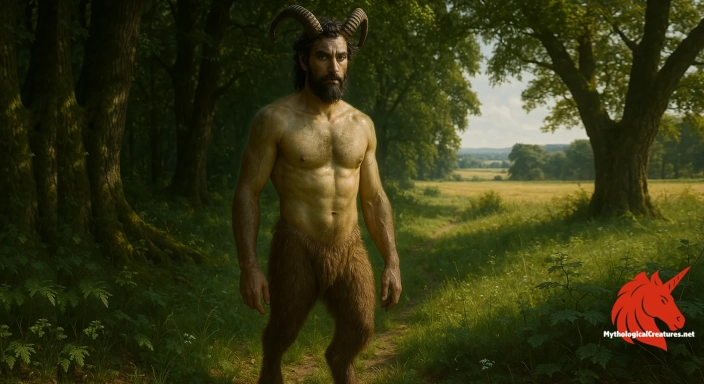
Dare to Meet the Faunus....
Curated by the Mythological Creatures Team
Series editor: Mythological Creatures Directory
Primary desk: Hellenic & Ancient Mediterranean Desk
(rev. November 2025)