
Flidais: Flidais is a revered goddess in Irish mythology known as the goddess of cattle and fertility.
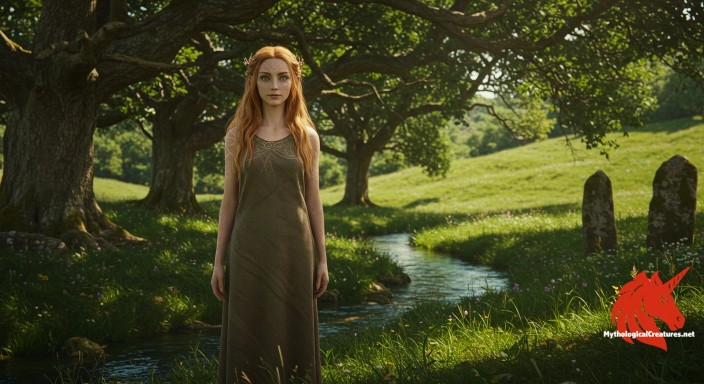
Flidais
Flidais - Flidais embodies the nurturing and abundant aspects of nature, playing a crucial role in the agrarian prosperity of ancient Ireland.
Origins & First Encounters
Flidais emerges as a radiant figure among ancient Irish deities, celebrated for her intimate connection with cattle, fertility, and the natural bounty of the land. Her myth, though shrouded in the mists of time, finds its roots in the agrarian traditions that once sustained early Celtic life. Bearing the epithet Foltchaín, meaning 'beautiful hair', she is portrayed as both a nurturing guardian and an untamed spirit of the wild. Her first attestation appears in fragments of oral lore later recorded in medieval manuscripts, reflecting a time when nature and the divine were closely intertwined. The reverence for cattle in early Irish society is echoed in her narrative, where the prosperity of a community was inextricably linked to her blessing. Local communities saw her as a vital force, ensuring that the land remained fertile and the herds abundant. Over the centuries, her story has been woven into the fabric of cultural rituals and seasonal celebrations across Ireland. Flidais continues to embody the enduring bond between humanity and the earth, reminding us of a time when nature was revered as a living, breathing deity.
Source Texts & Tale Variants
Ancient manuscripts and oral traditions have played a crucial role in preserving the legend of Flidais. The scant written records that mention her suggest a vibrant tradition of storytelling, where her myth was passed down through generations. Early medieval accounts, though fragmentary, reveal a goddess who was both fierce and benevolent, whose power was invoked during pastoral rites. Variants of her story appear sporadically in folklore, with some versions emphasising her transformative abilities and others highlighting her role as the nurturer of cattle. Within these diverse narratives, Flidais is portrayed as a bridge between the mortal realm and the wild spirit of nature. Folklore from different regions occasionally adapts her tale to local customs, reflecting the dynamic nature of myth-making. The interplay between the written word and oral performance has enriched her character, allowing for fluctuations in detail yet maintaining her core attributes. Modern retellings continue to draw on these dispersed sources to construct a more nuanced picture of her divine influence.
Form & Powers
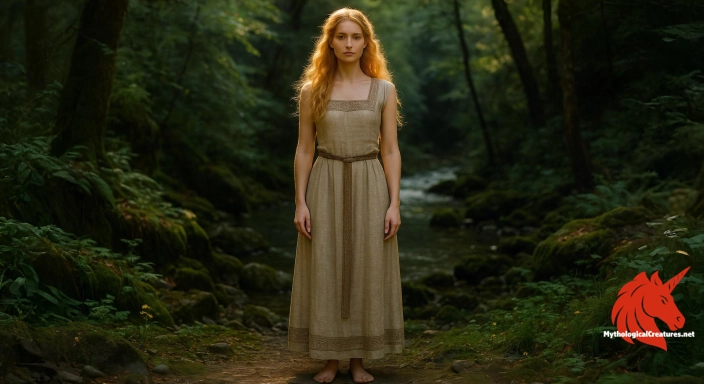
The visual representations of Flidais are imbued with an otherworldly charm, fusing human elegance with the raw elements of nature. Her flowing, lustrous hair, from which her epithet is derived, cascades like liquid gold, capturing the light of the natural world. Artists often depict her eyes as deep pools that mirror the ever-changing hues of pastoral landscapes. In some interpretations, subtle hints of bovine symbolism are interwoven with her human form, suggesting a divine kinship with cattle. Her attire, if featured, is reminiscent of the textures found in nature—soft, untamed, and intricately patterned like the meadow grasses. The elegance of her silhouette is balanced by elements that evoke wildness, such as a crown of wildflowers or reeds that adorn her head. These physical attributes serve as visual metaphors for both her nurturing qualities and her untamed spirit. Variations in her depiction allow for themes of metamorphosis and the cyclical patterns of nature, reinforcing her role as a goddess of fertility and pastoral abundance.
Regional Faces
Across the Celtic lands, the figure of Flidais takes on distinctive local flavours that mirror the unique geographies and cultures of each region. In Ireland, where her legend originated, she is primarily revered as the protector of cattle and a symbol of the land's fertility, celebrated through seasonal rituals and community gatherings. In parts of Scotland, echoes of her myth merge with the local belief in nature spirits, giving her a role as both a nurturing force and a wild guardian of the highlands. Some interpretations in Welsh traditions imbue her with an even more mystical character, aligning her with ancient rites and the mystical aspects of the natural world. Regional celebrations often repackage her narrative with localized symbols, such as traditional knotwork and native flora, that signify a deep-rooted connection to the land. Local storytellers adapt her attributes to fit regional needs, whether emphasising her protective qualities or her untamed connection to animal life. This mosaic of regional variations reinforces the idea that while the core of her myth remains constant, its cultural expression is as diverse as the landscapes that cherish it. Flidais, therefore, stands as a unifying figure whose multifaceted legends resonate with the broader themes of nature and fertility throughout the Celtic world.
Cultural Parallels
Flidais occupies a unique position within the tapestry of world mythology, sharing several key attributes with fertility and nature deities from diverse cultures. Her institutional role in nurturing cattle and ensuring the fertility of the land places her in parallel with other Celtic goddesses who symbolise agrarian prosperity and renewal. Comparisons can be drawn, for instance, with figures like the Irish goddess Macha, whose stories likewise echo the cyclical nature of life and the symbiotic relationship between people and their environment. In a broader context, the themes embodied by Flidais resonate with those of Demeter in Greek mythology, where the blessings of the earth and the sustenance of life are central motifs. Similar to other deities who preside over natural cycles, her legend brings together elements of both human civilisation and the untamable wild. This cross-cultural dialogue between mythologies underscores a shared human sensitivity to the forces that govern life and growth. The parallels between her myth and those of other earth goddesses highlight universal concerns about fertility, abundance, and the mystery of life’s regeneration. Ultimately, Flidais serves as a potent reminder that, regardless of cultural boundaries, the veneration of nature’s bounty is a theme that transcends time and geography.
Legacy & Modern Evolution
The evolution of Flidais from an ancient pastoral goddess to a modern symbol of natural abundance illustrates the enduring power of myth. Early interpretations closely tied her identity to the practical realities of agrarian communities, where her blessings were essential for the prosperity of cattle and the fertility of the land. As the centuries passed, her image expanded beyond strictly agricultural concerns, embracing broader themes of environmental stewardship and the cyclical nature of life. In contemporary times, Flidais has been rediscovered by neo-pagan movements and cultural revivalists who celebrate her as an emblem of ecologically balanced living. Modern artists, writers, and spiritual practitioners often reimagine her narrative to address current ecological and social concerns, emphasising her role as a guardian of nature. This reimagining has led to a vibrant resurgence in festivals, artworks, and scholarly studies that honour her ancient legacy. The continuous reinterpretation of her myth serves not only as a connection to Ireland’s rich past but also as an invitation to explore the enduring relationship between humanity and the natural world. Flidais remains a timeless symbol whose legacy bridges the gap between ancient wisdom and modern environmental consciousness.
Interesting Fact
A notable aspect of Flidais is her enduring legacy in Irish mythology, where her association with cattle and fertility underscores the ancient Irish reverence for the natural world and agrarian prosperity.
Mythology-aligned partners
Showcase your myth-friendly brand here
Run a store, studio, or platform that lives in the world of myth and folklore? A curated sponsor panel on these pages may fit.
Explore partnership optionsQuick Creature Info
Features:
Associations:
Our Mythic Legendary Rating:

Also Sometimes Known As:
Habitat:
Supernatural Powers:
Physical Attributes:
Abilities:
Behavior:
Lore:
Related Creatures, Tales or Lore
- BBrigid
- ÁÁine
References
Discover Another Mythical Legend You May Not Have Heard Of?
Uncover the mysteries of ancient folklore and expand your knowledge of legendary beings from cultures around the world.
Dare to Meet the Dzerassae....
Curated by the Mythological Creatures Team
Series editor: Mythological Creatures Directory
Primary desk: Northern & European Folklore Desk
(rev. November 2025)