
Forest Bull: The Forest Bull, also known as the Ethiopian Bull, is a massive and ferocious beast featured in ancient bestiaries.
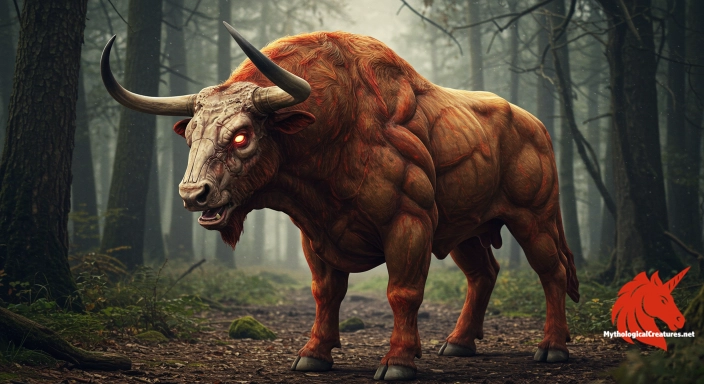
Forest Bull
Forest Bull - The Forest Bull embodies the untamed, dangerous forces of nature and was revered and feared as the king of beasts by local tribes and ancient scholars alike.
the legend in five swipes.
the legend in five swipes.
How did the Forest Bull enter folklore?
The Forest Bull emerges as an extraordinary figure within the annals of ancient myth and medieval bestiary tradition, captivating the imagination with its blend of natural ferocity and supernatural resilience. It is rooted in the classical accounts of antiquity, where early chroniclers first depicted its uncommon presence in the wild lands of Ethiopia. The creature is steeped in a duality of existence, combining tangible natural traits with the mystique of legendary embellishment. Its earliest attestation by figures such as Pliny the Elder situates it within a rich historical context, reflecting the era’s fascination with the exotic and unexplained. Rendered as a tawny, imposing beast, the Forest Bull symbolised nature’s raw power and unpredictability. The creature’s reputation was bolstered over time by interpretations from diverse cultures that saw it as a harbinger of both danger and awe. Its depiction in ancient manuscripts blends factual observation with the allegorical, thereby creating a narrative that endures in both literary and artistic expressions. The enduring legacy of the Forest Bull underscores a timeless human endeavour to embody the untamed spirit of the natural world. Today, this mythical animal remains emblematic of nature’s indomitable force, inspiring reinterpretations that straddle the line between myth and reality.
Forest Bull: How the Tale Was Told and Retold
The primary narrative of the Forest Bull is primarily drawn from classical sources, where Pliny the Elder’s detailed accounts provided one of the foundational descriptions. His narrative painted the bull as an animal of immense size and ferocity, which later writers found irresistible to embellish. Subsequent accounts, notably from Aelian, further enriched its lore by labelling it a 'flesh eater,' thereby heightening its menacing character. Medieval bestiaries inherited these classical narratives, expanding them with moral and allegorical interpretations that elevated the bull to a near-mythical status. Multiple manuscript traditions enriched the legend with variant details regarding its combat abilities and prey. Some texts emphasised the supernatural mobility of its horns and the invulnerability of its skin to conventional weaponry. These differing versions reflect a broader tendency in ancient and medieval literature to infuse natural phenomena with symbolic meaning. The amalgamation of various source texts helped cement a portrayal that was both consistent and adaptable across different cultures. This melting pot of narratives continues to spark interest among those curious about the evolution of mythical zoology.
What was the Forest Bull believed to be capable of?
The physical depiction of the Forest Bull is nothing short of dramatic, featuring a tawny coat that shifts in hue from deep russet to a glowing red under the sun. It is said to be twice as large as an ordinary bull, with its sheer size lending an aura of unstoppable strength and dominance. The creature’s most peculiar feature is its gaping mouth, which stretches from ear to ear and gives it a perpetually fearsome expression. Its horns, reminiscent of those of a mythical Yale, are not fixed but can swivel in any direction, lending the animal an uncanny versatility in combat. When provoked, it raises these horns in a manner that seems deliberately designed to intimidate and unsettle. Ancient writers noted that its hair, described in striking red tones, further accentuated its wild and untamed character. The bull’s skin is famed for its near-mythical resilience, reputed to deflect not only arrows and spears but even the impact of iron itself. Each aspect of its anatomy, from its robust frame to its extraordinary horn dynamics, contributes to a composite image of a beast that defies conventional physical limits. The meticulous detail in these descriptions continues to inspire wonder and scholarly debate about the boundaries between natural history and myth.
What regional forms of the Forest Bull exist?
Regional interpretations of the Forest Bull reveal a fascinating interplay between local folklore and classical description, resulting in a multifaceted myth. In the Ethiopian context, it is often portrayed as a guardian of the wild, a creature whose untamed nature symbolises both protection and peril. Various communities adapted the myth to reflect their own experiences of nature’s unpredictability, sometimes portraying the bull as a vengeful force against human encroachment. The local narratives frequently emphasise the creature’s role in disrupting pastoral life, leading herdsmen to devise ingenious methods such as digging deep ditches to mitigate its destructive potential. In nearby tribal societies, especially among cave-dwellers, the bull was lauded as the king of beasts, a title that underscored its unrivalled strength and bravery. Some regional adaptations imbued the creature with supernatural qualities, transforming it into a spirit of the wilderness or a symbolic guardian against chaos. Despite the variations, a common thread runs through these accounts: the portrayal of an animal that encapsulates nature’s raw and untamed energy. These localised legends not only reflect the diverse cultural landscapes of the regions but also contribute to a more expansive myth where nature and myth intertwine. The evolution of this creature’s depiction across regions underlines the universal appeal of myths that celebrate nature’s formidable and enigmatic power.
Do other traditions know the Forest Bull by another name?
Across disparate cultural traditions, the myth of the Forest Bull occupies a similar niche to other legendary bovine creatures that embody a sublime synthesis of strength and mystique. It bears a resemblance to the revered Apis Bull of Egyptian lore, where the animal also stands as a symbol of divine power and natural fertility. In Greco-Roman thought, the bull frequently appears as an emblem of unbridled natural forces, a symbolism echoed in the Forest Bull’s portrayal. Some parallels can be drawn with the Celtic myths of wild oxen that were often seen as protectors of sacred groves and boundaries. The distinctive features of the Forest Bull, such as its swivelling horns and seemingly invulnerable skin, offer a unique twist that contrasts with more conventional depictions in other cultures. This comparative analysis reveals that many societies harness the image of colossal, fearsome bovines to represent both physical prowess and the untamable spirit of nature. While the specific details of appearance and behaviour differ, the collective impulse to imbue these animals with supernatural attributes is remarkably consistent. Such mythological motifs underscore a universal human fascination with the animal kingdom, reflecting a desire to interpret and revere the power of the natural world. Ultimately, the Forest Bull stands alongside these cultural icons, resonating as a symbol of nature’s grandeur and mystery.
Why does the Forest Bull still matter?
The evolution of the Forest Bull’s depiction over time provides a striking example of how myth adapts and survives across millennia. Initially recorded in antiquity as a formidable creature of the wild, it was later elevated in medieval bestiaries to embody moral and allegorical lessons. As the centuries passed, the bull’s image morphed from a literal representation of natural ferocity into a more symbolic figure, representing the untamed aspects of nature and the eternal struggle between civilisation and the wild. In modern reinterpretations, the creature has been reimagined in literature and visual arts, where it often appears as an emblem of resilience against the encroachments of modernity. Contemporary fantasy authors and artists frequently draw upon its storied attributes to evoke themes of power, defiance, and ecological mysticism. Academic explorations of bestiary traditions have further cemented its status as a creature that transcends simple categorisation, inviting reexamination of historical narratives and cultural symbolism. This transformation underscores a broader cultural shift in how we perceive and mythologise the natural world, with the Forest Bull emerging as a potent icon of both ancient wonder and modern environmental consciousness. Its legacy continues to spark reinterpretation and debate, ensuring that the creature’s myth endures well into the present day. As a bridge between the ancient and the contemporary, the Forest Bull remains a dynamic symbol of nature’s boundless and enigmatic allure.
Interesting Fact
A standout attribute of the Forest Bull is its unique, swivelling horns combined with an impenetrable hide, features that have fascinated and terrified readers of classical bestiaries for centuries.
Mythological Treasures
Greek Myths: A field guide to the monsters of ancient Greece
Every monster here earned its place in legend, and each gets a full page of artwork and the story behind it.
Egyptian Legends: A field guide to the gods and monsters of ancient Egypt
Guardians of the living and devourers of the dead, with the role each played in judgement.
Chinese Beasts: A field guide to the dragons and demon kings of Chinese myth
From river dragons to demon kings, with the legends that shaped five thousand years of storytelling.
the legend in five swipes.
Mythology commerce, done carefully
Align your store with our global myth audience
If you sell myth-inspired jewellery, prints, decks, or collectibles, we can feature your brand without overwhelming the reading experience.
Partner with usQuick Creature Info
Origin:
Features:
Associations:
Our Mythic Legendary Rating:

Also Sometimes Known As:
Habitat:
Supernatural Powers:
Physical Attributes:
Abilities:
Behavior:
Weaknesses:
Lore:
Related Creatures, Tales or Lore
References
Discover Another Mythical Legend You May Not Have Heard Of?
Uncover the mysteries of ancient folklore and expand your knowledge of legendary beings from cultures around the world.
Dare to Meet the Starkad....

The Mythological Creatures Book Series
Yokai, Greek, Norse, Egyptian & Chinese. Five illustrated field guides to the creatures the old stories either warned or told you about.


Curated by the Mythological Creatures Team
Series editor: Mythological Creatures Directory
Primary desk: Hellenic & Ancient Mediterranean Desk
(rev. November 2025)