
Fūjin: Fūjin is the ancient Japanese god of wind, depicted as a fearsome, wizard-like demon with green skin, red hair, and adorned in animal skins.
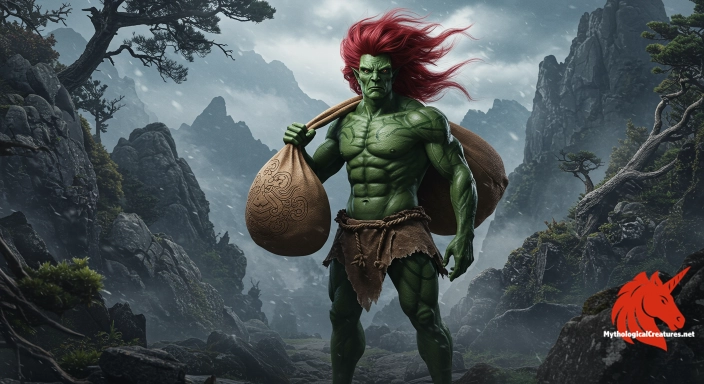
Fūjin
Fūjin - One of the eldest Shinto deities, Fūjin embodies the power and unpredictability of the wind, playing a crucial role in Japanese mythology.
Origins & First Encounters
Fūjin is a formidable figure in Japanese mythology, embodying the raw and untamed power of the wind. His origins trace back to the early Shinto traditions, where natural elements were revered as divine forces. He is one of the eldest deities, and his role as the wind god has been integral to the understanding of nature in ancient Japan. Known also as Fūten or Ryobu, his presence is a reminder of the elemental forces that govern both life and nature. His depiction as a fearsome, wizardly demon adds depth to his character as both a protector and a wild, uncontrollable spirit. Ancient tales suggest that his power could bless as well as devastate, reflecting the dual nature of wind itself. His early attestation in myth and art positions him as a timeless symbol in Japanese cultural and religious contexts. The integration of his image in shrine decorations and scroll paintings underlines his significance as an essential component of nature worship. His legacy endures as a symbol of both creative energy and elemental destruction, a duality that has fascinated believers and artists alike.
Source Texts & Tale Variants
The narrative of Fūjin is woven through a mosaic of ancient texts and folklore, with early Japanese chronicles laying the foundation for his mythological character. Although details in seminal texts like the Kojiki and Nihon Shoki are sparse, they hint at a deity whose presence was both respected and feared. Over the centuries, oral traditions and regional legends have enriched his story, contributing layers of interpretation to his persona. Different historical accounts present him in varying lights, from a benign spirit of the wind to a more chaotic and formidable force. Artistic traditions in Edo-period scrolls and temple murals further articulate his myth, portraying him with dynamic movement and supernatural qualities. In some versions of the myth, Fūjin is seen as a guardian of the natural order, while in others he embodies the capricious nature of the weather. Folklore festivals and local narratives continue to celebrate his mysterious origins and the unpredictable nature of wind. This rich tapestry of sources highlights the multifaceted role of Fūjin in the broader context of Japanese cultural history.
Form & Powers
Visually, Fūjin is as compelling as he is fearsome, often depicted as a red-haired, green-skinned humanoid whose form exudes both strength and otherworldly magic. His wild, flowing hair and vibrant skin tone set him apart from other deities, enhancing his association with the untamed forces of nature. Clad in a loincloth fashioned from tiger or leopard skins, his attire symbolises the connection between natural predation and the elemental world. Over his shoulder, he bears a large, mysterious bag—a container from which gusts of wind are believed to burst forth at his command. His eyes are typically rendered as intense and penetrating, reflecting a deep understanding of the natural chaos he controls. Artists have taken creative liberties with his physique, sometimes amplifying his muscular build and fierce countenance to emphasise his demonic aspect. The wind swirling around him is often depicted with dynamic brushstrokes or intricate patterns, underlining the continuous motion and power he embodies. Across various media, slight variations in his proportions and features emphasise different aspects of his character, be it his benevolence or his terrifying might.
Regional Faces
In Japan, the portrayal of Fūjin has seen subtle shifts as local traditions and regional beliefs have coloured his image. In some rural areas, he is revered as a benevolent spirit who brings refreshing breezes essential for agricultural harmony, while in other regions he is feared as an unpredictable herald of storms. The visual iconography can vary from one locality to another, with some artworks depicting him with softer features, suggesting a more nurturing aspect of wind. In communities where ancient animistic elements remain strong, Fūjin is sometimes intertwined with the legacy of local kami, merging his identity with regional guardian spirits. His emblematic bag of winds is occasionally portrayed with differing artistic interpretations, ranging from a simple pouch to a complex container emitting luminous auras. In temple festivals and seasonal rites, local variations of his myth may even influence the parameters of ceremonial performances. This diversity in representation highlights the adaptability of his myth to local environments and cultural needs, cementing his role as a versatile symbol. Even now, local shrines and artisanal crafts continue to showcase regionally distinct portrayals of Fūjin, preserving his legacy in a manner that reflects both ancient and evolving traditions.
Cultural Parallels
Fūjin occupies a unique space within the pantheon of wind deities, yet his character finds echoes in several other cultural mythologies. Similar to Aeolus, the wind keeper in Greek mythology, Fūjin represents the capricious and uncontrollable nature of the atmosphere, though his depiction is embedded deeply in the mysticism of Japanese culture. Like the Hindu deity Vayu, he embodies the life-sustaining as well as the destructive qualities of air. The dual aspects of his nature, being both temperamental and protective, are reminiscent of similar figures in ancient Near Eastern traditions, where wind deities often symbolised both prosperity and peril. Cross-cultural comparisons reveal how different societies have revered the omnipresent force of wind through personification, with Fūjin being a prime example of this universal archetype. His vivid portrayal in art stands alongside other mythological figures whose physical characteristics are intended to invoke awe and respect for nature’s unpredictable power. The interplay between benevolence and wrath in his depictions bridges the gap between mortal impermanence and the everlasting spirit of the natural world. This confluence of themes highlights a shared human endeavour to understand and mythologise the forces that shape our environment.
Legacy & Modern Evolution
The evolution of Fūjin’s image is a testament to the enduring allure of myth in Japanese culture. Early depictions in ancient texts and shrine carvings have given way to more elaborate interpretations in Edo-period woodblock prints and modern graphic media. Contemporary portrayals in manga, anime, and video games reveal a continuing fascination with his dynamic and sometimes fearsome presence. His symbolism has been adapted to underscore modern themes such as the balance between nature and civilisation, and the perpetual cycle of creation and destruction. With the advent of digital art, Fūjin’s image has been reimagined to capture both traditional elements and futuristic aesthetics, appealing to a global audience. Festivals and cultural rituals in Japan still invoke his name, celebrating the spirit of the wind as both a catalyst for change and a keeper of ancient wisdom. His role in popular culture underscores the timeless relevance of myth in addressing modern environmental and societal challenges. As interpretations of his character continue to evolve, Fūjin remains an emblem of nature’s ceaseless energy, inspiring both awe and reflection in equal measure.
Interesting Fact
Despite his fearsome portrayal, Fūjin is a crucial figure in Japanese culture, embodying the essential and unpredictable force of the wind that sustains and challenges life.
Partner with us
Sponsor this space
Reach thousands of mythology enthusiasts with a curated placement on our creature pages.
Learn about sponsorshipQuick Creature Info
Features:
Associations:
Our Mythic Legendary Rating:

Also Sometimes Known As:
Habitat:
Supernatural Powers:
Physical Attributes:
Abilities:
Behavior:
Lore:
References
Discover Another Mythical Legend You May Not Have Heard Of?
Uncover the mysteries of ancient folklore and expand your knowledge of legendary beings from cultures around the world.
Dare to Meet the Ootakemaru....
Curated by the Mythological Creatures Team
Series editor: Mythological Creatures Directory
Primary desk: Asian & Pacific Myth Cycles Desk
(rev. November 2025)