
Furfur: Furfur is a powerful Great Earl of Hell known for ruling twenty-six legions of demons.
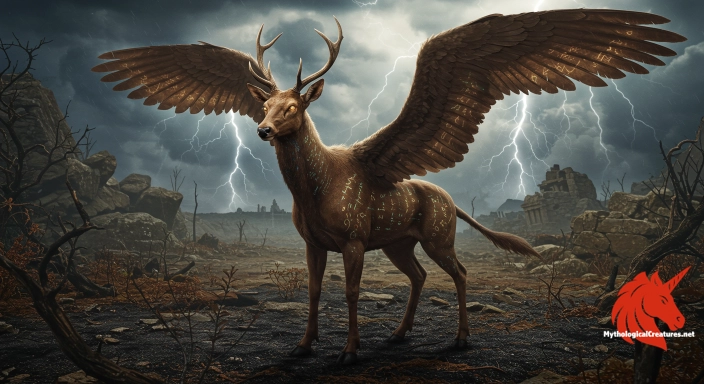
Furfur
Furfur - Furfur is significant for his dual nature, command over demonic legions, and his ability to manipulate both natural phenomena and human emotions.
Origins & First Encounters
Furfur is a prominent figure in demonology, renowned as a Great Earl of Hell and the commander of twenty-six legions of demons. His origins are steeped in medieval occult traditions and grimoires, where his dual nature as both a bearer of tumult and a facilitator of passionate intrigue is vividly illustrated. Early attestations of Furfur appear in texts that explore the intricate relationship between human desire and the forces of nature, lending him a complex persona that is as enigmatic as it is formidable. His reputation for sparking mysterious love connections alongside conjuring violent storms encapsulates the duality that pervades many infernal mythologies. The intricate balance between his capacity for benevolent love-making and his propensity for generating chaos has fascinated practitioners of the esoteric arts for centuries. Cultural narratives surrounding Furfur often depict him as a bridge between celestial and beastly realms, challenging simplistic interpretations of good versus evil. Rituals involving his summoning typically emphasise his shapeshifting qualities, which contribute to his enduring allure in magical practices. His character remains a subject of intense interest, blending elements of seduction, elemental power, and deception in a narrative that transcends time.
Source Texts & Tale Variants
Primary texts such as the Lesser Key of Solomon provide detailed accounts of Furfur’s capabilities and nature, painting a picture of a demon who defies conventional expectations. Diverse manuscripts recount his ability to instigate both intimate love and formidable natural disturbances, offering multiple perspectives on his multifaceted influence. There are accounts where, even when confined in a magic triangle, his responses remain unpredictable and laced with cunning deceit. Varied story variants in occult literature describe how he simultaneously engages in the art of seduction and the manipulation of elemental forces. Some grimoires highlight his rough, gravelly voice as an unmistakable marker of his presence during ritual ceremonies. These sources often underscore his proficiency in revealing divinely secret knowledge, contributing to the mystique that surrounds him. Authors from different eras have adapted his narrative to suit the evolving needs of occult practice, thereby enriching his mythology. The accumulation of these accounts, spanning from Renaissance texts to modern grimoires, ensures that Furfur's myth continues to be both diverse and dynamic.
Form & Powers
Descriptions of Furfur’s physical appearance are as dynamic as the myth itself, with many accounts portraying him in forms that shift between the natural and the supernatural. In some depictions, he appears as a majestic deer with an imposing presence, characterised by sleek antlers and a graceful form that hints at hidden power. Other portrayals present him as a winged deer, where expansive, ethereal wings seem to capture the tumult of a storm in their sweeping gestures. A number of texts even evoke his image as that of an angel, merging celestial beauty with an undercurrent of infernal mischief. His dual forms symbolise the interplay between the human and the divine, further complicated by his inherent ability to transform when under magical compulsion. Artists and occult scholars alike have emphasised his unsettling combination of innocence and cunning, such that his eyes are often described as reflecting both wisdom and deceit. The variance in his anatomy—from the delicate lines of a deer to the robust aura of an angel—mirrors the broader themes of transformation found in demonological lore. Rich visual detail in various interpretations suggests a creature whose physicality is a metaphor for the unpredictable forces of nature itself. This layered portrayal provides a multifaceted insight into the aesthetic and symbolic dimensions of his being.
Regional Faces
Regional variations of Furfur’s myth highlight the creature’s adaptability within different cultural and environmental contexts. In much of European tradition, particularly in medieval and Renaissance texts, he is depicted with a strong association to pastoral imagery, reflective of the agrarian settings that often inspired local mythologies. In climates marked by frequent tempests, Furfur’s control over storms and lightning is emphasised, aligning his character with local understandings of nature’s uncontrollable might. Eastern European adaptations sometimes blend his demonic traits with those of enigmatic forest spirits, thereby enriching his profile with local folklore and cultural symbolism. In the British Isles, elements of faerie lore meld subtly with his more sinister attributes, suggesting a link between both benevolent and malevolent natural forces. Mediterranean sources occasionally cast him as emblematic of both passionate love and sudden misfortune, resonating with the region’s rich tapestry of myth and legend. These differing portrayals underscore how Furfur’s image can be reshaped by local traditions, yet remain anchored in his core attributes of transformation and elemental power. His mythic versatility ensures that, despite regional discrepancies, the essential narrative remains one of duality and dynamic influence.
Cultural Parallels
Comparative analysis with other mythological entities reveals that Furfur occupies a unique niche marked by the interplay of natural fury and seductive appeal. His ability to both incite romantic attraction and unleash violent storms invites comparisons with horned deities such as Cernunnos, whose imagery similarly fuses the wildness of nature with enigmatic spiritual qualities. Like trickster figures from various traditions, his tendency toward deception resonates with the archetypes found in both Norse mythology and other ancient folklores. The shapeshifting aspect of his character is reminiscent of other global legends where the boundary between animal and supernatural becomes blurred, reflecting a universal fascination with transformation. Elements of his narrative also draw parallels with faerie lore, where beings possess the dual capacity to charm and confound. Such cross-cultural connections highlight how the themes of love, power, and chaos are recurrent in myth and serve to bridge disparate cultural narratives. While many mythological figures evoke similar elemental forces, Furfur’s distinctive mixture of seduction and tempestuous energy sets him apart. This synthesis of traits illustrates the broader mythological motif of duality that permeates folklore around the world, inviting ongoing comparative reflection on the nature of supernatural agency.
Legacy & Modern Evolution
The historical evolution of Furfur’s myth encapsulates a journey from medieval infernal texts to contemporary popular culture and occult practice. Initially presented as a fearsome demon with unyielding control over both passion and natural phenomena, his character was a staple in grimoires that sought to explain the unpredictable forces around them. Through the Renaissance, occult practitioners incorporated his dual nature into sophisticated magical rituals, often using his image to symbolise the precarious balance between order and chaos. In modern times, reinterpretations of Furfur have led to a more nuanced depiction, where elements of sympathy, mystery, and even redemption occasionally emerge. His legacy is visible in modern occult circles and has been revitalised in literature, graphic novels, films, and digital art. Contemporary portrayals often harness his archetype to critique modern conceptions of power, desire, and the environment. The transformation of his image mirrors broader cultural shifts, whereby ancient symbols are continuously reimagined to reflect current societal values. This ongoing evolution ensures that Furfur remains not only a relic of myth but also a dynamic symbol of both natural and metaphysical tension. His myth endures as a testament to the timeless allure of figures who embody the convergence of beauty, danger, and enigma.
Interesting Fact
An intriguing aspect of Furfur is his contradictory appearance as both a deer and an angel, which highlights the complex interplay between deception and divine knowledge in demonology.
Partner with us
Sponsor this space
Reach thousands of mythology enthusiasts with a curated placement on our creature pages.
Learn about sponsorshipQuick Creature Info
Origin:
Associations:
Our Mythic Legendary Rating:

Also Sometimes Known As:
Habitat:
Supernatural Powers:
Physical Attributes:
Abilities:
Behavior:
Lore:
References
Discover Another Mythical Legend You May Not Have Heard Of?
Uncover the mysteries of ancient folklore and expand your knowledge of legendary beings from cultures around the world.
Dare to Meet the Yamata no Orochi....
Curated by the Mythological Creatures Team
Series editor: Mythological Creatures Directory
Primary desk: Northern & European Folklore Desk
(rev. November 2025)