
Gaasyendietha: Gaasyendietha, the meteor dragon of Seneca mythology, is a giant serpent that inhabits the deep rivers and lakes of Canada, notably Lake Ontario.
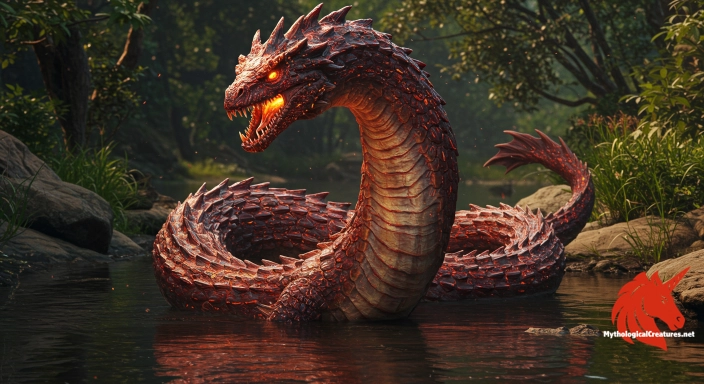
Gaasyendietha
Gaasyendietha - Gaasyendietha embodies a fusion of celestial power and terrestrial menace, symbolizing the untamable forces of nature in Iroquoian myth.
Origins & First Encounters
Gaasyendietha emerges as one of the most beguiling figures in Seneca mythology, its legend woven intricately into the cultural fabric of the Great Lakes region. It is not merely a dragon in the European sense, but a colossal serpent whose origins trace back to a celestial impact, imbuing it with an ethereal quality. Tales recount that it sprang into being from a meteoroid, carrying with it the fiery essence of the heavens and the mystery of the cosmos. This remarkable creature is primarily associated with the deep, hidden waters of Lake Ontario and other Canadian lakes, where its presence invokes both reverence and dread. The amalgamation of water, fire, and the astronomical in its lore has fascinated generations, marking it as a spiritual emblem. Its depiction oscillates between portrayals of a benevolent guardian and a destructive force, symbolising the unpredictable fury of nature. Ancient storytellers rendered its image with a complexity that linked the terrestrial with the divine. Early attestations highlight its dual affinity for both water and flame, presenting a myth that defies simple categorisation. Every retelling further cements its role as a mediator between the earthly realm and cosmic phenomena. The continuing allure of Gaasyendietha lies in its capacity to encapsulate the mysteries of nature and the celestial in a single, awe-inspiring form.
Source Texts & Tale Variants
Ancient narratives and oral traditions form the cornerstone of Gaasyendietha’s myth, weaving a tapestry of stories passed down through generations. The tale known as 'Ganyadjigowa' stands out, where the heroic Mudhen meets his fate at the hands of the dragon, which disguises itself as an old man. Such narratives, preserved by the Seneca and neighbouring indigenous communities, offer vivid portrayals of the creature’s fiery might and enigmatic origins. Multiple versions of the legend exist, each emphasising different facets of its personality and role in the natural world. Some accounts focus on its cosmic birth from a falling star, while others highlight its terrestrial reign as the master of lakes and rivers. Early ethnographic records corroborate these diverse interpretations by noting the fluidity of the oral tradition. The creature is often cast as a symbol of the powerful forces that shape the environment, blending the worlds of spirits, nature, and the cosmos. Despite the passage of time, storytellers continue to recount its appearance with a blend of awe and caution. Each variation enriches the myth by offering unique insights into the character of Gaasyendietha. The multiplicity of sources and story variants underscores its enduring presence in the collective memory of indigenous cultures.
Form & Powers
Gaasyendietha is depicted as a formidable giant serpent, its elongated body gleaming with a radiance reminiscent of molten metal. Its scales are said to flash like burning embers, each one echoing the creature’s fiery origins. The dragon’s eyes burn with an intense, otherworldly light that captures the tumultuous spirit of the celestial event that brought it into existence. Along its sinuous form, intricate patterns and textured ridges suggest the impact of cosmic forces, rendering it both awe-inspiring and mysterious. Its immense size is matched by a powerful musculature that hints at the latent energy of a meteorite. Not only does the creature embody the ferocity of fire, but it also seamlessly integrates attributes of aquatic life, reflecting its dominion over deep lakes and rivers. When it spews fire or soars through the sky, its physical presence is accentuated by dramatic bursts of flame that highlight the duality of its nature. The myth often portrays its head as adorned with horn-like projections and a crown of fiery radiance, symbolising its celestial heritage. The shifting imagery of its form – both graceful and formidable – ensures that every depiction remains a work of dynamic, living art. In every narrative, Gaasyendietha’s physical description is a compelling blend of natural prowess and otherworldly majesty.
Regional Faces
Gaasyendietha manifests in a rich variety of interpretations across different indigenous regions, each emphasising aspects of its hybrid nature. In the environs of Lake Ontario, the creature is predominantly visualised as a vast serpent gliding silently through the dark, mysterious waters. Meanwhile, in other Iroquoian traditions, it is reimagined as the 'fire lion,' a striking embodiment of the Underwater Panther myth. This regional divergence not only reflects the geographic diversity of the tribes but also highlights the adaptability of oral tradition in capturing local environmental and spiritual nuances. Some communities stress its role as a cosmic interloper whose fiery trails connect the heavens and the Earth, while others revere it as a protector of sacred waters. The different names and attributions—ranging from 'meteor dragon' to 'fire lion'—suggest that each locale imbues it with additional layers of cultural significance. In some areas, local folklore integrates ritualistic elements that honour the creature as a mediator during times of natural change and cosmic events. Despite these variations, the central themes of fire, water, and celestial origin remain consistent, binding the regional narratives together. The lore surrounding Gaasyendietha is thus a mosaic of regional adaptations, each colouring the myth with its own distinct cultural heritage. This diversity enriches the overall legend, offering a multifaceted insight into the natural and spiritual worlds of indigenous peoples.
Cultural Parallels
Gaasyendietha invites comparison with an array of mythic beings from diverse cultural traditions, standing out for its integration of aquatic majesty and fiery dynamism. Its ability to traverse both water and sky invokes echoes of the classic European dragon, although its origin story—rooted in the impact of a meteor—sets it apart. The creature’s dual essence of water and fire is remarkably similar to Eastern dragons, which are often seen as bridges between heaven and earth. At the same time, its violent yet noble aspects resonate with the symbolism found in Mesoamerican deities, where transformative power is a recurring theme. In Iroquoian lore, where it is known as the fire lion, the myth aligns with regional depictions of potent water spirits like the Underwater Panther. This comparative analysis reveals a universal human inclination to personify the elements through serpentine figures endowed with mystical qualities. The juxtaposition of celestial phenomena and earthly domains in its legend mirrors similar motifs in global mythologies, where cosmic events are inherent in the creation of life and power. Such cross-cultural parallels underscore a shared narrative framework that transcends boundaries and speaks to enduring natural mysteries. The synthesis of these diverse mythological elements in Gaasyendietha creates a compelling narrative that exceeds the sum of its parts. Ultimately, its story enriches our understanding of how cultures worldwide negotiate the forces of nature and the cosmos.
Legacy & Modern Evolution
Over the centuries, Gaasyendietha has undergone a profound transformation from a fearsome mythic figure to a symbol rich with cultural and artistic significance. Early recountings of the creature depicted it as an almost elemental force of nature, capable of both creation and devastation. As indigenous communities encountered new challenges and shifts in cultural dynamics, the dragon’s image evolved to embody themes of resilience, transformation, and a profound connection to the natural world. In modern portrayals, Gaasyendietha often appears in art, literature, and film, where its fiery and serpentine attributes are highlighted alongside its cosmic origins. Contemporary indigenous artists have reinterpreted the legend, merging traditional iconography with modern aesthetics to create new visual narratives that speak of identity and resistance. This evolution also reflects a wider re-examination of myth in the context of environmental stewardship and cultural revival. Modern adaptations tend to emphasise its role as a guardian of nature, a protector whose fury is balanced by wisdom and responsibility. As debates continue over the relevance of indigenous lore in public discourse, Gaasyendietha has emerged as a potent emblem of cultural heritage and environmental consciousness. Its story is continuously reimagined, ensuring that the myth remains vibrant and pertinent in a changing world. The ongoing legacy of Gaasyendietha testifies to the enduring power of myth to bridge past and present, tradition and innovation.
Interesting Fact
Gaasyendietha uniquely bridges the elements of water and fire, reflecting a dual nature that challenges conventional mythological archetypes and underscores its legendary status.
Mythology commerce, done carefully
Align your store with our global myth audience
If you sell myth-inspired jewellery, prints, decks, or collectibles, we can feature your brand without overwhelming the reading experience.
Partner with usQuick Creature Info
Origin:
Features:
Associations:
Our Mythic Legendary Rating:

Also Sometimes Known As:
Habitat:
Supernatural Powers:
Physical Attributes:
Abilities:
Behavior:
Lore:
Related Creatures, Tales or Lore
- EEuropean Dragon
- UUnderwater Panther
- QQuetzalcoatl
References
Discover Another Mythical Legend You May Not Have Heard Of?
Uncover the mysteries of ancient folklore and expand your knowledge of legendary beings from cultures around the world.
Dare to Meet the Huodou....
Curated by the Mythological Creatures Team
Series editor: Mythological Creatures Directory
Primary desk: Americas & Indigenous Traditions Desk
(rev. November 2025)