
Ganga: Ganga is the personification of the sacred river Ganges and a revered goddess in Hindu mythology.
-c81423ab-4305-453b-85d6-c6a81dcaa990_small.webp "Ganga - Central to Hindu rituals of purification and serves as a mother figure to humanity, facilitating the journey to moksha")
Ganga
Ganga - Central to Hindu rituals of purification and serves as a mother figure to humanity, facilitating the journey to moksha
Origins & First Encounters
Ganga embodies the sacred essence of the mighty river Ganges and occupies a central place in Hindu cosmology. Emerging from the ancient hymns of the Rigveda, she was revered as a divine force capable of purifying both body and soul. Over time, her narrative has evolved into that of a benevolent goddess whose mission is to cleanse and restore balance. The myths celebrating her descent to earth capture the imagination with tales of celestial intervention and human endeavour. Her divine presence is interwoven with the spiritual lives of millions who view her as both a nurturer and a symbol of forgiveness. Throughout the Vedic texts, epic narratives, and daily rituals, Ganga is celebrated as a life-giving force that has transcended mere natural phenomena. Her influence reaches across social, cultural, and geographical boundaries, reinforcing her role as a mother to humanity. The seamless blend of mythology and natural beauty makes her an enduring icon whose story continues to inspire devotion and reverence.
Source Texts & Tale Variants
The earliest mentions of Ganga can be traced back to the Rigveda, where the river is celebrated as the holiest of waterways, laying the groundwork for her divine status. Vedic literature laid the foundation for her mythos, later enriched by epics such as the Ramayana and the Mahabharata. In these texts, varied origins are attributed to her, with some narratives portraying her as the firstborn of the majestic Himavat and others linking her to the preserver deity Vishnu. Her dramatic descent to the mortal realm is recounted in multiple versions, most notably through the endeavours of King Bhagiratha and the compassionate intercession of Shiva. The Puranas add further layers of complexity by infusing ritualistic symbolism and deeper spiritual insights into her character. These ancient accounts provide diverse perspectives that collectively shape her identity as both a purifier and a sustainer of life. Folk traditions and temple lore have further diversified her story, embedding local customs within her overarching narrative. This rich tapestry of sources reflects a long-standing cultural tradition that venerates Ganga as a transformative force in both myth and life.
Form & Powers
Ganga is traditionally depicted as an exceptionally fair and radiant woman whose features mirror the glistening flow of the river she personifies. Her form is often adorned with intricate jewellery and flowing garments, symbolising the seamless union of beauty and divinity. The portrayal of her cascading hair, reminiscent of rippling water, accentuates her ethereal and fluid nature. In many representations, she is seen riding a mythical creature known as the makara, an amalgam of crocodile and other aquatic features that emphasises her connection to water and nature. The makara itself is rendered with elaborate detail, accentuating themes of power blended with grace. Her penetrating gaze and gentle smile evoke both compassion and an ancient wisdom that spans millennia. Artistic renditions capture her poised stance and regal demeanour, ensuring that viewers recognise her as an emblem of purity and life. Through rich iconography and a harmonious blend of aesthetics, Ganga’s depiction encompasses both the tangible beauty of the river and the intangible spirit of divinity.
Regional Faces
Regional depictions of Ganga reveal a fascinating spectrum of local traditions and artistic expressions, each adapting her iconography to resonate with indigenous cultural values. In the northern regions of India, she is often celebrated in the context of the mighty Himalayas, underscoring her role as a life-sustaining force emerging from the snow-capped peaks. At sacred sites along her banks, communities enshrine her presence through elaborate rituals and festivals that reflect centuries-old devotional practices. Local artisans frequently incorporate regional motifs into her portrayals, blending traditional imagery with distinctive native styles. In some areas, she is depicted with additional symbols of fertility and prosperity, highlighting her dual role as both a purifier and a giver of life. Her image also finds echoes in temple art, where subtle variations in attire or accessories further enrich her narrative. In regions influenced by Buddhist or other cultural streams, the syncretic portrayal of Ganga shows how her essence transcends rigid iconographic boundaries. These regional adaptations not only underscore the dynamic evolution of her worship but also affirm her unifying presence across diverse cultural landscapes.
Cultural Parallels
Ganga’s persona as a divine river goddess finds intriguing parallels in other mythological traditions where water deities embody the principles of renewal and purity. In many cultures, sacred rivers and streams perform a similar role, serving as the conduit for life's regeneration and the purging of sin. Comparable figures can be found in Greek mythology with the Naiads, who, like Ganga, were revered for their life-giving and purifying qualities. In Egyptian lore, the sanctity of the Nile parallels the veneration of Ganga as a life-sustaining and restorative force. Despite differing cultural contexts, these deities share the recurring motif of water as a transformative and sacred element. Within Hindu mythology itself, Ganga’s attributes are often juxtaposed with those of other divinities, reinforcing her unique position amidst the pantheon. The cross-cultural resonance of water as both a metaphor for and an agent of cleansing underscores the universality of her symbolism. In many ways, Ganga stands as a testament to the enduring human connection with nature’s most elemental substance, bridging diverse mythologies with her timeless allure.
Legacy & Modern Evolution
The evolution of Ganga’s image over time reflects a rich historical journey from ancient sacred texts to modern-day cultural symbolism. Early depictions, rooted in Vedic literature, presented her primarily as a majestic river deity, a personification of nature’s bounty and a preserver of cosmic order. As the narrative expanded in epics like the Ramayana and the Mahabharata, her role was imbued with qualities of maternal care, divine forgiveness, and redemptive power. In contemporary society, Ganga not only continues to inspire deep religious devotion but also serves as a rallying symbol for environmental conservation and cultural unity. Modern festivals and public rituals that celebrate her sanctity often address both spiritual aspirations and urgent ecological concerns. Artists and filmmakers have reinterpreted her story, highlighting the interplay between tradition and modernity. Her portrayal has grown to encompass a multifaceted legacy that speaks to both historical values and present-day imperatives. As a living tradition, Ganga endures as a symbol of hope, purification, and the enduring sanctity of nature, constantly evolving while remaining rooted in timeless mythology.
Interesting Fact
An intriguing aspect of Ganga is that she is celebrated beyond India, as evidenced by her worship alongside Gautama Buddha during Thailand's Loy Krathong festival, showcasing her widespread cultural influence.
For serious myth projects
Feature your work alongside the legends
From academic works to story-rich games, we highlight projects that respect world mythologies. Talk to us about a measured, long-term placement.
Start a conversationQuick Creature Info
Associations:
Our Mythic Legendary Rating:

Also Sometimes Known As:
Habitat:
Supernatural Powers:
Physical Attributes:
Abilities:
Behavior:
Lore:
Related Creatures, Tales or Lore
- YYamuna
- SSaraswati
- NNarmada
References
Discover Another Mythical Legend You May Not Have Heard Of?
Uncover the mysteries of ancient folklore and expand your knowledge of legendary beings from cultures around the world.
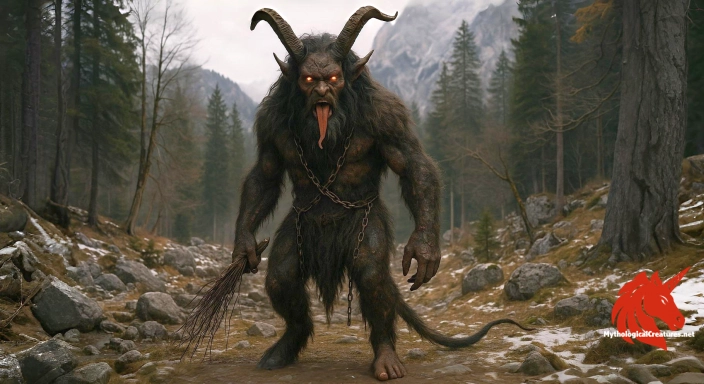
Dare to Meet the Krampus....
Curated by the Mythological Creatures Team
Series editor: Mythological Creatures Directory
Primary desk: Asian & Pacific Myth Cycles Desk
(rev. November 2025)